
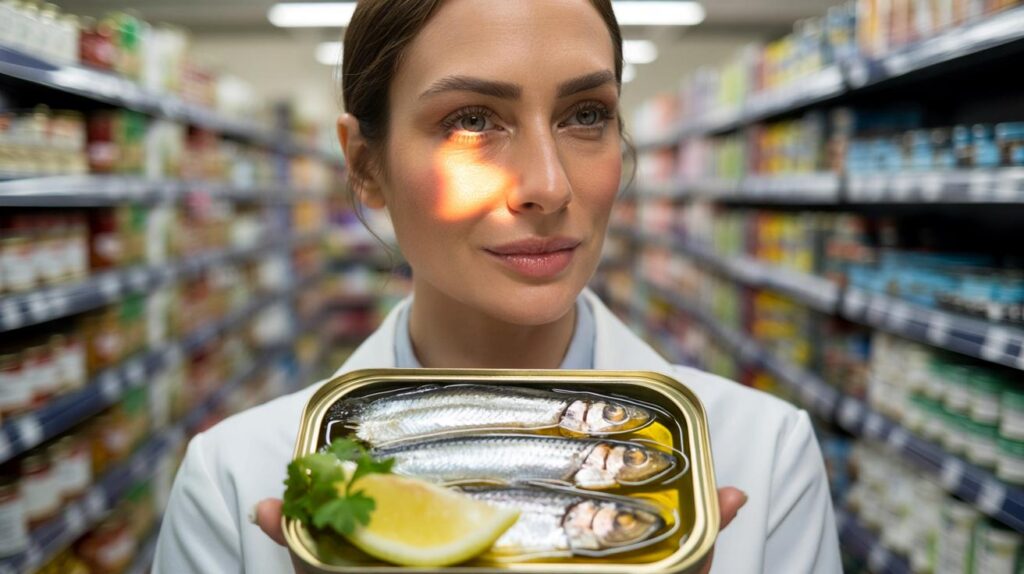
The glow-fixers line our shelves in glossy bottles, yet dull skin keeps winning. What if the real radiance booster is wedged between the beans and budget tuna, wearing a humble paper label?
I’m standing in a bright supermarket aisle in Hackney, watching a consultant dermatologist pick up tinned fish like it’s a rare serum. She doesn’t rush. She reads labels the way most of us scroll TikTok. A student walks past, tosses a fancy collagen powder into her basket, and the doctor quietly smiles. I didn’t expect her answer to come in a pull-ring tin.
On the way out, she tells me her patients don’t need more steps — they need better staples. Not trendy, not pricey, not complicated. Just the stuff that slides into weeknight life without a fight.
Her secret for glow wasn’t a mask or a peel. It was aisle eight. A tin with a tail.
The skin-glow secret hiding in plain sight
The food? Sardines. The little tins most of us skip are the quiet powerhouse dermatologists whisper about when the cameras are off. They’re oily fish, rich in skin-loving omega-3 fats, vitamin D and selenium. There’s also proper protein to feed collagen.
They cost less than a latte and work harder than a new moisturiser. **Glowing skin starts in the trolley.**
A junior PR I met, Priya, swapped in sardines three lunches a week — on toast with lemon and pepper — after a clinic visit. By week three she kept texting me photos of her cheeks in daylight. “I’ve stopped caking on concealer,” she wrote.
Survey data in the UK suggests most of us don’t eat oily fish weekly, even though the advice is right there on NHS posters. That gap shows up on our faces: tightness, slow-to-calm blemishes, winter-grey tone.
Priya didn’t overhaul her life. She opened tins. And that tiny decision stuck when the glow in her selfie didn’t need a filter.
Here’s why this works. EPA and DHA — the headline omega-3s in sardines — are building blocks for calm skin signalling. They nudge the balance away from the shouty inflammatory pathways that make redness and breakouts linger.
They sit in cell membranes, improving fluidity, which helps the barrier hold on to water. Less transepidermal water loss, more cushion. Vitamin D supports normal cell turnover, while selenium and B12 pitch in on antioxidant defence and energy production.
Sardines are also a tidy way to get amino acids your skin uses daily. Not a miracle. A foundation. **Tinned sardines are low-mercury, budget-friendly, and weirdly chic.**
How to make the glow habit stick (without turning your kitchen into a fish market)
Try the “three-tin week” trick. On Sunday, put three tins by the kettle so you see them. Rotate them through your week: mash with lemon, olive oil and parsley on warm toast; fork through a tomato-and-caper salad; fold into a quick pasta with garlic.
This isn’t meal prep, it’s friction reduction. If the food is in your eyeline, you’ll eat it. Open, drain, dress, eat. Ninety seconds, one plate, glow unlocked.
Go gently at first if the flavour feels bold. Half a tin is fine. A squeeze of citrus and fresh herbs brightens and tames any fishiness.
Choosing sardines in olive oil adds skin-friendly polyphenols; in brine if you’re watching energy intake. Rinse if you’re salt-sensitive. Bones are soft and edible — a calcium bonus — but pick them out if the texture spooks you. Let’s be honest: nobody really does that every day.
Some people worry about smell. Don’t heat them hard; that’s when it blooms. Room-temperature sardines tossed with something acidic and something crunchy? That’s your weekday skincare ritual on a plate.
“I see less flaring redness and fewer ‘angry’ breakouts when patients get regular omega‑3s from food,” the consultant dermatologist told me. “Supplements help, but food habits last longer. Sardines are the easiest on-ramp.”
- Fast ideas: lemon + chilli flakes on toast; sardines + cherry tomatoes + basil over warm couscous; smashed with yoghurt, dill and cucumber for a quick dip.
- Shopping cue: look for “sustainably caught” and short ingredients lists.
- Storage hack: keep a tin at your desk; add to a supermarket salad for a 2‑minute lunch.
- Flavour upgrade: grate lemon zest, add a crack of black pepper, finish with a ribbon of extra-virgin olive oil.
The bigger picture (and why this small fix keeps paying off)
We’ve all had that moment when skin just won’t play ball and everything you put on it seems to bounce off. Food isn’t a cure-all, but it can change the baseline you’re working with.
When the barrier is fed with the right fats, water stays in and irritants stay out. That means serums and creams don’t have to fight through a drought. You’re not chasing your tail with new products every payday.
Think of sardines as a weekly deposit into your skin’s resilience account. You might notice glow first. Then calmer breakouts. Then less of that paper-dry feel by 4 p.m. on a heated train. **Small habit, big skin payoff.**
It’s also a quietly sustainable choice. Sardines reproduce quickly and sit low on the food chain, so they’re both eco-wise and low in mercury. That’s a rare win‑win in the beauty world.
And if you’re squeamish? Pair with bold flavours you love — lemon, chilli, herbs — and let the tin disappear into the dish. The goal isn’t perfection. It’s rhythm.
| Key points | Details | Interest for reader |
|---|---|---|
| The overlooked glow food | Tinned sardines: omega‑3s (EPA/DHA), vitamin D, selenium, high‑quality protein | Cheap, quick, widely available in UK supermarkets |
| Why it helps skin | Supports barrier lipids, calms inflammatory signalling, aids hydration, feeds collagen with amino acids | Visible glow, calmer redness, fewer tight/dull patches |
| How to use it today | Three tins per week; eat at room temperature with lemon/herbs; choose olive oil or brine to taste | Low-effort routine that fits busy weekdays |
FAQ :
- Which sardines are best for skin?Ones packed in extra‑virgin olive oil bring bonus polyphenols, while those in brine are lighter. Look for sustainably caught and minimal additives. Skin on/bones in is fine — bones are soft, edible and add calcium.
- How long until I see a “glow” effect?Some people notice plumper-looking skin within 2–3 weeks as hydration improves. Deeper changes in tone and reactivity can take 6–12 weeks. Keep the habit steady rather than perfect.
- What if I hate the taste of sardines?Start small and hide them. Mash half a tin with lemon and dill into yoghurt as a dip, or fold through a tomato-rich pasta sauce. Strong, fresh flavours reduce fishiness fast.
- Should I worry about mercury or safety?Sardines are low-mercury and generally considered safe for regular consumption. If you’re pregnant, stick to NHS oily fish guidance. If you have a fish allergy or histamine sensitivity, skip them and talk to your clinician.
- Can I get similar benefits without fish?Plant options like walnuts, chia and flax provide ALA, which the body converts to omega‑3s in small amounts. Algae‑based omega‑3s supply DHA/EPA directly. Layer these with vitamin‑C‑rich produce for skin support.



Wait, sardines over serums? Wild, but I’m game—aisle eight, here I come.
I’m sceptical — won’t the fishy smell llinger all day? Also, is “three tins a week” too much salt if they’re in brine, or do you just rinse and call it good?