
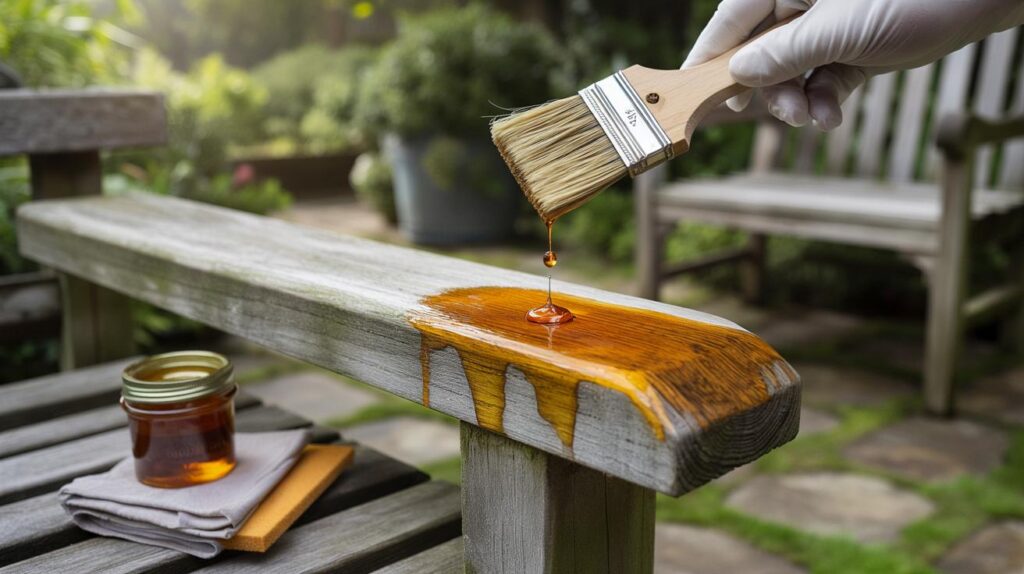
A patio chair starts to splinter at the arms, the table looks tired and grey, and one summer thunderstorm can undo months of care. Outdoor wood is beautiful — and brutally exposed. The quiet trick that saves it isn’t a massive DIY mission. It’s a single drop that tells you exactly what to do next.
It was a mild Saturday in Kent, the kind where the air smells like wet leaves and barbecue smoke, when I watched my neighbour kneel beside a weathered teak bench with a jam jar of stain. He tipped the brush, let one drop kiss the arm, and we both saw the old honey colour bloom from beneath the grey like a photograph developing. *I remember thinking: there’s no way a fix this small will last.*
He didn’t rush, just watched. The drop sank, darkened, then steadied. He turned to me and said, “It’s thirsty. Two thin coats and it’ll sing.” He was right. The bench looked alive by tea-time. The fix is smaller than you think.
The one-drop test that changes everything
When outdoor wood fades, most people reach for a big tin and a bigger brush. Start smaller. A single drop of stain on an inconspicuous spot shows absorption, colour shift, and how evenly the timber drinks. It also flags trouble: patchy soaking means blotches ahead. **Hardwood isn’t invincible**; even teak and iroko lose oils at the surface under British sun and rain. One quiet drop gives you a map before you paint the whole landscape.
Picture a garden table after two winters: silvered boards, cup rings, a little algae at the joints. You dab one drop of semi-transparent stain beneath the edge. It beads? The wood’s still sealed — a clean and a light keying first. It vanishes in three seconds? That timber’s parched and wants a penetrating oil, not a film coat. It sits and smudges? There’s grime or mildew in the grain that needs washing and oxalic brightener. We’ve all had that moment when we want to rush it. The drop keeps you honest.
There’s a simple reason it works. Wood is a bundle of straws; the end grain is a thirsty mouth, the face grain a measured sip. Pigmented stains lodge in earlywood, oils soak along the fibres, and film-formers float on top. Your one-drop trial shows which behaviour you’re getting on that exact piece of furniture, right now, in your garden’s light and temperature. That knowledge saves you from the classic mistake: loading on heavy coats that peel by August. **Prep beats product.**
From drop to full coat: the method that actually lasts
Start at the sink, not the tin. Wash the furniture with warm water and a dash of sugar soap; rinse and let it dry until the surface looks matte, not damp. If the wood’s greyed, use an oxalic-based brightener to bring the colour back, then a gentle sand — 120–150 grit — just to lift the grain and knock back roughness. Stir stain like soup, don’t shake; bubbles are the enemy. Use your one-drop test where rain won’t show it, pick your product, then work in the shade between 10–25°C. Thin coats, long strokes with the grain, and wipe off any excess after a few minutes. **Thin coats win.**
Common slip-ups happen fast. Overloading the brush invites puddles that turn sticky and streaky. Brushing in full sun dries the stain before it can level, leaving lap marks. Skipping the end grain is like leaving the taps open; seal those ends lightly and evenly or they’ll drink everything and darken. Don’t chase perfection with six coats in one day. Two honest coats — water-based two to four hours apart, oil-based overnight — usually beat a rushed marathon. Let’s be honest: nobody does that every day.
You don’t need fancy kit, just a calm sequence.
“One drop tells you what the wood wants. The rest is rhythm: clean, test, coat, step away,” says furniture restorer Mia Larkin.
Here’s a pocket checklist to keep nearby:
- Wash, brighten if grey, light sand, dust off.
- Test one drop for absorbency and colour on a hidden spot.
- Brush on thinly, back-brush, wipe any shine after 5–10 minutes.
- Mind the end grain; don’t let it hog all the stain.
- Dry flat if you can; keep rags in water, then bin safely.
Care that fits real life
Stain isn’t a forever shield; it’s a breathable coat that moves with the seasons. A quick rinse after storms, a soft brush for pollen, and a spring refresh keep things happy. You don’t need to respray your routine. A twenty-minute check each month in summer catches scuffs before they expand. When colour begins to dull on the sun-facing side, a single maintenance coat snaps it back. The drop test still helps: if it sinks instantly, the wood’s ready to drink again; if it lingers, wait for a dry day and a light keying.
Oil-based stains with UV absorbers tend to feed older hardwoods; water-based formulas with high-quality pigments shine on softwoods and painted finishes. Gel stains behave like polite marmalade on tricky species, less drippy on vertical slats. Don’t fear mixing approaches outdoors: a penetrating oil for the frame, a toner on the tabletop. And always treat oily rags like live coals — lay them flat to dry outdoors or drown them in a metal tin of water before binning. It’s not drama; it’s just how they behave.
What you’re really after isn’t perfection; it’s a garden set that makes you say, “Tea?” without a sigh. Go light, go slow, and let that first drop set the tone. The wood will show you what it needs if you give it a moment. Your future self — bare feet on a smooth, warm bench at golden hour — will be grateful, even if nobody notices the work. That’s the point of good care: it disappears into the season.
| Key points | Details | Interest for reader |
|---|---|---|
| The one-drop test | Reveals absorption, colour shift, blotch risk in seconds | Fast decision-making, fewer mistakes |
| Light, methodical prep | Wash, brighten, sand 120–150, stir stain, shade application | Better finish without heavy labour |
| Thin coats and safe finish care | Back-brush, wipe excess, seal end grain, handle rags safely | Longer-lasting results, safer DIY |
FAQ :
- How do I know if my furniture needs stain or oil?Do the drop test on a hidden spot. If the drop vanishes quickly, use a penetrating oil or semi-transparent stain. If it sits on top, a light keying and perhaps a toner is better.
- What’s the best day to stain outside?Choose dry, mild weather, shade if possible, with temperatures roughly between 10–25°C. No rain forecast, no harsh midday sun.
- Do I need to sand everything to bare wood?Not always. Clean, brighten greyed timber, and lightly sand to open the grain. Full sanding is for thick, failing film finishes or heavy damage.
- How long between coats?Water-based stains often recoat in 2–4 hours. Oil-based typically want overnight. Read your tin and give the wood real drying time.
- Are oil-soaked rags dangerous?Yes, they can self-heat. Lay them flat to dry outdoors or submerge in water in a metal container before disposal.



Loved the one-drop test—never thought to start that small. Tried it on my greyed acacia table and the guidance about thin coats + end grain sealing was spot on. Bench went from meh to mmm in an afternoon. Thx for the oxalic brightener tip; I always forget that step!