
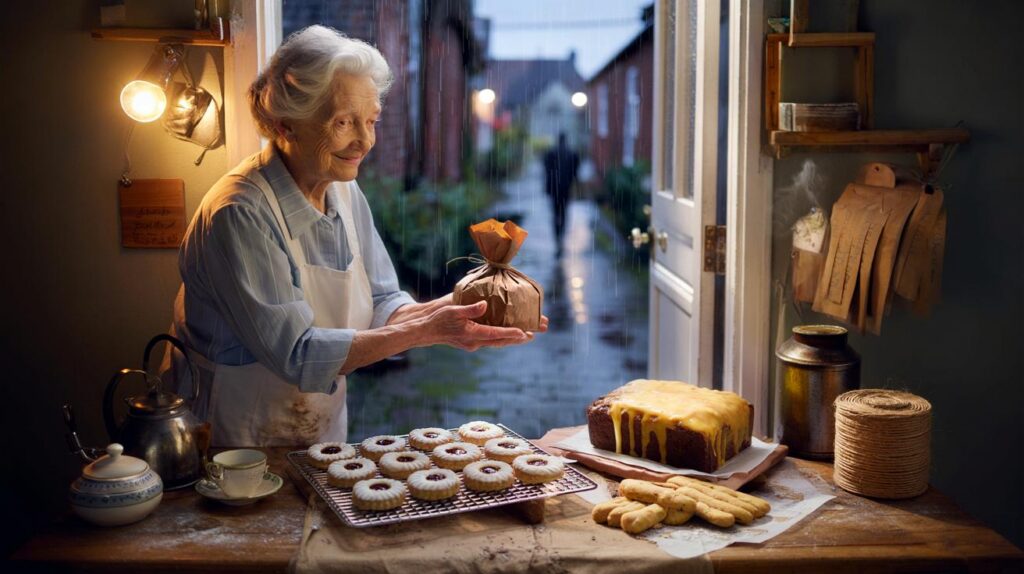
Across Britain, one quiet ritual keeps a street from fraying at the edges: a grandmother in a small kitchen, apron smudged with flour, baking for the people who live a few steps away. Loneliness rises, time shrinks, traditions wobble. A warm tin on a doorstep still changes the weather of a day.
The kettle clicks just before the oven timer. Steam lifts from a tray of jammy dodgers, and the hallway smells like childhood. A grandmother—let’s call her Mo—wraps two still-warm biscuits in a napkin, ties them with thread, and steps into the drizzle. She knocks at the door across the landing and leaves the bundle, smiling at the peephole.
Down the stairs, the postie gets a shortbread for the road. A student on the third floor, a loaf for exams. It looks small. It isn’t. A warm cake can open a cold door.
What does a lemon drizzle have to do with happiness? More than you’d think.
The quiet power of a cake on a doorstep
Baking for neighbours is not about perfection. It’s a rhythm—stir, knock, smile—that makes a postcode feel like a place again. When Mo bakes, people appear. A toddler in socks, a caretaker with paint on his cuffs, the widower next door who once loved Dundee cake.
These rounds become a gentle map of who lives where and what they like. In that map, people look up from their phones and say hello. The cake is simply the reason.
Here’s a small story. When Mrs Khan returned from a week in hospital, Mo left a lemon drizzle with a paper note: “Welcome home.” It sat on the counter for an hour before the doorbell rang. Another neighbour arrived with a bunch of tulips, then another with soup. Three knocks later, the flat wasn’t quiet anymore.
ONS surveys have repeatedly found that around a quarter of UK adults feel lonely at least some of the time, with a smaller group saying “often or always.” Neighbourly rituals don’t fix everything. They do nudge a silent corridor towards conversation, which is where relief begins.
Why does this work? Our brains are simple here: warmth, smell, and the sight of something made by hand signal care without a lecture. Food memories anchor us—treacle tart at school, hot cross buns in spring—and a gift awakens them instantly. Reciprocity blooms lightly: biscuits today, an offer to water plants next week.
Food is a love letter you can eat. It carries dignity for giver and receiver. We’ve all had that moment when one neighbourly act shrank a long day to size.
How to bake like a neighbour, not a showstopper
Start with one base recipe you could do with your eyes closed. A plain sponge, a soda bread, an oat biscuit. Bake two—one for home, one to share. Cut into modest pieces that travel well. Keep a small stash of tins and brown paper bags, plus a roll of string. Write a note: ingredients, date, your first name. The recipe is less flour and sugar, more time and noticing.
Pick a slot that fits your life—a Sunday afternoon batch, or midweek when the oven’s on anyway. Freeze portions so you always have a “hello” ready. Knock, hand over, linger for two minutes. That’s it.
Common snags? Allergies and dietary needs matter, so add a simple label and skip nuts unless you’re sure. Don’t ring at awkward times; early evenings work well. If the person looks busy, smile, pass the package, and go. Let’s be honest: nobody really does this every day.
Joy fades if you turn it into a performance. No need for ribbons unless you enjoy them. If you burn a batch, laugh and try again tomorrow. Keep the gesture light. Keep the door open.
Mo says it best:
“I’m not feeding an army. I’m just reminding the street we belong to one another.”
- Neighbour-baking starter kit: one foolproof recipe, brown paper bags, string, a pen, sticky notes for ingredients.
- Best first bakes: oat biscuits, banana bread, scones, soda bread, flapjacks.
- Two-minute doorstep script: name, quick hello, what’s inside, “shout if you need anything.”
- Small safety check: label allergens, avoid raw egg glazes, cool fully before packing.
What lasts when the tray cools
The oven switches off, but the effects keep moving. A sweet parcel invites a first chat, which becomes a second. A second becomes a favour exchanged. Favour becomes trust. That’s the real recipe—small, repeatable steps that stitch a street into something like a family.
Traditions don’t vanish because modern life is fast. They bend, shrink, change flavour. A grandmother’s secret is not secret at all: consistency beats spectacle. Tradition isn’t fragile when it’s passed hand to hand. Bake once a month. Share what you can. Listen at the door.
If you try it, tell someone what happened. Did a stranger smile? Did a story surface? Did a quiet staircase sound less empty? The answer may not be fireworks. It might be a sticky note on your own door, with a thank you and a borrowed tin.
| Key points | Details | Interest for reader |
|---|---|---|
| Neighbourly baking builds micro-connections | Short doorstep exchanges create recurring contact and trust | Practical way to feel less isolated and more rooted |
| Keep it simple and repeatable | One base recipe, small batches, clear labels, quick knocks | Reduces effort so the habit survives busy weeks |
| Respect boundaries and needs | Allergen notes, considerate timing, no pressure to chat | Makes the gesture safe, kind, and welcomed |
FAQ :
- Is it odd to bake for neighbours I barely know?Not odd—just gentle. Start small, introduce yourself, and let the cake do the talking.
- What if someone refuses or doesn’t answer?No drama. Leave a note with your name, take the bake home, try another day. Kindness has a long shelf life.
- How do I handle allergies and dietary choices?Label ingredients clearly, avoid nuts as a default, and ask once you know them. There are brilliant vegan and gluten-free options.
- What’s a budget-friendly bake that still feels special?Flapjacks, soda bread, and oat biscuits use cupboard staples and carry well. Cinnamon sugar changes everything.
- Can this work in flats with shared entrances?Yes. Use small, odour-light bakes, deliver at sensible hours, and keep doorstop chats brief. Respect shared space and quiet.



What a lovely reminder that consistency beats spectacle. I grew up in a block where shortbread meant “we’ve got you.” This piece makes me want to bring banana bread to the quiet flat down the hall. Small notes about ingredients are a genius touch. Thank you for making neighbourliness feel do‑able, not performative. Also: “Food is a love letter you can eat” — I’m definatley stealing that line.