
Bath tiles don’t just get dirty — they get tired. Limescale dulls their shine, soap scum clings like fog on a windscreen, and the grout turns sullen and grey. We’ve all had that moment when the bathroom light catches a streak and you suddenly see the whole wall for what it is: neglected, a bit sad, quietly asking for help.
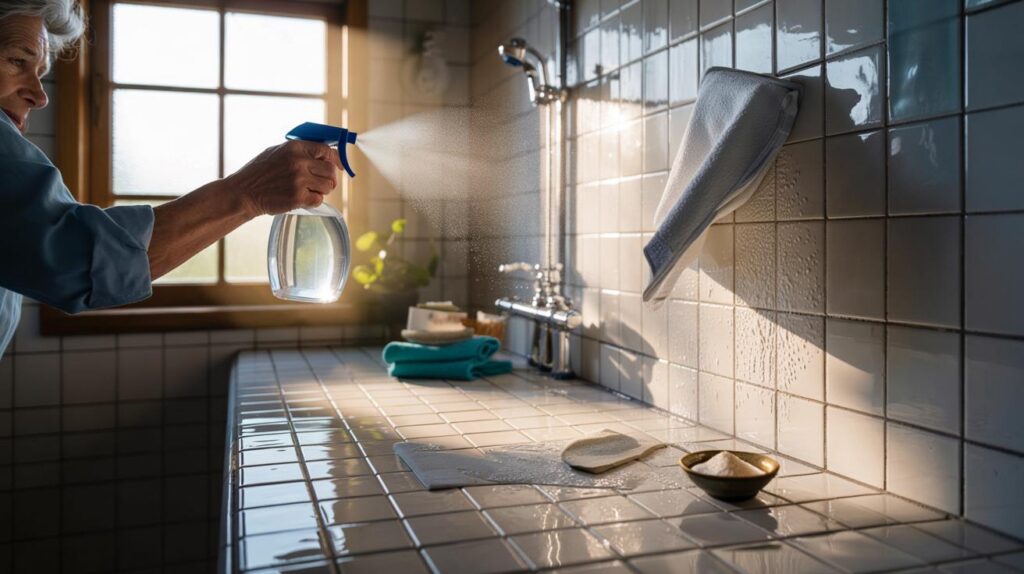
The first time I met Colin, he was holding a supermarket bottle of clear vinegar like a tiny secret. Morning light spilled across his small tiled bathroom in Leeds, showing every milky edge and chalky fleck that weeks of hard water had left behind. He laughed, shrugged, then sprayed the tiles with the casual air of a man watering tomatoes, as the crisp tang cut through the steamy air.
He waited, kettle murmuring in the kitchen, tea bag poised, time unhurried the way retirement can be once you stop rushing. Then he wiped — slow, deliberate strokes with a soft cloth — and the original glaze revealed itself in bright, almost cheeky patches. The grout, once grey and moody, lightened like morning after a storm.
It felt almost like cheating.
The quiet power of a store-cupboard staple
Colin swears by vinegar not because it’s trendy, but because it works in a way that feels honest. The transformation is oddly satisfying to watch: a dull tile becomes crisp again, the way a window clears after a rain. He likes that it costs pennies and comes with no performative promise — no neon label or heroic claim, just a reliable, slightly vinegary truth.
He told me he started after a pricey bathroom spray left his hands stinging and his eyes watering. In came the vinegar, out went the fuss. Within a fortnight, his routine took half the time, and his bathroom looked less like a place that had slowly given up and more like one that remembered what it was for. His neighbour — curious and unconvinced — tried it on her shower wall and sent a photo ten minutes later that could have been a before-and-after advert.
There’s a simple chemistry at play. Limescale is mineral, soap scum is a sticky mix of fats and minerals, and vinegar’s mild acidity loosens both. Warmth helps the liquid spread and cling, patience lets the acid do the quiet work, and a soft cloth lifts what’s left. It’s not magic; it’s a small, precise dialogue between the problem and the fix, and it plays out in minutes.
https://youtu.be/CRonpOrs9u4
How he did it: the rinse-and-rest trick
Colin mixes equal parts warm water and distilled white vinegar in a spray bottle, then fogs the tiles from top to bottom. He lets it sit for 10 to 15 minutes — that’s the “rest” — before wiping with a microfibre cloth or a soft brush along the grout lines, then rinsing with hot water. He finishes with a quick squeegee and a cracked window to let the air carry the smell away. Rinse generously.
He’s learned what not to do. Don’t rush the dwell time — the letting it sit is where the shine comes from. Don’t scrub with anything scratchy; the glaze is tough, not invincible. Do not mix vinegar with bleach. It’s an easy mistake when you’re throwing everything at a stubborn mark, but that cocktail can create nasty fumes. Avoid natural stone. Vinegar and marble are not friends, and that includes travertine and limestone. Let’s be honest: nobody keeps up a daily scrub, which is why this once-a-week ritual feels doable.
He also keeps one little flourish for tougher build-up near the taps and on the lower tiles. He sprays, waits, then dabs a pinch of baking soda on a damp cloth and works in gentle circles before rinsing. “It’s like the vinegar loosens it and the soda nudges it away,” he says, smiling at the shine on his shower valve.
“Vinegar gave me my Saturdays back,” Colin told me. “I don’t spend the morning in rubber gloves anymore. I get my shine, I make my tea, and I get on with the day.”
- Use distilled white vinegar, not malt or balsamic.
- Test a small patch near the skirting or behind a basket if you’re nervous.
- Open a window; the scent fades faster with fresh air.
Why this small fix feels bigger than clean tiles
There’s something tender about watching a retiree master a tiny domestic victory. The vinegar trick is frugal, yes, but it also returns a sense of control: a way to push back at hard water and the slow creep of “I’ll get to it tomorrow.” In a cost-of-living year that’s asked people to do the same with less, this feels less like a hack and more like a quiet bit of dignity.
Colin likes the ritual now. Warm water, a spritz that smells faintly of a chip shop, ten minutes to read a page or two, then the soft wipe and the rinse. He jokes that the bathroom looks photographed after he’s done, but it’s more than shine — it’s the way the room feels lighter, the way the day starts a bit crisper when the tiles catch the light and wink back. It’s a small, repeatable win that doesn’t ask for much.
He isn’t precious about it either. If he forgets a week, the vinegar still shows up and does its job. If a guest notices the gleam, he shares the method like he’d share a recipe, no gatekeeping, no mystique. He says it’s less about the product than the pause: give the wall a moment to soften, and it usually forgives you.
A few deeper truths the shine reveals
Vinegar won’t replace every cleaner, and it won’t do miracles on etched surfaces or years of neglect. It will, though, outsmart hard water in much of England, where chalky deposits are part of the tap’s personality. The trick is pacing: light and regular beats fierce and rare. If you’ve got sealed grout, go gentle and rinse, and if you’re in a flat with little ventilation, a small fan or the tiniest open window goes a long way.
The smell is the main sticking point for most newcomers. Colin shrugs and says he barely notices now; the aroma vanishes after the rinse and the air-out. If it bothers you, drop a sliver of lemon peel into the bottle or add two or three drops of a mild essential oil — lavender makes the room feel unreasonably calm — and keep the bottle in the cupboard so your bathroom doesn’t pick up a vinegar echo between cleans.
His last thought is the one that lingers: clean tiles affect how you stand in the room. You lift your chin a little. You notice the mirror needs a quick once-over, then you do it without much drama. A small cascade of better feels like luck at first, then like habit. That’s the quiet genius of it — the way a bottle of something ordinary can make a place feel new without asking you to become a different person.
There’s a broader conversation here about what we keep around the house and why. Fancy bottles come and go; vinegar keeps showing up because it’s humble and it doesn’t ask for applause. When friends share these things, it pulls neighbours closer and lowers the bar to entry. Would you try it? Would you tell your mum? Would you send a photo to the group chat when your grout suddenly looks like it moved into a better postcode? The story tends to travel. The shine does too.
| Key points | Details | Interest for reader |
|---|---|---|
| — | — | — |
| — | — | — |
| — | — | — |
FAQ :
- Can vinegar damage grout?Occasional use on ceramic or porcelain surfaces is generally fine, especially if you rinse well and don’t scrub like you’re sanding a bench. On sealed grout, frequent acid can nibble the sealer over time, so keep the contact brief and finish with a thorough rinse.
- Is malt vinegar okay, or does it have to be white?Go for clear distilled white vinegar. Malt or balsamic can stain pale grout, leave a lingering chip-shop hue, and bring along sugars or colour that don’t help with cleaning. White vinegar is the quiet workhorse for this job.
- What if I have marble, limestone, or travertine tiles?Skip the vinegar entirely on natural stone. Acid can etch and dull the surface in minutes. Choose a pH-neutral stone cleaner and a soft cloth, and consider a professional reseal if the stone has lost its water-bead effect.
- How often should I do the vinegar routine?A light weekly spritz keeps limescale from settling in, and a quick squeegee after showers makes everything easier. If life gets busy, every fortnight still helps. Soyons honnêtes : nobody actually does this every day, and that’s okay — the method forgives you.
- What about the smell — will my bathroom reek?The scent is sharp while you spray, then fades fast once you rinse and air the room. Cracking a window or running the fan clears it, and a small twist of lemon peel in the bottle adds a friendlier note without getting in the way.



Just followed Colin’s routine — 1:1 warm water and white vinegar, 12 minutes rest, microfibre wipe, hot rinse — and my tiles legit look new again. The grout brightened, limescale melted, and the whole room feels lighter. Cost me pennies and no stinging hands. Definately adding this to my Saturday reset. Tip that helped: squeegee after showers so it stays cleaner longer. Thanks for the gentle reminder not to rush the dwell time 🙂