
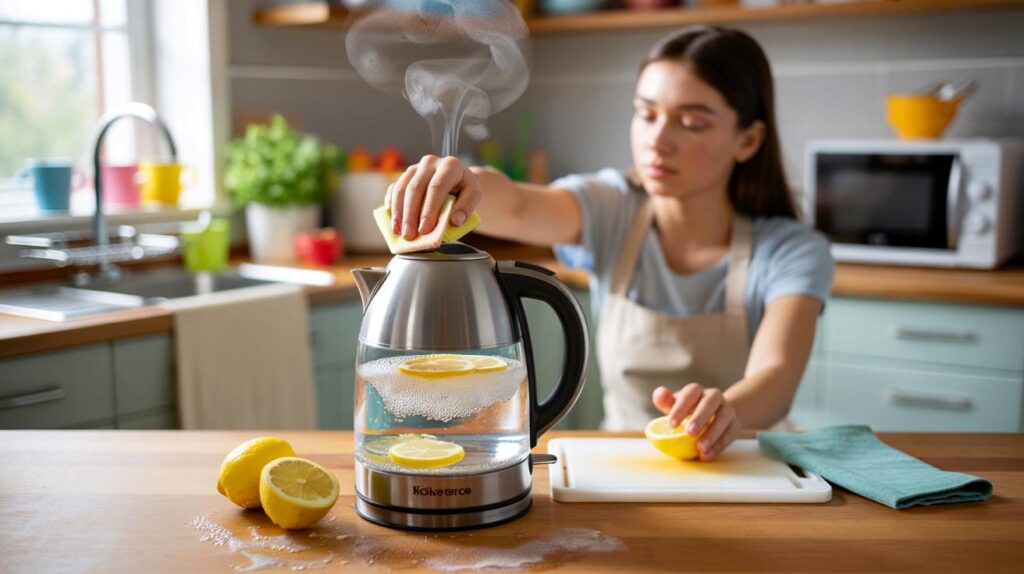
A chipped kettle with a chalky ring, a fridge that smells of last night’s curry, flatmates arguing about whose turn it is to clean. This is the everyday battlefield of a shared kitchen. One student’s trick—using lemon juice to descale a kettle and reset the vibe—has quietly become the small, doable fix that spreads faster than a meme.
The morning I saw it happen, campus halls were still half-asleep. Someone had left the kettle open, its insides rutted with pale crust like a coastline at low tide. Maya, a third-year with a tote bag full of fruit and a timetable full of labs, cut a lemon in two and squeezed it straight in. Steam rose; the whole room briefly smelled like fresh washing on a summer line. It was ordinary and a little magic at once.
She chatted as it bubbled, saying this was the only cleaning job she never postponed. The white ring softened, peeled away with a gentle swipe, and the kettle looked like it had shed a bad habit. One slice of citrus was doing what angry scrubbing couldn’t.
One lemon, two minutes, no fuss.
The student hack that actually works
Lemons travel well in student life. They’re cheap, bright, and they survive the back of the fridge better than herbs or good intentions. A squeeze of **lemon juice** in a scaled kettle is the kind of fix that feels like cheating—fast, fragrant, and oddly satisfying.
In a house share in Manchester, the kettle is the busiest appliance. Over 60% of homes across England sit in hard-water areas, so **limescale** builds up fast and turns morning tea into a chalky ritual. People notice when the boil takes longer, or when cups carry that cloudy film. The lemon trick started as a hush-hush tip on a hallway chat and ended up stuck to the fridge with tape.
There’s chemistry underneath the charm. Lemon contains citric acid, which reacts with the calcium carbonate in scale and loosens it into soluble bits you can pour away. Heat speeds the reaction; time finishes the job. The bonus is the lemon oil in the peel that lifts odours and leaves a kitchen smelling fresher than a splash of vinegar ever could.
How to descale your kettle with lemon juice (student edition)
Unplug the kettle and fill it halfway with fresh water. Cut one lemon and squeeze the juice in, then drop the squeezed halves into the water as well. Bring it to a boil, switch it off, and let it sit for 20–30 minutes while you prep breakfast or scroll your feed. Swirl, pour out, and gently wipe inside with a soft sponge. Rinse, reboil with clean water once, and pour that away. Done.
We’ve all had that moment when the kettle smells odd, the bin is sulking, and you want one quick win. Let’s be honest: nobody does this every day. If the scale is stubborn, repeat the routine with a second lemon or let it sit a bit longer before you pour it out. Avoid scouring pads on the heating plate, and don’t submerge the base. Stainless steel loves citrus; plated interiors or fancy finishes do not—check your model if you’re unsure.
One small caution: citrus cuts grease and odours, but it doesn’t replace proper disinfection where needed.
“I used to hide the kettle when my mum visited,” Maya laughed. “Now I do a lemon boil before she arrives, and the whole kitchen feels calmer. It’s weird how a clean kettle buys peace.”
- Microwave reset: bowl of water + lemon slices, run 2–3 minutes, wipe the softened splatters.
- Chopping board: sprinkle salt, rub with lemon cut-side down, rinse and dry upright.
- Sink strainer: soak in hot water with lemon peel, scrub, and it stops smelling like the weekend.
- Fridge fix: a small cup of bicarb and a lemon wedge tucks away lingering odours.
- Bin lids: quick wipe with diluted lemon water between deeper cleans keeps flies away.
The bigger picture: small rituals, cleaner kitchens
Student kitchens are a negotiation between time, budgets, and everyone’s threshold for mess. A lemon routine doesn’t solve everything, but it’s a gentle lever: the room smells kinder, things look cared for, and making tea becomes a nicer invitation to pause together. That tiny cycle of boil, rest, rinse gives you a minute to breathe too, a small act of control in a day ruled by deadlines.
Lemon is not a silver bullet; it’s a rhythm. You do it when the kettle looks tired, you give the microwave a lemon sauna when it’s moody, you flick a peel down the plughole and the drain smells less like last night. The science is humble, the cost low, the payoff high. There’s a kind of *quiet satisfaction* in seeing the chalk melt away and the steel shine without chemicals you can’t pronounce.
In a shared space, the ritual becomes shared language. Someone boils, someone rinses, someone wipes. A clean kettle is a soft signal that people are trying. That’s how **shared kitchen peace** happens—one slice at a time.
Why a lemon beats scale and stress
This isn’t a hack for the sake of a hack. It’s a tiny, repeatable ritual that makes hot drinks taste better and kitchens feel less frazzled. The bright scent lingers, and your kettle heats faster when it isn’t wearing a chalk coat. If limescale returns next week, fine—you’ll spend two minutes fixing it instead of pretending it isn’t there.
| Key points | Details | Interest for reader |
|---|---|---|
| Lemon breaks down limescale | Citric acid reacts with calcium carbonate and loosens deposits | Cleaner kettle, better-tasting tea, quicker boil |
| Simple, low-cost routine | Half kettle of water + one lemon, boil, rest, rinse, reboil | Works in minutes with ingredients already in the kitchen |
| Side benefits for hygiene | Deodorises microwave, sink, and boards; encourages tidy habits | Fresher shared spaces without harsh smells |
FAQ :
- Will lemon juice damage my stainless-steel kettle?Stainless steel is fine with short lemon soaks. Avoid long soaks on plated interiors or decorative finishes.
- How often should I descale in a hard-water area?Every 1–2 weeks if you use the kettle daily. Monthly can work in softer-water areas.
- Can I use bottled lemon juice instead of fresh?Yes. Fresh smells nicer, but bottled works thanks to the citric acid content.
- What about kettles with a hidden heating element?The method is the same. Just avoid abrasive tools; the hot lemon water will reach the element.
- Will lemon make my next tea taste weird?Reboil once with clean water and pour it away. The citrus note disappears.



I tried this right after reading and wow—the chalky ring melted off like snow. The lemon smell beat the vinegary funk my roommate swears by, and the tea actually tasted cleaner. Pro tip: I sliced an extra wheel and rubbed the spout; gunk came right off. Only caution: rinse and reboil or you get a faint lemonade vibe. Otherwise, this is genuinly the easiest dorm clean win I’ve seen all term.