
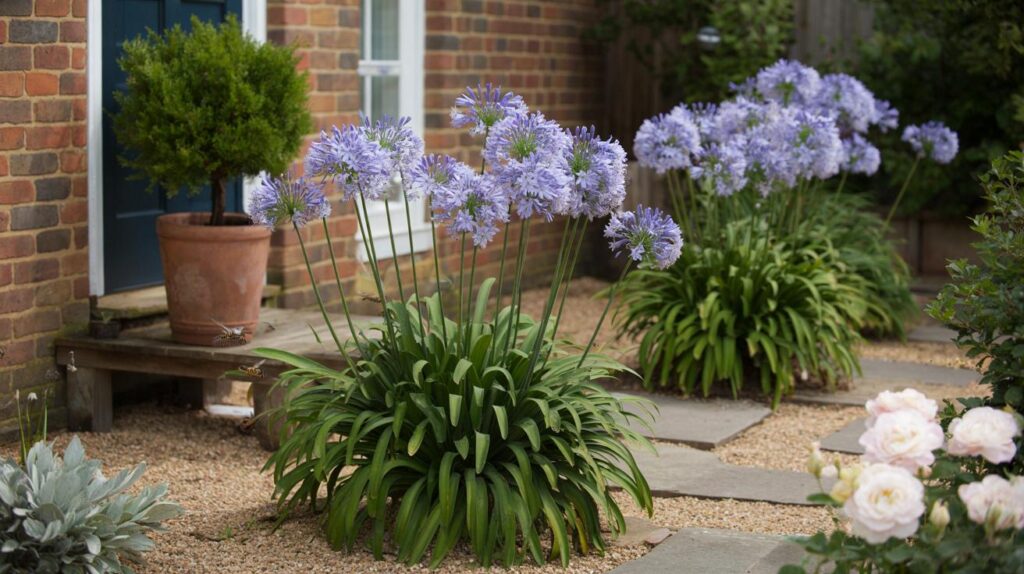
Blue globes on tall wands turn heads each summer, yet many gardeners still miss simple steps that unlock repeat colour.
As temperatures soften and planting windows reopen, Britain’s gardeners are eyeing agapanthus for drama that lasts from July into September. Follow five clear rules, avoid two common mistakes, and those architectural blooms will earn their keep for years.
Five golden rules for planting agapanthus
Rule 1: match the plant to your climate
Agapanthus split broadly into deciduous and evergreen groups. Deciduous forms shed leaves in autumn and shrug off serious chill. Evergreen types keep foliage and demand a milder winter, especially in the north and inland frost pockets.
| Type | Typical hardiness | Winter care | Best use |
|---|---|---|---|
| Deciduous (e.g., Headbourne hybrids) | Down to about −20°C when well drained | Mulch in severe cold; avoid waterlogging | Beds and borders in most UK regions |
| Evergreen (e.g., A. umbellatus, compact ‘Peter Pan’) | Needs mild winters; frost-tender in prolonged cold | Container culture, shelter or unheated greenhouse in freezes | Pots, courtyards, coastal gardens |
Pick hardy Headbourne-type hybrids for inland frost: they tolerate deep cold yet still flower generously in summer.
Rule 2: choose sun and drainage over everything
Agapanthus earn their best display with six to eight hours of direct sun. Shade cuts stem length and bud count. Free-draining soil matters just as much. Heavy clay combined with winter wet is the fastest route to losses.
- Site in open, south or west-facing positions, away from overhanging shrubs.
- Improve drainage with coarse grit and organic matter, or plant on a slight mound.
- Use containers with wide drainage holes and pot feet to lift bases off cold paving.
Cold plus wet beats cold alone: many plants die from winter saturation, not from temperature.
Rule 3: plant at the right moment and depth
Plant in spring once soils warm, or in early autumn in milder districts so roots establish before frosts. Depth depends on type and setting.
- In borders: set crowns about 2–5 cm below the surface to buffer against cold snaps.
- In pots: keep the neck at or just below the surface, especially for evergreens, to prevent rot.
- Spacing: 30–45 cm between plants; closer spacing produces a quick visual block, wider spacing gives larger clumps.
Water to settle soil, then keep evenly moist through the first growing season without saturating. In subsequent years, a thorough weekly drink in dry spells is plenty for in-ground plants; container specimens may need two lighter waterings in heatwaves.
Rule 4: feed, tidy and protect with a light touch
Agapanthus favour measured care over fuss. Overfeeding leafy growth delays flowering; starving plants sulk.
- From April to July, apply a high-potash fertiliser monthly; stop feeding in August to help ripen growth.
- Deadhead when florets brown, cutting stems to the base so energy shifts back to the crown.
- In late autumn, tidy deciduous foliage after it collapses; leave evergreen leaves intact.
- Before hard frost, move potted evergreens to a sheltered wall, porch or unheated greenhouse. In very cold snaps, fleece the foliage and keep compost barely moist.
Numbers that work: 6–8 hours of sun, one deep watering a week in summer, one feed a month from April to July.
Rule 5: give them room to shine and plan your pairings
Mature clumps produce dozens of heads from mid-summer, so build your planting to frame that moment. The vertical lines suit contemporary patios and classic borders alike.
- Height guide: 60–120 cm for most garden forms; dwarf selections suit small terraces.
- Good neighbours: perovskia, purple phlox, pastel roses and silver foliage that bounce light into the blue or white umbels.
- Design trick: repeat three to five plants along a path for a rhythm of colour, or stage a single container on steps for a statement.
Two costly mistakes you can dodge
- Winter wetting: soaking pots or beds in cold weather rots crowns. Keep compost on the dry side from November to February.
- Deep shade: planting under dense canopy slashes flower numbers. Relocate to a sunnier position rather than piling on fertiliser.
Container playbook for small spaces
Containers make evergreen agapanthus viable far beyond coastal belts. Use a loam‑based compost (such as a John Innes No. 3 style) with about 25–30% sharp grit for structure. Start with a 20–25 cm pot, potting on only when roots circle the base and rise to the surface. A slightly snug root run encourages flowering; starved, bone‑dry compost does not.
Sit pots in full sun, feed as above and turn them a quarter turn each fortnight for straight stems. In winter, place on pot feet and slide against a south‑facing wall to pinch a few extra degrees of warmth. Move under cover for cold snaps.
Keeping momentum year after year
Division and renewal
Divide congested clumps every four to five years, either in spring as growth restarts or immediately after flowering. Split into chunky pieces with at least two healthy shoots and replant promptly. Frequent splitting reduces display, so resist the urge unless flowering tails off or the centre hollows.
Seed versus named forms
Seed from garden plants rarely comes true to colour or size. For repeatable results, buy named cultivars or divide reliable clumps. Compact forms such as ‘Peter Pan’ earn their keep on balconies where full-sized hybrids overwhelm.
Timing, temperature and expectations
Do not expect fireworks in year one. Plants channel effort into roots before they push tall scapes. By the second or third summer, well-sited clumps ramp up, with more stems and bigger heads. Deciduous hybrids bred for UK gardens can handle temperatures down to around −20°C if kept well drained. Evergreen forms need frost in short bursts only, plus shelter from icy winds.
Patience pays: establishment first, spectacle later. Once settled, clumps bulk up and flower more with each passing summer.
Practical extras that help
- Mulch with fine gravel around crowns to shed winter rain and deter slugs from tender spring shoots.
- Cut a few stems for the vase as they open; the plant will not miss them and the flowers last well indoors.
- Handle with care: sap can irritate skin. Wear gloves when dividing or deadheading and wash hands afterwards.
- Pollinator value: the open umbels attract bees and hoverflies during mid‑summer gaps.
If you’re weighing cost and reward
A sturdy 2‑litre plant typically produces three to six stems in its second summer, rising to 15 or more as the clump matures. That repeat performance spreads the initial outlay over a decade of colour. In smaller plots, one well-grown pot beside a bench can deliver the same visual punch as an entire bed of lower plants.
When conditions are far from perfect
Heavy clay and a north-facing aspect need not rule out agapanthus. Build a raised strip with rubble and grit beneath 25–30 cm of improved topsoil to lift crowns above winter wet. Alternatively, go fully mobile: plant in containers and shift them to the brightest, warmest spot as the seasons turn.



Brilliant guide—wish I’d read this before losing two pots to winter wet. The “cold + wet beats cold” line explains alot. Switching to loam‑based compost with 25–30% grit and adding pot feet definately helped; I also stopped feeding after July and got taller, straighter stems. Quick q: for evergreen ‘Peter Pan’ in a 25 cm pot, is the neck level or 1 cm below best to avoid rot?