
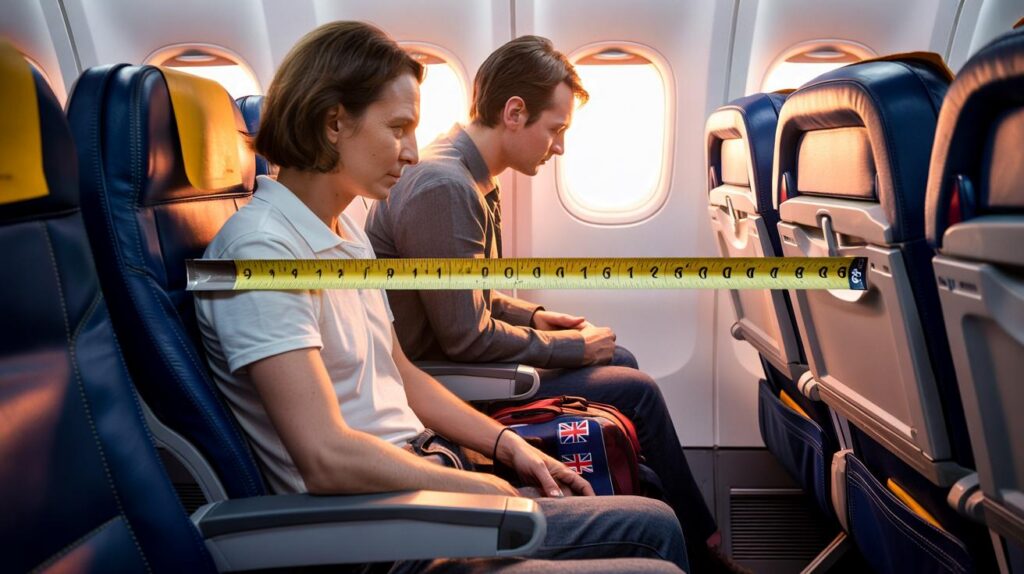
Be honest: when your shoulders brush a stranger before take-off, even a sun-soaked week ahead feels smaller than it should.
That cramped feeling has a measurable cause. On Europe’s busiest short‑haul routes, a single inch of seat width separates a tolerable trip from a tense one—and the latest consumer data points the finger somewhere unexpected.
The verdict: who has the narrowest seats
A fresh look at economy seating from consumer group Which? highlights a clear split on short‑haul aircraft: 17 inches at the tight end, 18 inches at the roomier end. The surprise for many UK travellers is where the smallest figure shows up.
The narrowest standard economy seat width flagged by Which? is 17 inches, appearing on Aer Lingus, Loganair, Jet2 and Norwegian.
Those carriers share the bottom line in seat width, while several rivals—often assumed to be the pinch points—actually offer more elbow space.
Wizz Air, TAP Air Portugal, easyJet and Lufthansa are cited with 18‑inch economy seats on short‑haul services.
In other words, if you expected easyJet or Ryanair to own the tightest seats, the data tells a different story. The analysis credited the 18‑inch group with a clear edge for shoulders and hips, even if legroom still varies by aircraft and row.
Why a single inch matters on short‑haul
An inch sounds trivial. In a narrow cabin, it isn’t. Seventeen inches equals roughly 43.2 cm; 18 inches is about 45.7 cm. That extra 2.5 cm reduces the fight for the armrest, softens pressure on hips and makes it easier to reach a seat‑back pocket without elbowing a neighbour. Over two to three hours, that relief adds up.
The Airbus versus Boeing factor
Cabin width plays a role. Many Airbus A320‑family jets support 18‑inch seats in a six‑abreast layout. Boeing 737 cabins usually come up slightly narrower, so some configurations land closer to 17 inches. Airlines mix fleets, so the same brand can feel different depending on the aircraft, row and even the seat manufacturer.
The numbers at a glance
Here’s a simple snapshot of the seat width picture referenced by the Which? review for short‑haul economy. Figures reflect typical configurations and can vary by aircraft and layout.
| Airline | Typical short‑haul seat width (inches) |
|---|---|
| Wizz Air | 18 |
| TAP Air Portugal | 18 |
| easyJet | 18 |
| Lufthansa | 18 |
| Aer Lingus | 17 |
| Loganair | 17 |
| Jet2 | 17 |
| Norwegian | 17 |
Ryanair did not feature among the narrowest names in the Which? snapshot, despite a longstanding reputation for tight cabins.
How to find a wider seat without paying extra
You can tilt the odds of a comfier flight in your favour without upgrading. Small choices during booking and boarding can nudge you closer to that precious inch.
- Check the aircraft type at booking. Airbus A320‑family flights often deliver 18‑inch seats; that may trump a slightly shorter flight on a narrower cabin.
- Target bulkhead rows if available. With no seats in front, knee space improves, though armrest‑stored tray tables can shave a bit off seat width.
- Scan the rear cabin. Tapering fuselages sometimes lead to rows with fewer seats across, creating marginally wider cushions or more shoulder clearance.
- Ask to move after take‑off. If the seat map shows empties, a polite request can turn three tight strangers into a sprawling two‑seat throne.
- Mindset matters. Aisle seats give one shoulder a break; window seats offer a wall to lean on but narrower escape routes.
Legroom, pitch and the comfort jigsaw
Width isn’t the only metric. Seat pitch—the distance from your seatback to the seatback ahead—dictates knees and laptop space. Many European short‑haul cabins sit around the high‑20s to low‑30s inches for pitch, but exact numbers vary widely by carrier and row. Exit rows and some bulkheads trade tray table quirks for extra knee room. Middle seats can feel most constrained; couples often book aisle and window together, hoping the middle stays empty on less busy runs.
Smart packing for small seats
Soft‑sided bags flex into tight spaces and free your footwell. A slim belt bag keeps documents handy without bulking pockets. Noise‑cancelling headphones reduce the stress of sitting close to strangers and the lavatory queue.
Who should speak up for extra space
If you’re very tall, pregnant, recovering from surgery, or managing a mobility aid, flag your needs early. Gate staff and cabin crew can sometimes reseat you into bulkhead or exit rows once boarding is complete and safety requirements are met.
If you have a genuine need and ask courteously, crew often find a better‑fitting seat once the cabin settles.
What this means for your next booking
Don’t rely on brand reputation alone. Comfort starts with aircraft type and layout, not just the logo on the tail. A minute spent checking the plane model can secure that 18‑inch cushion and ease a packed Friday evening hop.
Consider timings as well. Early‑midweek flights outside holiday peaks tend to leave more empty seats, making an on‑the‑day shuffle more likely. Late Sunday and peak Friday services fill fast, compressing your options.
A quick size sense check you can try at home
Measure your shoulder breadth with a tape measure. If you come in at 45 cm or more, an 18‑inch seat (about 45.7 cm) offers noticeably less contact with a neighbour than 17 inches (43.2 cm). That simple check helps you decide whether hunting down an Airbus flight or a bulkhead row is worth the effort.
Bottom line for budget travellers
The smallest short‑haul economy seats flagged by Which? sit at 17 inches and appear on Aer Lingus, Loganair, Jet2 and Norwegian. The wider 18‑inch group includes Wizz Air, TAP Air Portugal, easyJet and Lufthansa. That doesn’t guarantee comfort, but it does give you a clear, practical lever to pull before price anchors your choice.



Interesting, but are we comparing like‑for‑like configs? Seat width can be measured cushion width vs between‑armrests, and slimline designs skew the feel. What did Which?’s methodolgy use, and did they control for 737 vs A320 layouts?