
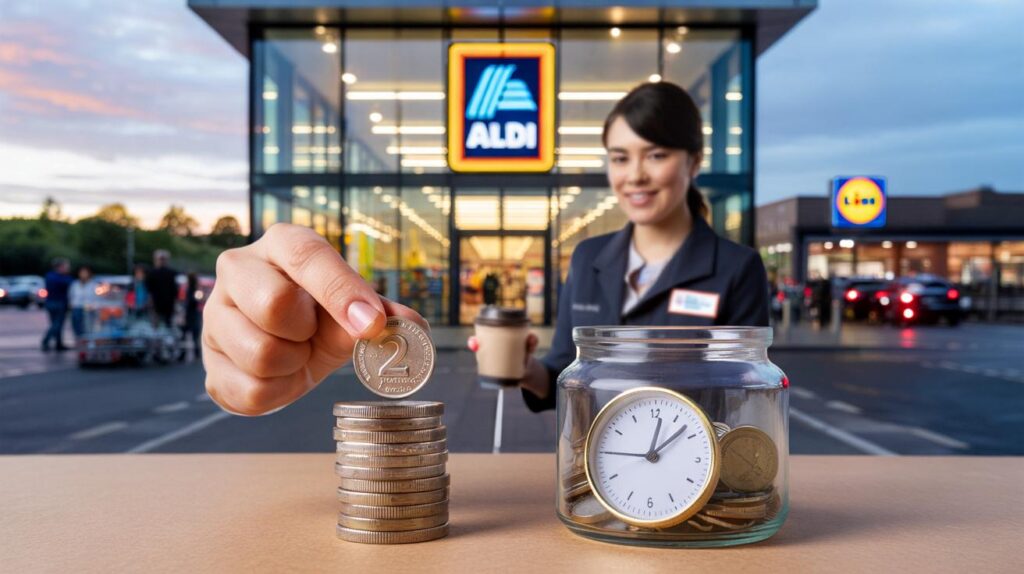
Payday is changing at one budget giant, and tens of thousands of shop workers could see extra pounds add up quickly.
From Monday 1 September, Aldi will lift hourly pay to stay ahead of rival supermarkets by a sliver that still grabs attention: 2p. The move follows Lidl’s headline £13 base rate and gives Aldi staff a fractional, but deliberate, edge on the shop floor.
What the 2p rule actually means
The “2p rule” is not a formal policy in a handbook. It is the practical effect of Aldi’s decision to set its new entry rate at £13.02 an hour across the UK, a whisker above the £13 now advertised by Lidl. The discounter says it refuses to be beaten on pay, and the two-penny nudge delivers that claim in black and white.
Key change: from Monday, Aldi’s base store assistant rate rises to £13.02 an hour outside London, with paid breaks on top.
Aldi’s rates also increase with length of service, and London pay continues to sit higher due to the capital’s higher costs. In total, the change affects more than 28,000 hourly paid store colleagues nationwide. It marks the second uplift this year and maintains Aldi’s position at the top of the big-grocer pay tables.
Who gets the rise and when
- Start date: Monday 1 September (from the first shift on or after that date).
- Who’s covered: hourly paid store colleagues, including store assistants.
- Base rate outside London: £13.02 an hour, rising with service to £13.95.
- London rate: £14.35 an hour, rising with service to £14.66.
- Breaks: Aldi remains the only UK supermarket paying all colleagues for their breaks, worth around £1,425 a year to an average store worker.
- Scope: the uplift follows July’s announcement and nudges the planned £13.00 rate up by 2p to keep the lead over Lidl.
The new rates at a glance
| Location | Entry hourly rate | Rate with service |
|---|---|---|
| Outside London | £13.02 | £13.95 |
| London | £14.35 | £14.66 |
These figures apply to store roles and sit alongside Aldi’s paid-breaks policy. Contract specifics and premiums for particular shifts or responsibilities can vary by store and role.
How this stacks up against rivals
The trigger for the latest nudge was Lidl’s move to £13 for its store staff across much of the UK. Other mainstream grocers, such as Asda and Morrisons, have set strong rates in recent years as supermarkets compete hard for labour. Aldi’s tweak to £13.02 reasserts its strategy of staying fractionally ahead, while London rates keep a healthy margin over the rest of the country.
On paper, 2p can look trivial. In a tight labour market, where experienced shop workers can pick and choose shifts and employers, that small headline difference matters symbolically. It signals who sets the pace, and it keeps Aldi’s message consistent: if you want the top line on hourly pay in a supermarket, look here first.
Why the extra pennies still matter to your pay
The 2p uplift alone will not transform a payslip. But add paid breaks and the service-linked increases, and the total package becomes more distinctive. Aldi remains the only major supermarket paying colleagues for breaks, and the retailer values that at about £1,425 a year for an average store worker. That dwarfs the 2p tweak and helps explain why rivals keep circling but rarely outflank Aldi on the overall offer.
Example: work 30 hours a week and the 2p bump adds around 60p a week, or roughly £31 a year. The paid-breaks policy is where the bigger money lies.
For context, the National Living Wage for adults rose to £11.44 in 2024. Aldi’s nationwide base sits well above that threshold, with the London rate climbing further. Many employers also watch the voluntary Real Living Wage benchmark, which typically updates in the autumn. Aldi’s package aims to stay north of these benchmarks while keeping pressure on rivals.
What to check on your payslip next month
When the new rate kicks in, a few quick checks can help you confirm it lands correctly:
- Hourly rate line: this should show £13.02 if you are outside London on the entry rate, or £14.35 in London.
- Service uplift: if your contract includes length-of-service increases, confirm the £13.95 or £14.66 rate applies if you qualify.
- Paid breaks: you should see break time counted as paid hours, not deducted.
- Overtime and premiums: ensure evening, weekend or bank holiday enhancements are calculated off the new base.
- Effective date: hours worked from 1 September should reflect the updated rate.
What sits behind Aldi’s move
Two forces are at work. First, the battle with Lidl for bragging rights on base hourly pay. Lidl’s £13 played well in recruitment ads. Aldi’s £13.02 reclaims the line without blowing the budget. Second, retention. Store teams have weathered rising footfall and persistent inflation pressures in household budgets. A crisp, simple pay message helps keep experienced people in place and trims the cost of churn.
Aldi has also delivered two store pay rises this calendar year, signalling weekly reality rather than once-a-year gestures. That cadence gives managers a story to tell in interviews and keeps the brand associated with pay leadership, not just low prices at the till.
How much could you be better off
Here are simple illustrations for someone on the new entry rate outside London, before tax and without premiums:
- 20 hours a week: the 2p lift adds about 40p weekly, ~£20.80 a year; paid breaks can add far more across a year.
- 30 hours a week: the 2p lift adds about 60p weekly, ~£31.20 a year.
- 40 hours a week: the 2p lift adds about 80p weekly, ~£41.60 a year.
The headline matters less than the package. The paid-breaks value near £1,425 a year is the big differentiator. Add length-of-service progression and the gap with some rivals can widen further over time.
What happens next
If you work for Aldi, the change should flow automatically from Monday. If you are considering applying, these rates apply to store roles and may vary for distribution or head office posts. If you work for another supermarket, expect more pay updates as employers respond to a tight jobs market and customer demand.
For budgeting, try a quick simulation. Take your contracted hours for a typical week, multiply by the new hourly rate, then add the time you usually spend on breaks. Because Aldi pays those breaks, they count towards your paid hours. Over a month, that can lift take-home pay by more than the 2p headline suggests.
One final point: if you are near the threshold for in-work benefits or student loan repayments, a small hourly rise can alter deductions slightly. A glance at your next payslip, or a quick run through an online benefits calculator, can flag any changes early. That way, the 2p edge and the paid-breaks boost translate cleanly into your pocket.



2p? I promise not to spend it all at once. On 30 hours that’s ~60p a week—barely a coffe.
Nice one Aldi! Paid breaks worth ~£1,425 is the real headline—beats a token 2p any day 🙂