
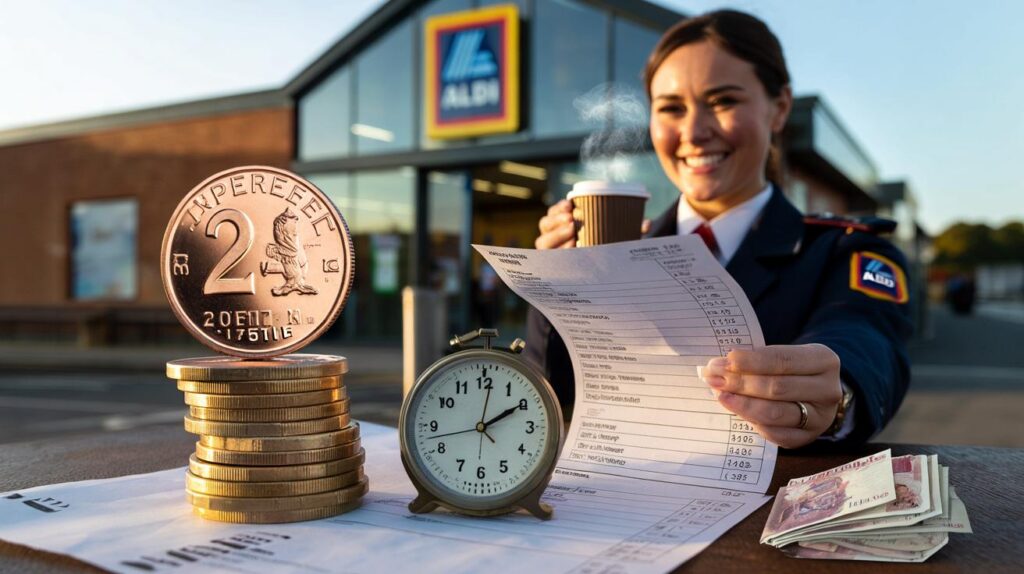
From Monday, a quiet tweak at Aldi will ripple through pay packets and boardrooms, touching thousands of shop floors across Britain.
Aldi will introduce what insiders are calling a 2p rule, lifting its entry store pay to £13.02 an hour and setting a small but pointed lead over rivals. Around 28,000 hourly paid store colleagues across the UK are affected, with London rates rising too. The move keeps the discounter’s long‑standing paid breaks policy and arrives after a summer of rapid wage moves in supermarket aisles.
What the 2p rule actually means
The German-owned grocer is nudging its minimum store assistant rate to £13.02 outside London from Monday. The number matters because it overtakes a headline £13.00 now advertised elsewhere. Put simply, Aldi wants to be a penny or two ahead — and has chosen two.
The 2p rule sets Aldi’s floor at £13.02 per hour outside London, maintaining a visible lead over £13.00 rivals.
The policy is a signal as much as a pay rise. It says to workers that Aldi intends to sit at the top of mainstream supermarket rates. It also says to competitors that when they move, Aldi will move a touch further. The increase follows an earlier announcement for September and turns that plan into a slightly bigger uplift.
Who gets how much and where
Rates vary by location and length of service. Here’s what changes from Monday.
| Area | Entry rate per hour | Length-of-service rate | Start |
|---|---|---|---|
| UK (excluding London) | £13.02 | £13.95 | Monday |
| London | £14.35 | £14.66 | Monday |
The uplift lands alongside a benefit Aldi says no other national supermarket offers: fully paid breaks. For an average store colleague, those breaks are worth about £1,425 a year before tax, depending on hours worked.
Paid breaks: the under-the-radar extra
Breaks are often unpaid in retail. Aldi keeps them on the clock. That puts real money into annual earnings while keeping hourly rates sharp at the headline level.
Paid breaks add an estimated £1,425 a year to the average colleague’s earnings — a benefit many competitors do not match.
Key points at a glance
- Minimum store assistant pay outside London moves to £13.02 per hour from Monday.
- London entry pay increases to £14.35, with a length-of-service rate at £14.66.
- More than 28,000 hourly colleagues benefit across the UK.
- Aldi maintains paid breaks, valued at roughly £1,425 a year for an average store worker.
- This is the second store pay rise at Aldi this year.
How much difference does 2p make?
Two pence an hour sounds tiny. Over time and across a large workforce, it builds into a material cost for the employer and still adds a modest amount to a worker’s annual pay compared with a £13.00 benchmark.
| Hours per week | Extra per week | Extra per year |
|---|---|---|
| 20 | £0.40 | £20.80 |
| 30 | £0.60 | £31.20 |
| 35 | £0.70 | £36.40 |
| 40 | £0.80 | £41.60 |
For a typical 35‑hour contract, the 2p edge equates to about £36 a year on top of what a £13.00 rate would pay. Add paid breaks and the annual gain versus unpaid-break employers becomes much larger. That is where Aldi’s package stands out.
Your monthly gross at the new rates
These back‑of‑envelope figures help visualise the new pay levels on a 35‑hour week before deductions.
- Outside London at £13.02: about £455.70 a week, roughly £1,976 a month.
- Outside London length-of-service rate £13.95: about £488.25 a week, roughly £2,118 a month.
- London entry £14.35: about £501.25 a week, roughly £2,172 a month.
- London length-of-service £14.66: about £513.10 a week, roughly £2,227 a month.
Actual take‑home depends on tax, National Insurance, workplace pension contributions, and personal circumstances.
Why Aldi is pushing ahead
Grocery retail is in a hiring tug‑of‑war. Store operations need stable teams, and pay is a decisive lever when unemployment is low. Aldi’s 2p rule is a clear, simple promise that makes recruitment ads read stronger than a rival’s. It also reassures existing staff that the company intends to stay out in front on pay.
The move follows a flurry of increases across the sector, with several big chains now publishing entry rates around the low‑£13 mark outside London. Aldi’s slight premium, plus paid breaks, are designed to keep the overall offer compelling. The company has also talked up efficiency, suggesting that productivity gains and scale pay for these uplifts while it remains price-competitive for shoppers.
How rivals may react
Competitors watch each other closely. A 2p gap is affordable for a lean discounter and awkward for others to ignore. Expect fresh announcements as supermarkets seek to match market headlines or stress other benefits, such as enhanced bank holiday premiums, team bonuses, or improved rotas.
Will shoppers see a change at the till?
Higher wages can pressure costs, yet front‑line pay also tackles staff turnover, training churn, and service quality. A stable team can cut waste and keep shelves filled, offsetting part of the wage bill. Aldi’s pitch remains that disciplined operating costs fund both low prices and decent wages. If competitors join the 2p chase, the pressure to hold shelf prices steady may intensify, but discounters typically bank on volume and efficiency to protect value.
What to do if you work at Aldi
- Check your rota and payslip from Monday to confirm the new hourly rate and any length‑of‑service step.
- Review your paid break allocation and ensure it appears within paid hours on your payslip.
- If you work variable hours, keep a personal log for the next month to compare scheduled and paid time.
- If you’re close to a length‑of‑service threshold, ask your manager when the rate change applies.
Thinking of applying?
For jobseekers weighing offers near the £13 mark, account for the total package. Paid breaks make a sizeable difference compared with employers who clock you out. On a 35‑hour pattern, the paid-break value can outstrip small hourly gaps elsewhere. Consider travel time, shift patterns, and weekend premiums where available.
The wider context
The uplift keeps Aldi’s base store pay comfortably ahead of the current National Living Wage for over‑21s. It also reflects fast‑moving labour markets where supermarkets, logistics, and hospitality compete for the same people. If the 2p rule triggers a fresh round of rate matches, the biggest impact will land on employers without headroom for benefits such as paid breaks, potentially reshaping recruitment across local high streets.
From Monday, Aldi’s package blends a £13.02 floor with paid breaks and higher London rates — a mix designed to win hearts and shifts.
For households, the headline is small, but the signal is loud. A tight labour market and a disciplined discounter have produced a new marker: match the rate, and Aldi will set it two pence higher. Over a year, that difference is modest for an individual, yet meaningful across 28,000 colleagues, and powerful as a message to the entire sector.



2p an hour more? On a 35‑hour week that’s ~£36 a year — feels like markting spin unless the paid breaks are enforced.
The paid breaks worth about £1,425 a year are huge. That, plus £13.02, genuinely sets a benchmark. Thanks for breaking it down!