
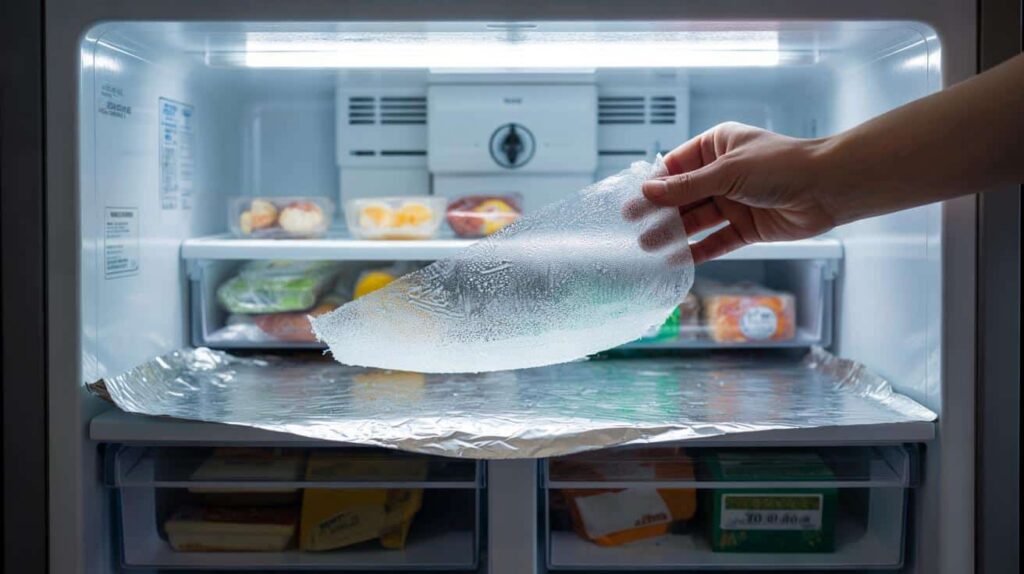
The tip sounds odd at first: aluminum foil inside the freezer. A growing crowd swears by it for faster defrosts, tidier drawers, and fewer headaches when frost creeps in.
Why people are putting foil in the freezer
Freezers love to grow frost. Moist air meets very cold surfaces, water vapor freezes, and a white crust forms. That crust insulates the cold parts and makes drawers stick. Aluminum foil gives that frost a new favorite place to land: a thin, shiny layer you can remove in seconds.
Aluminum conducts heat well. During a manual defrost, thin foil warms quickly and releases frost faster than plastic bins or painted walls. In normal use, it behaves like a sacrificial surface. Frost clings to the foil first, which helps you peel off entire sheets rather than scrape corners for an hour.
Foil does not stop frost from forming. It moves frost to a removable layer that speeds cleaning and keeps shelves and drawers clear.
There is a second effect. Foil is smooth and non‑porous, so ice sticks less aggressively than on textured plastic. Fewer scratches. Less prying. Fewer broken drawer rails.
How to set it up, step by step
- Power down and unload if you plan a full clean. For a quick liner refresh, keep the door open as little as possible.
- Cut heavy‑duty foil into flat panels sized for shelves, the floor of the compartment, and the top of drawers.
- Leave vents, sensors, and drain channels fully exposed. Keep at least a finger’s width away from any visible coils.
- Lay foil flat. Do not tape over plastics or gaskets. Replace food with small air gaps between packages.
- When frost builds, lift the foil sheet with the ice attached. Swap in a fresh sheet. Clean the removed sheet and reuse if intact.
Keep foil off sensors and vents. Airflow matters more for temperature stability than any liner trick.
Does it really save energy?
Frost is a thermal blanket. Even a thin layer makes the compressor work longer. Industry guidance often flags 2–3 mm of frost as the threshold where consumption begins to rise noticeably.
That rise varies with model and climate. Many households see 5–15% higher use when frost accumulates. Take a 350 kWh‑per‑year freezer. Cutting a persistent frost layer could trim 20–50 kWh a year. At common electricity rates, that’s roughly $4–$12 saved annually. Small on paper, but paired with less scraping and fewer stuck drawers, the case strengthens.
Foil itself does not cool anything. It helps you keep surfaces clean, and it speeds the manual part of defrost. The energy win comes from staying ahead of frost, not from magic metal.
What science says about foil in cold spaces
Aluminum’s thermal conductivity is high compared with plastics. That makes it responsive during defrost, when you introduce warmer air. The foil warms and releases ice quickly. It also presents a smooth nucleation surface during everyday cycles. Ice forms, but it lets go more easily.
There is no active heat removal here. The freezer still relies on its evaporator and fans. Think of foil as a removable skin that turns a messy peel into a tidy sheet.
When to skip the trick
- No‑frost models: These already defrost automatically. Foil liners can rattle, block airflow, or confuse sensors.
- Exposed coils: Chest freezers with visible tubing should not be lined near the metal. Contact can cause noise or damage.
- Tight drawers: Extra thickness can rub rails and wear plastics.
- Adhesives: Tape on gaskets and vents degrades seals. Avoid glue.
- Acidic spills: Tomato sauces or salty brines can pit aluminum. Use trays for those items.
A quick method you can try this weekend
Plan a 30‑minute reset. Unplug. Move food to a cooler. Lay warm, damp towels on stubborn ice for five minutes. Wipe. Add foil panels only to flat, non‑vent areas. Power back on. Label a calendar reminder for a two‑minute check every month. Peel and swap any frosty panel on sight. That habit prevents thick buildup and keeps energy use stable.
| Problem | Fast action | What to avoid |
|---|---|---|
| Heavy frost | Warm towel + foil liners for next cycle | Metal tools that scrape coils |
| Sticky drawers | Foil on drawer tops, silicone on rails | Thick liners that block movement |
| Rising bills | Keep frost under 3 mm, seal checks | Overpacking that kills airflow |
| Bad odors | Open baking soda, wipe with vinegar | Perfumed cleaners near food |
Other smart uses for the same roll of foil
One roll can do more than line a shelf. Crumple a ball and use it as a gentle scrubber on grill grates and cast‑iron exteriors. It lifts carbon without harsh chemicals. Slip a sheet under your ironing board cover to reflect heat. Many people report faster crease removal on cotton and linen.
About the battery “hat” trick you may have seen: placing a tiny foil pad between a weak battery and a spring. That can restore contact in a pinch, but it risks heat buildup and leakage. Device makers do not recommend it. Safer to replace the cell.
Care, safety and sustainability
Pick heavy‑duty foil. It resists tearing and survives several cycles. Rinse used sheets, pat dry, and keep a flat stash ready for swaps. Recycle clean aluminum where local programs accept it. Ball small pieces together so they do not slip through sorting equipment.
Mind edges. Fold borders over once to dull them. Keep foil away from the light sensor, thermostat bulb, and fan openings. If a liner hums or flaps, trim it smaller. Silence is a good sign that airflow is clear.
Who benefits most from the hack
Homes that open the freezer often. Large families. Short‑cycle meal preppers. Humid climates where door openings pull in moist air. Those scenarios drive faster frost growth. A peel‑off layer saves time and protects drawer hardware.
For small apartments with auto‑defrost units, the payoff is minor. Consider simple routines instead: do not overfill, cool leftovers before freezing, and check seals with the paper‑strip test. If a paper strip slides freely with the door shut, replace the gasket.
Real gains come from habits: clear airflow, tight seals, fast swaps of a frosty liner, and regular two‑minute checks.
Extra tips that widen the impact
Combine the foil liner with a simple bin map. Group meats low, produce in sealed containers, bread toward the door. Cold air sinks. That arrangement reduces temperature swings for sensitive items and cuts door‑open time. Label shelves. Seconds saved equal less frost.
Want a quick energy check? Read your freezer’s kilowatt‑hour label. Multiply by your local rate. Then track run time after a full clean and again two months later with liner swaps. Even a small drop confirms the routine is working. The time saved scraping is a bonus you will feel the first busy weeknight you need ice‑free drawers.


