
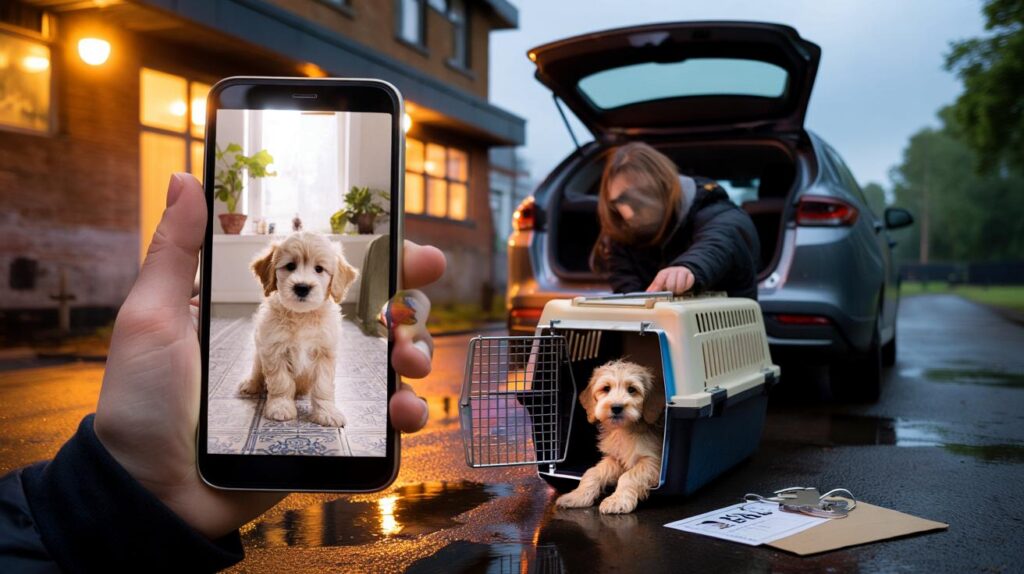
Across the UK, animal welfare groups are sounding the alarm: the illegal puppy trade has shifted into our feeds and private messages, growing slicker with every swipe. Ads look cuddly and clean. Sellers sound friendly. Behind the screen, pups are too young, unwell, or smuggled in the night.
I watched a young mum in a Hackney park cradle a lemon-coloured spaniel pup in a blanket, its eyes glassy, its belly too thin. She told me she’d found him on a Facebook group, then switched to WhatsApp, then paid a “refundable” deposit before seeing him because the seller said five other families were waiting. *Too perfect.* We’ve all had that moment where a picture seems to promise a whole new, brighter routine at home. Later, in the Sunday light, she scrolled back through the photos and noticed the kitchen tiles in the listing didn’t match the tiles where she collected the dog. Something didn’t add up.
The trade goes digital — and cruel
The illegal puppy trade hasn’t got bigger by accident; it’s been turbocharged by the same tools that sell us shoes and headphones. Classification sites, closed groups, even local marketplace posts create a quick rush of trust and a false sense of proximity. Sellers exploit urgency, geography filters, and cute photos to funnel buyers into private chats. It looks local and homely. It’s not. On the other side of that chat, a network can move animals fast, and make them look like they’ve always lived in a cosy kitchen.
Take Maya, a first-time buyer in Leeds, who sent £200 to reserve a “KC registered” cockapoo that would be “ready at eight weeks”. The seller wouldn’t do video calls because the camera was “broken”. When Maya arrived, the puppy was handed over in a car park with a carrier that stank of bleach. Two days later, the pup crashed with diarrhoea and a cough, and the number she’d saved for the breeder stopped ringing. Charities say stories like hers have multiplied since lockdown, then spiked again with the cost-of-living squeeze.
Why the surge now? Fashion plays a part: small, hypoallergenic-looking breeds still trend hard on Instagram, and scarcity bumps prices. There’s also the reality of stretched platform moderation and cross-border smuggling that outpaces checks. The law did move — “Lucy’s Law” ended third‑party puppy sales in England in 2020, with similar rules around the UK — but the black market adapted. Digital profiles can be wiped and remade in an hour. Glowing testimonials can be fabricated in minutes. The distance between a glossy ad and a sick kennel is just a tap.
Spot the scam before it bites
Start by slowing down the dance. Ask for a live video showing the puppy with its mother, in the same room you’ll visit, and watch them interact for at least 20 minutes. Run a reverse image search on the advert photos to see if they appear on other listings, in other cities. **Never pay a deposit before you’ve met the puppy and the seller in person.** Puppies must be microchipped by eight weeks across the UK; ask for the microchip number in advance and check it on an approved database. Insist that collection happens at the breeder’s home.
Scammers lean on two levers: urgency and sympathy. They’ll say a family emergency means they need the pup gone tonight, or that a buyer just pulled out so you’re “lucky”. They’ll nudge you toward bank transfer or a “gift” payment, because it’s harder to claw back. Let your excitement breathe. Let’s be honest: nobody does that every day. Keep screenshots of every message, and ask for documents before you set off — vaccination card, worming details, breeder licence number if they sell multiple litters.
Trust your senses when you arrive: does the puppy look clean, bright, and curious, or dull and withdrawn; do the rooms match the photos; is the mother truly attentive to the litter? **Always see the puppy interacting with its mother for at least 20 minutes in the home.** Pushy sellers will try to shorten the visit, or suggest a meet in a neutral spot. That’s your cue to step back.
“Decent breeders don’t need pressure tactics,” says a senior inspector with a UK animal charity. “If anything feels rushed, inconsistent, or off, you’re not ‘missing out’ — you’re avoiding a heartbreak and a vet bill.”
- Genuine sellers welcome questions and visits; they don’t hide behind broken cameras.
- Paperwork should match dates and names; photos should be recent and consistent.
- Payment with a traceable method offers protection; cash and “friends” transfers do not.
- Eight weeks is the legal minimum for rehoming a puppy in the UK — not six, not “almost seven”.
- Licenced commercial breeders display their council licence number in adverts.
What happens next is up to us
There’s a reason the algorithms keep serving us puppies: they’re irresistible. A dog is a heartbeat with paws, and when you’ve pictured that heartbeat in your hallway, your brain starts moving furniture. The market knows this. **Walk away if anything feels rushed, inconsistent, or off.** Talk about it with friends. Share the red flags you spotted, even if you nearly fell for them. You’ll feel daft for a minute and grateful for years. The more we tell each other how the con unfolds — the deposit, the broken camera, the car park handover — the less oxygen the trade gets. And when you do meet a breeder who does it right, tell that story too. Good practice deserves just as much airtime.
| Key points | Details | Interest for reader |
|---|---|---|
| Illegal puppy trade rising online | Slick ads, private chats, fast account turnover, and cross‑border smuggling evade checks | Protects your money and a dog’s welfare before emotion takes the wheel |
| Red flags and verification | Live video with mother, reverse image search, microchip number check, no deposits sight unseen | Gives a simple, repeatable method to separate real from risky |
| If it goes wrong | Collect evidence, contact your bank, report to Trading Standards, the platform, and animal charities | Helps you act quickly, limit losses, and prevent the next buyer being hit |
FAQ :
- How can I tell if an online puppy ad is fake?Look for copied photos via reverse image search, pressure to pay a deposit, refusal to show the mother live on video, and changing stories about location or age. Fake ads often use generic phrases and push to move the chat off-platform fast.
- What paperwork should a legitimate UK seller provide?A vaccination and worming record, the microchip number with transfer details, a sales contract or “puppy contract”, and a council licence number if they sell multiple litters. Kennel Club paperwork is a bonus, not a guarantee of welfare.
- What is Lucy’s Law and does it apply to me?Lucy’s Law bans third‑party sales of puppies and kittens in England, meaning you must buy directly from the breeder or adopt from a rescue. Similar rules apply across the UK. You should meet the puppy at the place it was bred.
- I’ve already paid a deposit to a suspect seller. What now?Stop further payments, collect all evidence, and contact your bank immediately to attempt a chargeback. Report the listing to the platform, Trading Standards, and an animal welfare charity. Don’t go alone to confront the seller.
- I’d rather adopt than buy — where should I start?Check reputable rescues like Dogs Trust, Battersea, the RSPCA, and breed‑specific rescues. Visit, ask questions, and be honest about your routine. There’s a dog whose pace and temperament fit your life.



Are we sure reverse image searches won’t throw too many false positives? Scammers can just snap new pics—what’s the next best check if images don’t match?
Thank you for the concrete steps—live video with mum and no deposits sight unseen. Saved me a vet bill, probably.