
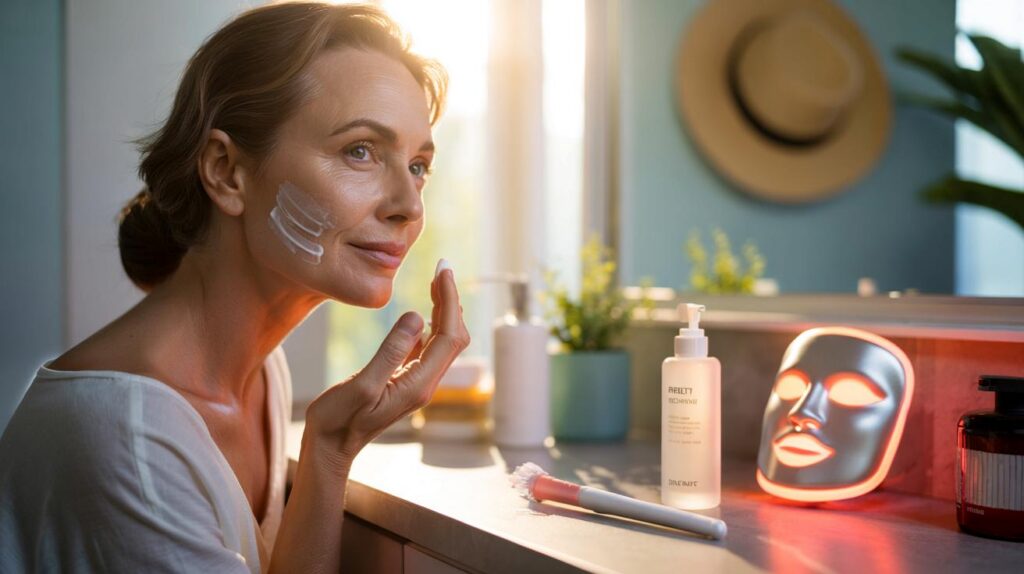
The moment your skin starts telling little truths you used to ignore, you look for fixes that don’t involve a needle, a week off work, or a new personality. We’ve all had that moment when the lift in the cheeks softens, the neck gets chatty, and foundation sits where it never did before. The real question: which non‑invasive tweaks actually work for women over 40?
The woman on the 8:12 to Victoria had the kind of glow that looks like a secret. Not shiny, not filtered, just rested skin with a hint of bounce that catches morning light through the train window. She scrolled past ads for miracle serums and booked‑out clinics, then tucked her phone away and dabbed something invisible along her jaw as if it were routine, not ritual.
At the next stop, a friend slid into the seat and they swapped notes in the soft way women do: a home LED mask that wasn’t gathering dust, a retinoid finally behaving, an in‑clinic session that lifted without drama. They laughed about the drawer of almost‑empties and the reality of school gates and late nights. Results were slow, they agreed, then suddenly noticeable. Here’s what actually moves the needle.
What really changes skin after 40
Ageing skin isn’t a failure. It’s collagen trickling away, elastin growing lazier, and oestrogen slipping, which can drop collagen fast around menopause. Pigment gets bossier. Pores read like tiny megaphones. The aim isn’t to freeze time. It’s to coax fibroblasts back to work, even out the chorus of colour, and restore that springy, hydrated feel that makes everything else look easier.
Numbers tell part of the story. Collagen declines by about 1% per year from our mid‑twenties, then up to 30% can vanish in the first five years after menopause. A 47‑year‑old with a good sunscreen habit, a gentle retinoid three nights a week, and consistent red‑light sessions often sees finer lines soften and mottled patches back down within 8–12 weeks. One London hairdresser I met swore by a Sunday night “stack”: cleanse, low‑strength retinoid, plain moisturiser, then ten minutes under red LEDs while the roast rested.
Non‑invasive works when it addresses cause, not just symptom. UV is the loudest ageing driver, so daily SPF slows the slide and protects fresh collagen from being dismantled. Retinoids nudge cell turnover and signal more collagen production. AHAs brighten by sweeping away dull, clinging cells. LED red light calms inflammation and energises mitochondria, which can translate to better texture and firmness. Small gains compound. That’s the quiet magic.
The needle‑free treatments that deliver
Start with the boring hero: sunscreen. Go broad‑spectrum SPF 50, aim for two fingers’ worth for face and neck, and treat the chest like prime real estate. Reapply if you’re in daylight for hours or sit by a window, because UVA sails through glass and quietly frays collagen. A wide‑brim hat on bright days buys you decades of good decisions. SPF is non-negotiable.
Retinoids are where many over‑40 routines actually change texture. Begin with a low‑strength retinol or retinal three nights a week, sandwich it with moisturiser if you’re sensitive, and let skin acclimatise over a month. Lactic acid can be your brightening friend once or twice a week; keep glycolic for sturdy skin. Niacinamide steadies oil and strengthens barrier, which keeps the rest from misbehaving. Let’s be honest: nobody really does that every day.
LED is the most reliable at‑home device in the real world. Short sessions, three to five times a week, tend to beat sporadic marathons. Wavelengths around 630–660 nm (red) and 830–880 nm (near‑infrared) are the sweet spot for collagen and calm. Clean skin, eyes protected, then moisturiser after. LED red light works.
“Consistency beats intensity. Your skin wants habits, not heroics.” — a Harley Street derm told me between patients
- LED: 10 minutes, 3–5 times weekly, after cleansing
- Microcurrent: 5–10 minutes, slow passes, upward on jaw and cheek
- At‑home radiofrequency: 2–3 sessions weekly, low heat, move continuously
- IPL in clinic: 3–5 sessions for sun spots/redness, spaced four weeks apart
- Peels: gentle lactic or mandelic at home; stronger ones stay in clinic
Smart in‑clinic options without downtime
Radiofrequency skin tightening warms the dermis to contract collagen and kickstart new strands. You feel heat, not pain, then a quiet lift reveals itself over six to twelve weeks as fibres remodel. High‑intensity focused ultrasound goes deeper, nudging the scaffolding layer that props up cheeks and jawlines. Sessions are quick, results unfurl slowly, and the best outcomes look like you on eight hours’ sleep.
IPL photofacials target brown and red, so sun freckles fade and diffuse redness steps back. Non‑ablative fractional lasers add texture wins with minimal social downtime. These are stackable with a steady home routine, not a replacement. Costs vary wildly across the UK; patch tests and a proper consult matter more than a glossy Instagram feed. Book in autumn or winter if you can. Fresh skin and strong sun are a messy couple.
The support cast matters too. Hydrafacials and oxygen facials won’t build collagen, yet they clear congestion and plump the surface for short‑term radiance, which can keep you faithful to the long game. Microcurrent facials train lazy muscles for a temporary lift that photographs well. A monthly rhythm makes sense for many, especially around events or a protein‑rich training phase when skin loves extra fuel. Retinoids still reign in the background, quietly doing the heavy lift while the clinic polishes the finish.
Think of this as compounding interest for skin. A high‑SPF habit, a retinoid that doesn’t make you flake, and three weekly LED sessions build a base that salon treatments can amplify. Share the plan with your hair colourist’s schedule and your menstrual or HRT rhythm, because recovery, sensitivity, and glow all dance together. The goal is skin that looks well, not “done”.
Your face doesn’t need fixing; it wants better care and steadier light. Decide where you’re happy to be low‑effort, and where you want a measurable upgrade. Swap the panic buys for a three‑month experiment and take photos in the same window, same time. When the jawline looks a touch tidier and your concealer sits better under the eyes, you’ll know what’s working. Then you can spread the word.
| Point clé | Détail | Intérêt pour le lecteur |
|---|---|---|
| Build a simple core | SPF 50 daily, gentle cleanse, retinoid 3x weekly, moisturiser | Protects collagen while improving texture with minimal fuss |
| Add targeted energy | LED at home; RF/HIFU/IPL in clinic based on concern | Visible tightening and even tone without needles or downtime |
| Track and tweak | Photos in consistent light; adjust actives seasonally | Removes guesswork and saves money on ineffective steps |
FAQ :
- How long until I see real changes?Most non‑invasive routines show early wins in 4–6 weeks, with firmer, clearer skin building around 8–12 weeks. Energy‑based clinic treatments often peak at three months.
- Is LED safe for all skin tones and eye areas?Quality red/near‑infrared devices are generally safe across tones. Keep eyes closed or use goggles and skip on active rashes or migraines triggered by light.
- Retinol, retinal or prescription tretinoin — which for over‑40 skin?Retinal is a strong over‑the‑counter middle ground with fewer tantrums than tretinoin. Tretinoin works fastest but needs patience and barrier support. Bakuchiol is a gentler option for the retinoid‑shy.
- Do microcurrent results last?They’re temporary muscle toning. Great for an event day and better with regular use, but results soften if you stop. Think gym for your face, not surgery in a wand.
- Best order for morning and evening?Morning: cleanse, vitamin C or niacinamide, moisturiser, SPF. Evening: cleanse, retinoid on dry skin, moisturiser. Slot acids on a separate night if you’re sensitive.



Loved this – finally a realistic plan that doesn’t scream “new personality required.” Bookmarked for my 12-week test 🙂 The wavelengths tip and the “habits not heroics” line are keepers. SPF sermon was spot-on.
Any peer-reviewed data for 630-660 nm results? Feels like marketing copy. Also, “two fingers of SPF” assumes the same density; why not mg per cm2? Curious but cautous – show me outcomes beyond anecdotes.