
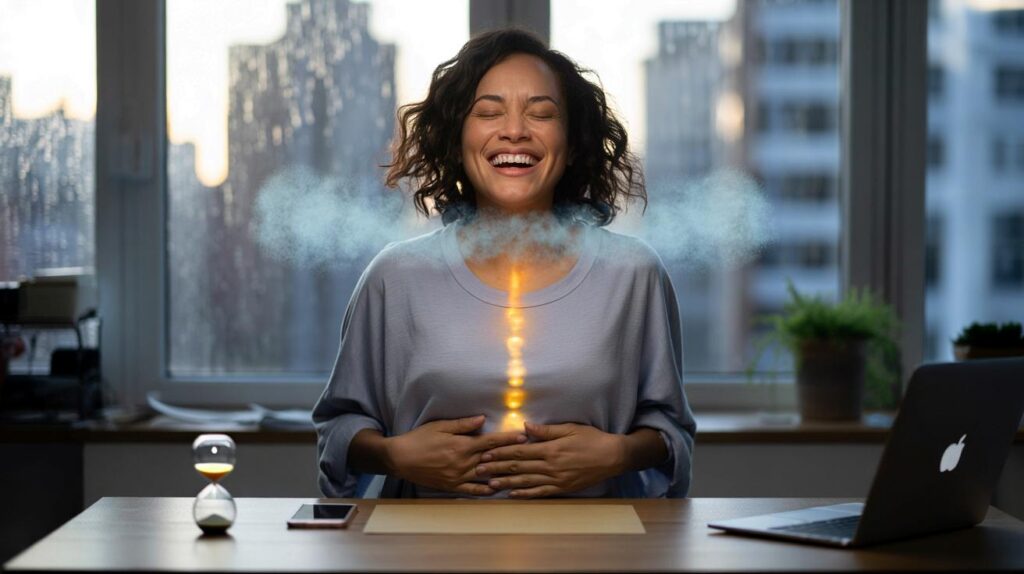
Dark mornings, deadlines and a buzzing phone can tilt a steady day off balance. Relief often hides in plain sight, waiting.
As the clocks change and routines tighten, clinicians and coaches are spotlighting a simple physiological move you can trigger anywhere. It redirects the nervous system within seconds, slows a racing breath, and gives you back a sense of control without a gadget or app.
The overlooked reflex hiding in your body
When anxiety climbs, most people reach for familiar fixes: a brisk walk, breathing drills, a herbal brew. In real life, few of us stop a meeting to set up a meditation cushion. One reflex asks for less planning and more instinct. Laughter.
It sounds light, even trivial. Biologically, it is anything but. Laughter coordinates breath, facial muscles, the diaphragm and core. It upshifts attention away from threat and sends a clear signal to the brain: stand down.
Sixty seconds of deliberate laughter can interrupt spiralling worry, deepen exhalation and nudge the nervous system towards safety.
How the brain pivots in seconds
The first chuckle pulls attention away from rumination. Circuits that track threat quieten as reward and social bonding networks light up. Researchers at Oxford have shown that bouts of genuine laughter raise pain thresholds, a marker of endorphin release. That shift matters when tension makes the body feel unsafe.
| Time | What changes | What you feel |
|---|---|---|
| 0–15 seconds | Attention snaps to sound and rhythm of laughter; exhalations lengthen | Mind breaks from looping thoughts; shoulders ease |
| 15–60 seconds | Endorphins rise; muscle tone loosens in face, neck and torso | Warmth, a lighter chest, steadier heartbeat |
| 2–3 minutes | Cortisol begins to dip; vagal tone improves from extended out-breaths | Clearer focus; tension feels manageable |
The chemistry: endorphins up, cortisol down
Laughter’s punch comes from a rapid chemical recalibration. Endorphins, the body’s own opioids, climb during sustained laughter. People often report comfort and warmth spreading through the torso. At the same time, several studies have recorded lower cortisol after laughter-based sessions, with reductions around 20% in the following hour in small trials. That shift takes the edge off hypervigilance and helps the prefrontal cortex regain the wheel.
Endorphins soothe, cortisol eases, and breath slows. Those three levers together short-circuit the anxiety loop.
Why a ‘fake’ laugh still works
The body listens to the pattern of movement more than the punchline. Forced laughter uses the same muscles and the same exhale-heavy rhythm. Within a minute, the mechanical pattern recruits genuine amusement in many people, especially when done in a group. Think of it as priming a switch: you set the posture and breath, and the chemistry follows.
- Start with a steady out-breath that becomes a gentle “ha-ha-ha” rhythm.
- Let the belly move. Use both hands on the lower ribs to feel the motion.
- Add eye contact if you are with others; social cues amplify the effect.
From living room to office: making it social
Shared laughter carries extra power. Community groups, workplace wellbeing teams and care homes have been trialling short laughter breaks for years. The reason is simple: humans mirror one another. One person’s giggle becomes a room’s rhythm in seconds.
Simple ways to bring it into your day
- Set a one‑minute alarm labelled “laugh break” before a stressful call.
- Create a phone folder of five clips that always raise a grin; keep them under 30 seconds.
- Begin a weekly meeting with a harmless, self‑deprecating anecdote to release tension.
- Share a “two silly faces” ritual with children after school to reset the household mood.
When to use it
This reflex shines in short, high‑pressure moments when you need a fast reset and no special kit.
- Two minutes before presenting.
- After reading a difficult email.
- On the train home, with headphones on and shoulders relaxed.
- Following a domestic row, once everyone agrees to pause and breathe.
Limits, risks and sensible care
Laughter will not erase the root causes of chronic anxiety, trauma or debt‑driven stress. It does not replace therapy or medicine. If you live with panic disorder, psychosis, or a condition that makes strong physical exertion risky, choose gentle versions seated, keep the breath easy, and speak to your GP if anything feels off. People recovering from abdominal surgery or with pelvic floor issues should avoid forceful belly shaking; use light chuckles with longer, soft exhales.
Try this today: a 60‑second drill
Use a timer. Stand or sit tall. Drop your shoulders.
Notice any change in jaw tension, chest pressure or thought speed. Many people feel a “pressure drop” around the heart and more room in the neck by the end.
Why it matters this season
Shorter daylight can drain mood and disturb sleep. Anxiety often rides on that fatigue. Laughter gives you a rapid way to restore rhythm when daylight and deadlines collide. It can pair neatly with morning light exposure, brisk walks and regular meals to stabilise energy across the week.
Add depth with smart pairings
- Laughter + box breathing: do 30 seconds of light chuckles, then four rounds of 4‑4‑4‑4 breathing.
- Laughter + cold face splash: a brief cool rinse on the cheeks afterwards can further nudge vagal tone.
- Laughter + journalling: once calm, write one line naming the stressor and one line naming the next useful action.
Tracking what works for you
Create a tiny log for one week. Note time, place, and a 0–10 anxiety rating before and after your 60‑second session. Patterns appear quickly: some people respond best mid‑morning; others need an evening reset. Keep what works. Leave the rest.
You do not need the perfect joke. You need the pattern: longer out‑breaths, moving belly, a hint of play.
This autumn, think of laughter as practical first aid for the nervous system. It costs nothing, travels everywhere, and takes one minute. Add it to your toolkit alongside light, movement and sleep, and you give yourself a reliable lever when anxiety barges in uninvited.



I tried the 60‑second laughter drill before a tense client call—my shoulders actually dropped and the looped thoughts eased. Bookmakring this, thanks!
8 in 10 feels high—what were the sample sizes behind that, and any citations for the cortisol ~20% drop and the Oxford pain‑threshold paper?