
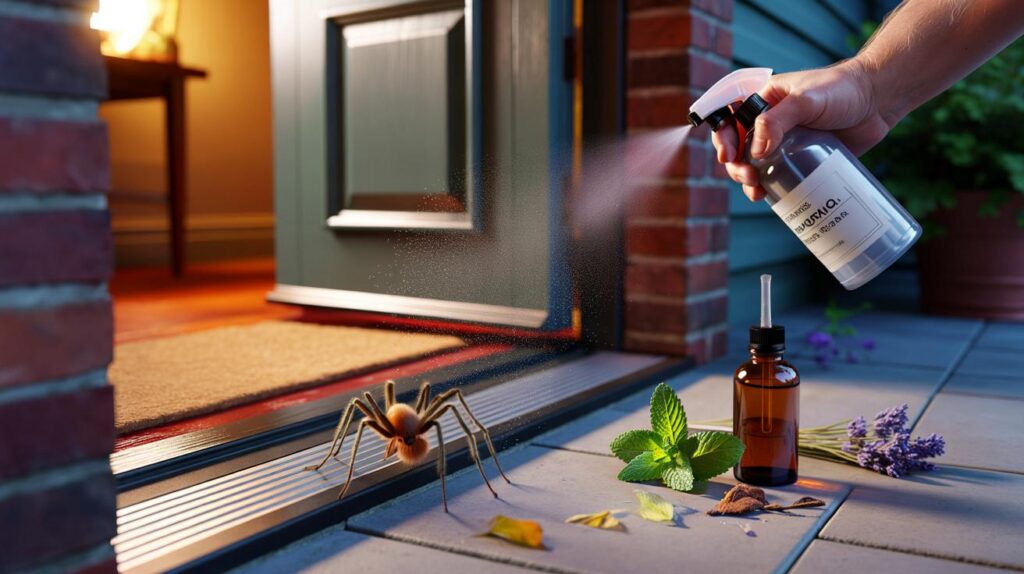
Cooler nights are pushing eight‑legged wanderers indoors, and British households are already bracing for unwelcome skittering.
Across the country, residents are turning to a kitchen‑cupboard staple for fast relief, chasing a simple question: can one carefully chosen spray line stop spiders crossing the threshold?
Why autumn brings spiders inside
Early autumn boosts sightings as males roam for mates and warmth. Damp weather drives them towards dry rooms. Warmed interiors and gaps around external doors act like signposted corridors. Homes near gardens, sheds, or stacked firewood see more visitors because prey and shelter sit close by.
Most house spiders are harmless, yet surprise encounters raise anxiety. A quick, targeted barrier reduces those living‑room dashes.
The single spot that matters
Pest technicians report that one area pays off more than scatter‑spraying: the main doorway threshold. That strip where the floor meets the exterior door gathers the scents and draughts spiders follow. A short, continuous spray line here disrupts their approach before they reach skirting boards or furniture.
Why the threshold works
Spiders navigate by touch and chemoreceptors on their legs. Strong acetic vapours in white vinegar mask cues along sill edges, brush seals and weatherstrips. The odour fades outdoors, so a neat line needs topping up, but the first intercept point cuts indoor footfall.
A 50:50 white vinegar and water mix, laid as a thin line along the door frame and threshold, acts like a scent fence.
How to mix and apply
- Fill a clean spray bottle with equal parts white vinegar and tap water.
- Shake for 5 seconds to blend. Use a fine mist setting for even coverage.
- Spray a narrow band along the exterior door threshold and frame, including the lower hinge side.
- Wipe any drips on flooring to avoid pooling. The goal is a light, continuous line, not a wet patch.
- Reapply every 48–72 hours, after heavy rain, and after mopping near the door.
This single focus point is the quickest win. If sightings persist, extend the line to window sills and vents. Repeat applications keep the scent consistent through the peak weeks.
Strength boosts and scent tweaks
Some households add peppermint or lavender essential oil to soften the vinegar note and sharpen the deterrent. Add 15–20 drops to a 500 ml spray bottle. Shake before each use to disperse the oils. Test on a small, hidden area first. Oils can mark paint or soft finishes if used neat, so keep them diluted.
Top‑up rule: little and often. A 5‑second spray at the door every two days beats dousing the whole house once a week.
Where vinegar fits, and where it doesn’t
White vinegar suits many hard surfaces, but it can etch some minerals and dull certain coatings. Use this quick guide before you spray:
| Surface | Vinegar suitability |
|---|---|
| uPVC frames, sealed tiles, painted metal | Generally fine with light misting |
| Finished wood, varnished thresholds | Test first; wipe any residue after 1–2 minutes |
| Marble, limestone, travertine | Avoid; acid can etch stone |
| Unsealed grout, natural slate | Use sparingly and test |
Pets, children and safe use
Keep bottles labelled and out of reach. Strong peppermint oil can irritate pets, especially cats, so limit indoor use of essential oils if animals show sensitivity. Ventilate after spraying. The vinegar scent fades within an hour indoors; outdoor lines fade faster, which is why reapplication matters.
Does it actually reduce sightings?
Householders who focus on the doorway report fewer late‑night scuttles within a week. The mix does not harm spiders; it nudges them to choose a different route. Success depends on consistency and sealing gaps that undo your efforts. A well‑placed spray line works best when paired with simple maintenance.
- Brush or vacuum webs near door frames so new scent can reach surfaces.
- Fit a door brush strip if light shows under the door.
- Seal cracks with exterior‑grade sealant around frames and cables.
- Move stacked logs, boxes and bins at least 30 cm from the doorway.
- Switch exterior bulbs to warm‑colour LEDs to attract fewer insects.
Costs and timing
White vinegar often costs under £1 per bottle in UK supermarkets. A 500 ml mix covers a family home’s main door for 2–3 weeks of top‑ups. Start the routine now, before night temperatures drop further. Spiders become bolder as rooms warm up and gardens cool down.
One bottle, one line, one minute every other day. That rhythm keeps the threshold unfriendly to wanderers.
When vinegar is not enough
If phobias are severe or infestations build inside wall voids, speak to a qualified technician. Ask about gap sealing, mesh screens and targeted mechanical removal. Chemical sprays add risk to pets and indoor air and rarely beat the door‑line method for casual autumn visitors.
Extra know‑how to stay ahead
Understand the cue chain. Spiders follow prey, and prey follows light and crumbs. Reduce indoor insects by keeping bins shut, wiping sugary spills, and fixing fly‑entry gaps around trickle vents. Fewer moths and flies mean fewer spider scouts.
Run a seven‑day check. Each evening, note sightings by room and time. Map them to doors and windows used that day. This small log shows the best re‑spray moments and the true entry path. Keep the vinegar line where the numbers say it matters most—usually that single threshold.



Interesting, but is there any evidence beyond anecdotes? Vinegar’s acetic acid evaporates fast—do you have measured duration (hours) for the scent fence at a typical UK doorway, esp. after rain? Also, how does this compare to a brush strip alone? If the mix only masks cues, I’d like a source or two (lab or feild). The “proof?” in the title made me expect links. Not trying to be snarky, just wary of placebo fixes.