
With nights near freezing, allotment holders face a choice that could decide whether squashes last weeks or months.
Across Britain, growers are eyeing ripening pumpkins and butternuts, weighing up a risky wait against a hasty cut. Professionals say one small, often ignored sign on the plant can settle the dilemma and protect the winter larder.
Why timing changes flavour and storage
Winter squash reach peak eating quality only when their sugars rise and the rind hardens. Pick them too early and flavours stay flat, textures watery. Leave them too long and damp, rot and cold snaps can undo a season’s work. That is why harvest timing, not size alone, decides whether those fruits are fit for a January soup or spoiling by December.
Three quick checks you can do today
- Colour: the rind has deep, even colour and has turned from glossy to matte.
- Skin hardness: a thumbnail pressed firmly should not pierce the skin.
- Firmness: the fruit feels solid and heavy for its size, with no soft spots.
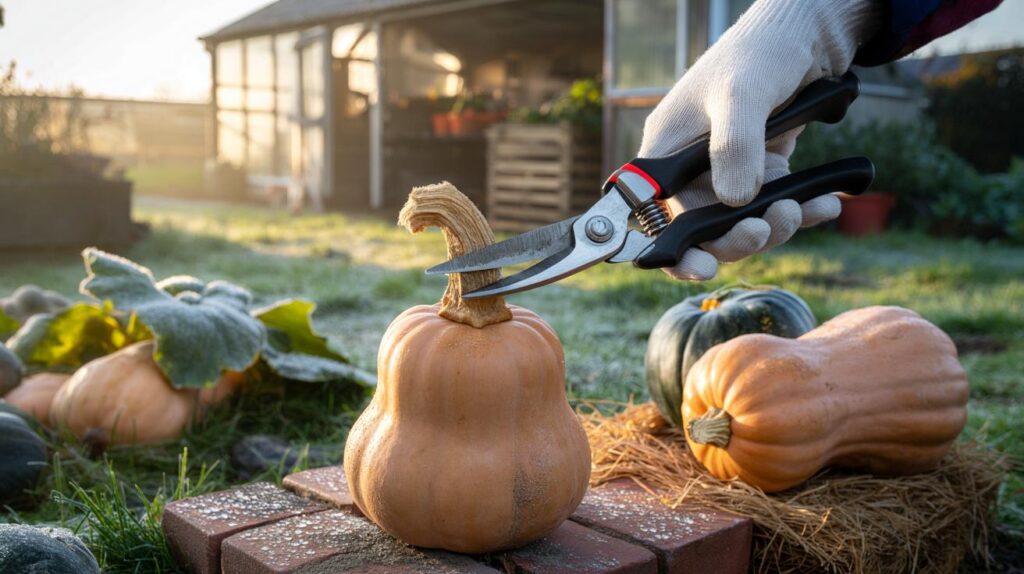
Cut when the stem at the fruit end turns corky, dry and slightly cracked, and leave a handle of about 5 cm.
The overlooked stem test
What the corky handle really signals
The small section of stem attached to the fruit is your best gauge. As a squash reaches full maturity, moisture flow through this section slows. Fibres toughen, the green turns tan, and the surface looks woody or faintly cracked. That corkiness is the plant’s own seal, making the fruit far less prone to infection once cut.
If the stem is not ready yet
Raise fruits off wet soil with bricks, tiles or a pallet slat to avoid soft rot. Turn them so a different side faces the sun for a few days to even up ripening. Tidy rampant foliage to improve air flow, but keep enough leaf to feed the plant. Do not snap or twist the fruit to “hurry” it—damage invites decay.
Weather traps that wreck a harvest
First frosts: numbers to watch
A light ground frost around −1°C can blemish rind and shorten storage life. Colder than −3°C risks internal damage and a floury, wet texture. If forecasters flag frost for your area, harvest the mature fruits the day before. After a frost has bitten, affected fruits will not keep well even if they look sound for a few days.
Handling mistakes to avoid
- Do not carry fruit by the stem; support underneath with both hands.
- Do not wash before curing; moisture on the rind raises rot risk.
- Do not pile fruits; pressure points cause bruises that later collapse.
- Keep them off soaked ground; a dry board or straw layer works.
- Skip harvesting in heavy rain; wait for a dry window.
Harvest ahead of the first frost warning, not the morning after it, and keep fruit dry from cut to store.
Cutting like a pro
Tools and technique for a clean cut
Use sharp, clean secateurs or a small garden knife. Disinfect blades with alcohol between plants. Cut the stem cleanly, leaving about 5 cm attached to the fruit. Angle the cut so water runs off. Avoid nicking the rind. Never yank, twist or snap—those tears become entry points for microbes.
- Wear gloves; tough stems can slip under pressure.
- Lay fruits gently onto a soft, dry surface—cardboard or a sack works.
- Inspect immediately and set aside any damaged fruit for prompt use.
Curing and storage that carry you to spring
The 14-day cure that extends shelf life
After cutting, cure fruits in a warm, airy place for 10–14 days at roughly 18–24°C. This dries the cut surface, heals microscopic scratches and further hardens the rind. A sunny windowsill, greenhouse bench with vents cracked, or a covered porch with good airflow all suit the job. Rotate fruits every few days so one side does not stay damp.
Where to store—and for how long
Once cured, move fruits to a cool, dry spot. Aim for 10–15°C, with low humidity and no freezing risk. Space them so air circulates and avoid touching walls or each other. Check weekly and eat any that develop soft patches or mould first.
| Variety | Typical storage life |
|---|---|
| Butternut | 2–4 months |
| Kabocha / potimarron | 3–5 months |
| Large pumpkin | 2–3 months |
| Hubbard | 5–6 months |
| Acorn | 1–2 months |
A fast checklist for busy growers
- Rind is matte, deeply coloured and resists a thumbnail.
- Stem at fruit end looks corky, dry and slightly cracked.
- Weather shows frost risk within the next 72 hours—harvest mature fruits now.
- Cut with disinfected secateurs, leave a 5 cm handle, avoid rind damage.
- Cure warm and airy for 10–14 days, then store cool and dry.
If you are late or the frost struck
Rescue tactics that still save value
Fruits lightly nipped by frost should be eaten within a week. Trim blemishes, roast in wedges, and freeze the cooked flesh for later. Purée freezes well in tubs for soups and bakes. Severely soft fruit belongs on the compost heap; do not risk storing it beside sound produce.
Extra pointers that stretch your harvest
Small adjustments, big returns
A cheap digital thermometer helps you pick the right storage nook in a shed, spare room or loft. A wooden slat or wire rack under the fruits keeps air moving. Label each fruit with harvest date and variety so you eat the shorter keepers first. If you grow on heavy soil, lay slate or tiles under fruits as soon as they set; the rind will stay clean and cure faster later.
For next season, try staggering varieties by keeping quality. One plant of acorn for October meals, two of butternut for winter, and one Hubbard for late spring sees most households through. Feed vines well early, then ease watering as fruits mature to help the rind harden. A little planning turns that single stem detail—the corky handle—into months of reliable, flavour-packed suppers.



Brilliant breakdown. I’ve grown squash for years and always guessed harvest by size—no wonder some went mushy by December. The corky-stem cue plus the 14‑day cure is the missing piece. Loved the practical bits (don’t wash, don’t carry by the stem, angle the cut). I’m definitly labeling fruits with harvest dates this time and trying a wire rack to boost airflow. Thanks for making this so actionable!
Is there actual data behind leaving a 5 cm handle? Why not 2–3 cm or even 7–8? Does infeciton risk scale with stem length, or is it just a handling convenience? I’ve cut shorter for years with few losses, but maybe I’ve been lucky—curious if you’ve got sources.