
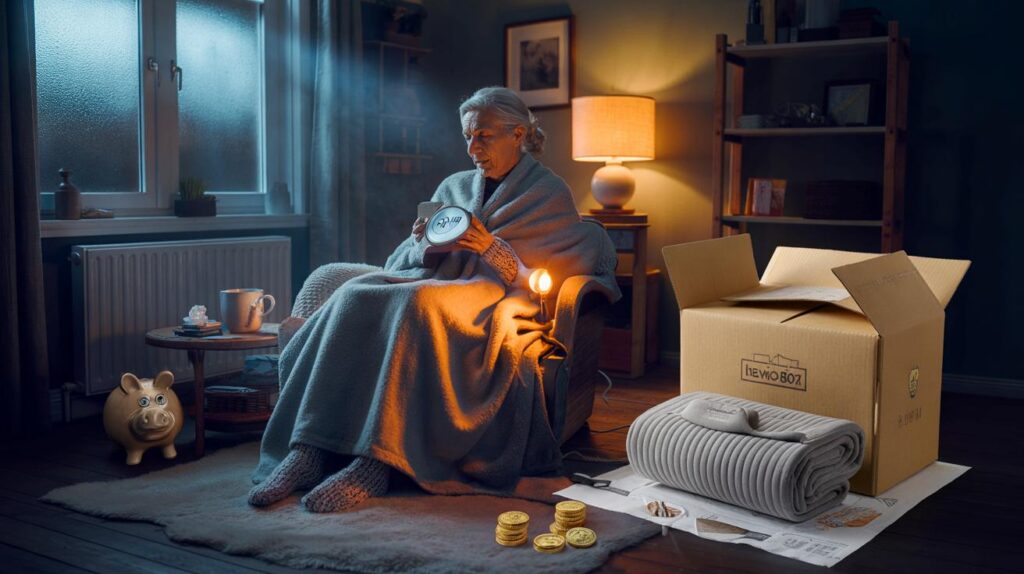
As the cold bites and budgets tighten, households face a stark choice between warmth and rising energy bills this winter.
One of Britain’s biggest energy suppliers is reviving a low-cost way to keep people warm, prioritising customers with medical needs and other vulnerabilities. Instead of heating whole homes, it is backing a person-first approach that can cost pennies per hour and deliver real savings for those most exposed to high tariffs.
What the offer means for you
Octopus Energy, which serves more than seven million customers, is allocating a fresh batch of free electric blankets to help people stay warm for less during autumn and winter. The company says that while heating an entire home can cost around £4 a day, an energy‑efficient electric blanket can warm one person for roughly 4p an hour. That shift from space‑heating to person‑heating can be a game‑changer for anyone spending long hours in a single chair or bed, particularly people who live alone.
So far, Octopus has distributed 93,000 free blankets to its most vulnerable customers and has ring‑fenced a further 10,000 for this winter. In follow‑up checks, customers reported average gas bill reductions of about 20%, suggesting targeted warmth can ease pressure on central heating use.
Heating people, not rooms: 4p an hour versus roughly £4 a day — a small switch that can trim gas usage by around 20%.
Who can apply and how it works
There is no public list of fixed criteria. Octopus assesses applicants individually and focuses on those with specific vulnerabilities or medical needs. To be considered, you must be an Octopus customer and apply through the company’s Octo Assist support route. Applications involve sharing a snapshot of your finances – income, outgoings and the reasons you are struggling with bills – often via a Paylink budget assessment. Decisions are made case by case, and stock is limited.
Step-by-step to request support
- Log in to your Octopus account and look for Octo Assist support options.
- Complete a budget assessment (typically via Paylink) with income and expenditure details.
- Explain any medical needs, vulnerabilities or circumstances affecting your ability to heat your home.
- Await assessment; Octopus will decide on the most suitable support, which may include a free electric blanket.
Demand is high and supplies are finite. Apply promptly if you think you qualify and keep your details accurate and up to date.
Other help on the table
Octopus has expanded its Octo Assist fund to £40 million, supporting customers who are struggling to pay for energy. The company reports more than 100,000 people have already received help, which can include grants, standing charge holidays and debt write‑offs. A match‑payment plan called “you pay, we pay” also doubles extra repayments made towards debt, helping people clear balances faster.
Pensioners can receive a one‑off credit of up to £200 through targeted support. Octopus also trains its teams to signpost and assist with applications for wider benefits where appropriate. Alongside the financial support, several practical schemes aim to reduce usage and trim costs in everyday life:
- Heat loss cameras: short‑term loans of thermal imaging devices to spot draughts and plug heat leaks.
- Energy Helpers: in‑person, tailored energy‑saving advice; more than 300,000 homes visited so far.
- In‑house social workers: one‑to‑one help for customers with complex circumstances.
- Saving Sessions: rewards for shifting usage away from peak times, with over two million participants.
- Free Electricity Sessions: for Octoplus rewards members when wholesale prices drop sharply or go negative.
How much could an electric blanket save?
Octopus’s headline figure is 4p an hour to heat a person with an efficient electric blanket. Actual costs depend on your tariff and how long you use it. The example below shows indicative costs based on typical winter habits.
| Scenario | Assumption | Estimated cost |
|---|---|---|
| Electric blanket for an evening | 3 hours at 4p per hour | 12p per evening |
| Electric blanket for a month | 3 hours daily for 30 days | £3.60 per month |
| Whole‑home central heating | £4 per day | ~£120 per month |
Even if your personal usage differs, the gap is stark. For someone at home most of the day, keeping a blanket on for six hours would still cost around 24p daily. For people sitting at a desk, reading or watching TV in one room, that can meaningfully reduce pressure on gas or electric heating.
Safety, comfort and practical tips
Using an electric blanket sensibly
- Check for a visible British Standard safety mark and follow the manufacturer’s instructions.
- Keep the blanket flat, don’t fold it and avoid placing heavy items on top.
- Don’t use with a damaged cable, and inspect regularly for wear.
- Use a timer or thermostat setting rather than leaving it on all night.
- Be careful with pets and liquids; consider a washable cover or heated throw for flexibility.
- If you have medical equipment or specific conditions, seek advice on safe use before switching on.
Heated throws can offer similar comfort with mobility, useful for those who move between rooms. Hot‑water bottles remain cheap, but replace them regularly and use a cover to avoid burns.
Why this matters now
Energy prices have eased from their 2022 peak yet many households still face higher‑than‑normal bills, tight budgets and colder homes. For anyone choosing between comfort and cost, person‑centred heating is a practical tactic. It targets warmth where it is needed most and can keep people with health risks safer during cold snaps.
Electric blankets work best as part of a broader plan: block draughts, shut doors, close curtains at dusk and lower boiler flow temperature if you have a combi boiler. Octopus’s thermal camera loans and in‑home advice can help you find quick wins that cut consumption without major upfront spend.
If you are not with Octopus
Other suppliers run hardship funds, payment plans and priority support for vulnerable customers. Ask your provider about discretionary credits, debt matching, energy‑efficiency visits and incentives for off‑peak usage. Check whether you qualify for the Warm Home Discount, the Priority Services Register, or local authority grants. Charities and advice agencies can also help with budgeting, benefits checks and tailored guidance.
For households with prepayment meters, timing matters. Plan blanket use for the coldest parts of the day and try to combine sessions with other low‑cost heat‑retaining tactics such as warm layers, hot drinks and draft proofing. The aim is comfort for pennies without sacrificing safety or running down credit unexpectedly.
A quick back‑of‑the‑envelope check
Take your typical evening routine. If you usually run the heating for four hours, see if you can cut that to two hours while using a blanket for three. If central heating is ~£4 per day and the blanket adds ~12p, you still bank a significant saving while keeping your core comfortable. Adjust the timings to fit your schedule and health needs, and review your bills after a fortnight to gauge the impact.
Fewer hours of whole‑home heating, paired with targeted warmth, can materially reduce costs without sacrificing comfort.



How is the 4p/hour calculated—based on what wattage and tariff? On E7 or standard? My rate is 29p/kWh; even at 60W that’s ~1.74p per hour… wait, that seems lower. Did I math wrong? Please share the assumtions.