
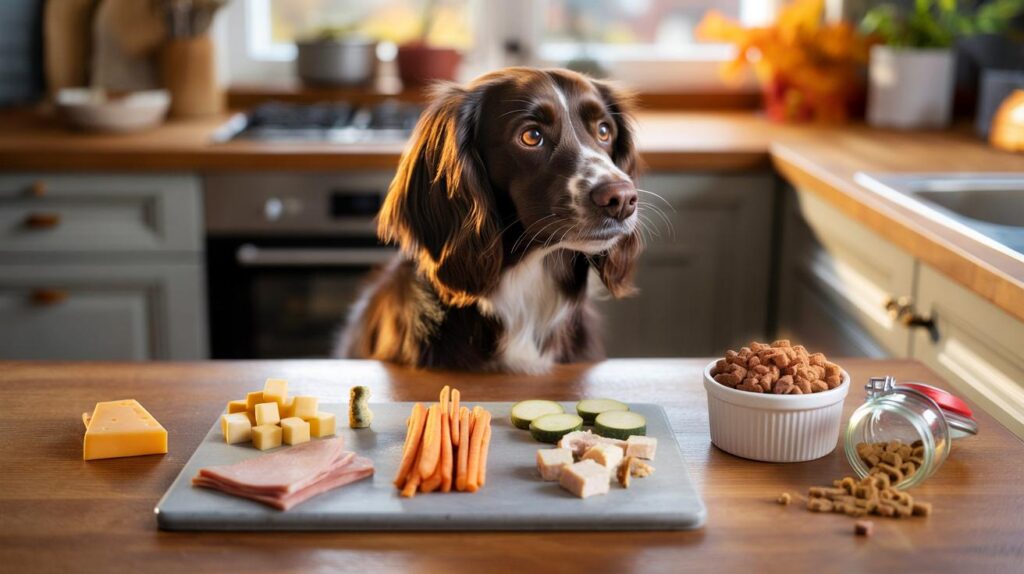
As nights draw in and sofas beckon, small indulgences can snowball. Your dog notices the biscuits. Your scales will, too.
Autumn brings cosy routines, longer evenings and more chances to feed from the heart. That pattern often hides a steady calorie creep that nudges healthy dogs into the danger zone before winter even starts.
Autumn temptations and the hidden calorie creep
Many owners give a nibble here and a sliver there. Each moment looks harmless. Add them together, and you get surplus energy your dog cannot burn off indoors.
A chunk of cheese after work, a biscuit post-walk, a strip of ham during Sunday lunch. Those extras can rival a small meal for a medium dog. The weight gain arrives slowly. The risk builds quickly.
Small treats stack like coins. By Friday, the “just a bite” habit can equal a full bowl in calories.
Why tiny bites add up fast
Dogs weigh far less than we do. A 20 g biscuit can represent a large proportion of a 12 kg dog’s daily allowance. What feels dainty to you may be hefty to your pet.
Families amplify the problem. One person rewards for sitting nicely. Another offers scraps while cooking. A visitor slips a cracker for a cuddle. No one sees the full tally.
What’s really in shop-bought treats
Many packaged snacks lean on fat, sugar, and salt for taste appeal. Labels can be vague. “Light” versions often keep calories high while offering little in the way of useful nutrients. Dogs fill up on dense bites and still miss fibre, protein quality and hydration.
Check the back, not the front: energy per 100 g and fat percentage matter more than the flavour claim.
The 10% rule, made practical
Keep treats to no more than 10% of daily calories. That single limit prevents slow, silent gain while leaving room for training rewards and shared moments.
A quick calculation for your dog
Figures below are rough guides for neutered adult dogs with light activity. Individual needs vary with age, breed, weather and exercise.
| Dog weight | Daily calories (approx.) | 10% treat cap | Example: 5 kcal training bites |
|---|---|---|---|
| 6 kg | 430 kcal | 43 kcal | Up to 8 bites, plus room for a few veg pieces |
| 12 kg | 720 kcal | 72 kcal | Up to 14 bites, if main meals remain unchanged |
| 25 kg | 1,250 kcal | 125 kcal | Up to 25 bites, or fewer larger treats |
Plan ahead. If you expect to train, skim a little from the main meals and allocate a fixed treat budget for the day.
Cap treats at 10% of calories. Shrink treats, not affection.
Smarter swaps you can use today
Keep flavour, reduce energy, and protect your dog’s waist with simple choices. Cut pieces small so you spread rewards without breaking the cap.
- Carrot shavings: 10–20 g for a medium dog delivers crunch, fibre and under 10 kcal.
- Apple slices without seeds: sweet taste, water content, and modest energy per piece.
- Cooked courgette coins, no salt: soft texture for older mouths, negligible calories.
- Plain cooked chicken breast: high-protein bites for training; use tiny cubes.
- Part of the daily kibble: weigh the day’s ration, set aside a portion for rewards.
Avoid chocolate, grapes, raisins, onions, xylitol and alcohol. Keep fatty trimmings and salty snacks off the menu. Bones from the table raise choking and dental risks.
Make treats do a job, not a habit
Use food when you train. Pay for position, not for presence. Reward a sit, a recall or calm behaviour around distractions. This turns calories into progress, not padding.
Turn rewards into activity
Scatter small pieces over the lawn to spark scent work. Hide them in a snuffle mat or cardboard tubes for puzzle time. Ask for a cue before each bite. The brain burns energy and builds resilience.
Rotate non-food rewards. Many dogs work well for praise, a short tug game, access to the garden, or a chance to sniff a hedgerow. Mix these in so food is not your only lever.
Create house rules that stick
Agree a daily treat pot everyone can see. When it is empty, the treat day is done. Share a simple list on the fridge with approved items and portion sizes. Guests get the same brief.
One pot per day, one plan per household. Consistency trims calories without drama.
Spot trouble early and change course
Weight gain shows first in shape and stride. Watch for a softening waistline, collar notches moving, puffing on gentle hills, or reluctance to jump into the car. React within weeks, not months.
- Switch to smaller treat pieces and lower-energy options.
- Measure main meals with scales, not scoops.
- Add brisk, sniff-led walks and short play bursts across the day.
- Weigh every fortnight on the same scale to track trend, not guess.
Real-world scenarios and quick maths
You have a 12 kg neutered spaniel who trains daily. At roughly 720 kcal per day, the treat cap sits near 72 kcal. Ten cubes of cheese at 30 kcal each blow past the cap by a wide margin. Switch to 5 kcal training bites and you can deliver 12–14 rewards, then pad with carrot shavings.
For a 6 kg indoor terrier with shorter walks, use a tiny chopping board routine. Dice chicken into 0.5 cm cubes. Each cube lands around 2–3 kcal. Twenty cubes still fit the cap, as long as the main meals stay measured.
Choosing products with a cooler calorie burn
If you buy treats, read energy per 100 g and note serving size. Aim for high-protein items with low fat, clear ingredients and simple recipes. Avoid sugar syrups and heavy oils. Training treats labelled 3–6 kcal each help you count while you coach.
Dental sticks can be energy dense. If you use them, count them. One stick can equal a fifth of the daily cap for a small dog. Balance the day around it or find lower-calorie dental chews approved for daily use.
Extra insight that broadens your toolkit
Neutered, less active and senior dogs need fewer calories. Brachycephalic breeds also tend to burn less. Adjust the cap and portion sizes down for these groups. Puppies use treats for learning but need careful totals; use part of the daily food as rewards and split sessions to avoid gut upset.
Satiety comes from routine and texture. Time meals, add approved crunchy veg, and use puzzle feeders to slow eating. The stomach and brain register fullness better when bites take time and involve work. That approach trims nagging and reduces begging at the table.
If weight is already up, plan a four-week reset. Weigh food, set a strict 10% treat cap, add 10–15 minutes of varied sniff-walking most days, and log body shape with a weekly photo from above and side. Small, steady changes protect joints, heart health and energy levels as the colder months arrive.



Thanks for the clear breakdown—definately needed the 10% rule demystified. The “one pot per day” idea is genius. Quick question: for a 6 kg terrier, would a single dental stick count as the entire treat budget, or do you reccomend splitting it across days?