
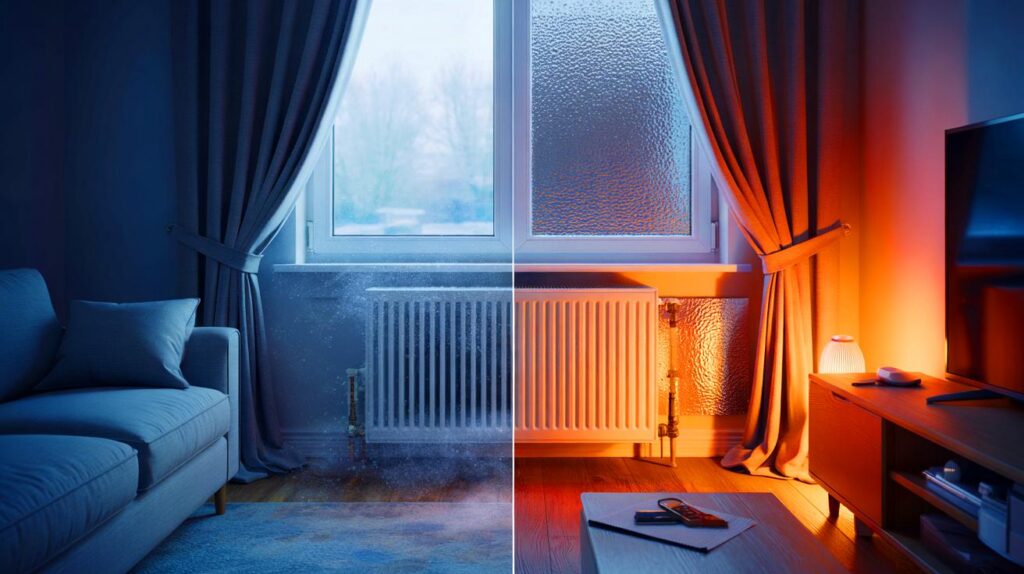
Winter bites and bills still bruise. Many homes waste heat each evening through habits that stay hidden in plain sight.
Look around your living room. A sofa inches from a radiator. Curtains draped across a warm grille. These small choices shift heat away from you and into walls, windows and fabric. With temperatures dipping and budgets tight, tiny layout changes can reclaim comfort without touching the thermostat.
The silent heat tax in your lounge
Radiators warm rooms by setting air in motion. Cool air sinks behind or beneath the unit, heats up, rises, and circulates across the space. Anything that blocks that flow turns your radiator into an expensive handwarmer. The heat still gets made; it just fails to reach you.
Give radiators room to breathe
Keep furniture off the front of the radiator. Leave a clear gap so warm air can rise and spread. Even a low backrest intercepts the upward plume and traps warmth behind a sofa.
- Leave at least 20 cm in front of each radiator to allow proper air circulation.
- Keep a 10 cm gap above the top edge; floating shelves need a clear space.
- Avoid deep radiator covers with small grilles; they can choke airflow.
- Dust fins and panels monthly; fluff behaves like a winter coat on the metal.
Rule of thumb: 20 cm clear in front and 10 cm above. No heavy furniture, no draped fabric, no excuses.
Curtains: cosy look, costly heat loss
Thick curtains look snug but can trap a pocket of heat, especially when they hang over a radiator. That pocket warms the glass, not the room. Tie curtains back to the edge of the sill when radiators are on, or hem them to sit just above the sill. Net voiles or blinds behind the curtains are fine if they stop above the radiator.
Never rest fabric on a hot radiator. It starves the room of heat and raises a safety risk around electric and oil-filled units.
Small tweaks, fast wins
Some fixes take minutes. Each one helps your radiators push heat where you actually sit.
- Bleed trapped air: If the top of a radiator feels cold, release air with a key until water appears. Check system pressure afterwards.
- Balance the system: If one room roasts and another lags, adjust lockshield valves slightly to slow the hot room and push more flow to the cool one.
- Fit reflective panels on external walls: Foil-backed boards behind the radiator reduce heat lost into brickwork.
- Raise the radiator slightly: A 10–12 cm floor gap lets cooler air feed the convective loop better.
- Add a small shelf above: In high-ceiling rooms, a narrow shelf just above a radiator can push warm air outwards rather than letting it pool at the ceiling.
Match heat to the room, not the whole house
Thermostatic radiator valves (TRVs) trim heat by room. That means you can keep the lounge toasty while the hallway stays cooler, avoiding waste in low-use spaces.
| Room | Suggested set-point | Why it helps |
|---|---|---|
| Living room | 19–20°C | Comfortable for sitting without heavy layers. |
| Bedrooms | 16–18°C | Better sleep and lower energy use. |
| Hallways | 15–17°C | Stops drafts without overheating circulation spaces. |
| Spare room | 12–15°C | Prevents damp while keeping costs down. |
Set a realistic target, then let the radiators do the work. Turning a whole-home thermostat down by 1°C typically trims heating demand by several percent across a season. The exact saving varies with insulation and the type of system, but the direction is clear.
What blocking a radiator really costs
Picture this. A typical radiator in a lounge runs hard each evening. A sofa sits 5 cm in front, and long curtains pool on the sill. The thermostat keeps calling for heat as the air near the radiator warms, but the room across the way still feels cool. If that layout adds just 30 minutes of boiler runtime per day in peak months, the extra gas could cost several pounds each week in a family home. Over a cold spell, that nudges into the low hundreds of pounds.
Move the sofa back by 20–30 cm. Tie the fabric at the edges. You reclaim warm air that you already pay to produce, and the lounge reaches temperature faster. The boiler or element cycles off sooner. Comfort arrives earlier in the evening, and the next hour’s heat use can fall.
Electric, oil or wood: the airflow rules stay the same
Whether you heat with electric convectors, oil-filled radiators or water-fed panels from a boiler, the physics is unchanged. Air needs a path in and a path out. Electric units often add a fan to push the plume; blocking the grille wastes that boost. Oil-filled units rely on gentle convection; a throw laid over the fins strangles it. Log-burner back-boilers feeding rads still need space around each panel to move air.
A five-minute home audit this evening
- Stand two metres from each radiator and look for obstructions within 20 cm in front or 10 cm above.
- Feel for cold spots: top cool, bottom hot means trapped air; bleed it.
- Check curtains at dusk: if they cross the radiator line, use tie-backs before switching heating on.
- Slide a hand behind wall-facing radiators; if it feels very warm, consider reflective panels.
- Vacuum dust from fins and grilles; a soft brush tool works well.
Safety, moisture and fabric care
Fabric on hot surfaces can scorch. Keep throws and laundry off radiators, especially portable electric models. Tucking furniture hard against an external wall can also trap moisture. A small gap improves airflow and helps prevent mould behind sofas and cabinets on cold walls.
If you want to go further
Pair airflow fixes with simple draught-proofing. Seal obvious gaps around skirting boards and window frames. Fit brush strips to external doors. These changes lower the heat your room needs to stay stable, so radiators cycle less often. In older homes, reflective panels and TRVs give a quick return. In newer builds, smart schedules nudge usage down by warming rooms only when occupied.
For a quick test of gains, note your gas or electricity meter before your evening heat-up. Make your layout changes. Repeat the same routine the next night at the same outdoor temperature. You won’t get lab-grade data, but you will see if the boiler or heaters run for less time to reach the same comfort, which is what counts on your bill.
One final angle: comfort speed. A clear radiator starts the convective loop fast. Rooms feel alive with warm air within minutes, even at a modest set-point. That lets families keep temperatures moderate while still feeling snug. Add good habits—space, clear grilles, tidy curtains—and your radiators work with you rather than against you this winter.



Just pushed the sofa back ~25 cm and tied the curtains — the room definately feels warmer without touching the thermostat. Nice tip on bleeding; I’d forgotten the cold-top, hot-bottom check. Any budget reflective panel brand you’d trust for external walls, or is plain foil-backed foam good enough?
The £312 headline reads a bit optimstic. Is that based on a specific gas unit rate (p/kWh), boiler efficiency, and an assumed extra runtime per day? Would love a back-of-the-envelope calc or source so I can sanity-check against my semi-detached with TRVs and decent insulation.