
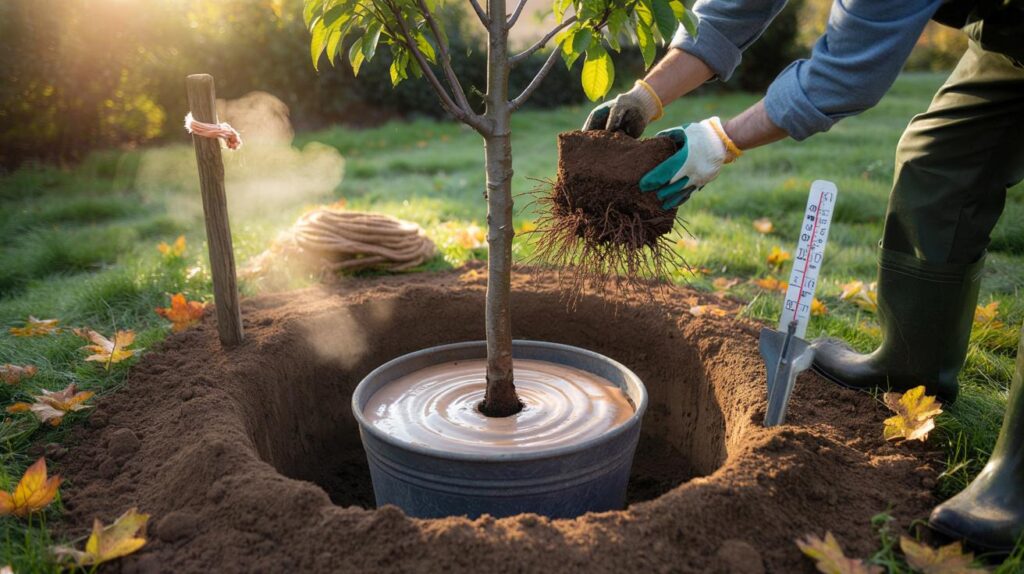
Autumn looks sleepy, yet growers quietly get ahead. A short, well-timed task now can change your harvests next year.
Across Britain and beyond, market gardeners are leaning into cool mornings and damp ground to give cherry, pear and peach trees a running start. The window is brief, the method is simple, and the pay-off can be striking once blossom turns to fruit.
Why october planting gives fruit trees a head start
Planting when leaves fall takes advantage of soil that still holds summer warmth while the air cools. Roots grow whenever the soil sits in the low teens, even while branches sleep. That makes autumn a rooting season, not a resting one.
Plant while soil hovers near 10–12°C and the air cools: roots extend quietly for months before spring.
Warm soil, cool air, faster rooting
By October, ground temperatures lag behind the weather above. Young trees avoid heat stress, yet root tips remain active. They knit into the loosened soil, find moisture, and set up the plumbing that powers next year’s growth. Spring-planted trees must do all that while pushing leaves and blossom, which splits their energy and slows them down.
Seasonal moisture that waters for you
Autumn showers keep the planting hole evenly damp. You water less, and trees face fewer dry spells. Consistent moisture encourages fine feeder roots, the fibres that capture nutrients and keep canopies healthy through the first hot spell.
Earlier spring vigour, steadier fruit set
Trees bedded in October wake up with roots already established. They leaf up smoothly, hold blossom better in blustery weather, and often need less rescue watering in May and June. That stability tends to translate into cleaner fruit and fewer June drop disappointments.
The five-step method growers swear by
Set-up matters. A few precise moves make the difference between a sulking sapling and a tree that races away next spring.
Pick the right spot for cherries, pears and peaches
Choose free-draining, fertile ground with morning sun and shelter from prevailing wind. Morning light dries dew quickly, which reduces leaf diseases. Avoid frost pockets; seek a gentle slope if you have one.
Sun at breakfast, shelter at lunch, drainage all day: that trio keeps young fruit trees out of trouble.
Five steps in under 10 minutes per tree
- Dig a hole two to three times wider than the root system, as deep as the root mass, no deeper.
- Loosen the sides and base so roots can escape easily; break any smear on clay.
- Dip bare roots in a clay-manure slurry (a “pralin”) to prevent drying and speed fine root growth.
- Set the graft union just above soil level; straighten the tree and backfill with crumbly soil, heel in gently.
- Create a shallow watering basin, soak thoroughly, then mulch 5–8 cm thick, keeping mulch off the trunk.
Tie, water, protect
Drive a sturdy stake on the windward side before planting. Use a soft, figure-of-eight tie. Water deeply once to settle soil around roots. Add a tree guard where rabbits or deer browse. In peach areas prone to leaf curl, plan a simple rain cover for late winter.
Autumn vs spring: what changes for your harvest
| Factor | Autumn planting | Spring planting |
|---|---|---|
| Soil temperature | Often 10–12°C, roots stay active | Cool to warming, erratic for roots |
| Moisture | Regular rain reduces stress | Drying winds demand frequent watering |
| Transplant shock | Low, canopy dormant | Higher, canopy pushing |
| First summer resilience | Better-established root system | Shallower roots, drought-prone |
| Year-one yield | More stable blossom and set | Greater risk of stall or drop |
Common pitfalls to avoid after planting
Too much water, too little oxygen
Soggy holes suffocate roots. Check drainage before planting by filling the hole with water; if it lingers overnight, lift the tree onto a low mound or improve drainage with organic matter and grit.
Mulch mistakes
A proper mulch ring saves water and suppresses weeds, but never pile mulch against the trunk. Leave a 5–8 cm gap to discourage rot and vole damage.
Fertiliser timing
Skip high-nitrogen feeds in the first year. They push soft, sappy growth that breaks in wind and attracts aphids. Use well-rotted compost or leafmould as a gentle top-dress in late winter.
Choosing varieties and rootstocks that suit your space
Match vigour to your garden
Cherries on Gisela 5 stay compact for small plots and start fruiting early. Pears on Quince A balance size and productivity for most gardens. Peaches remain naturally modest in size; fan-train them on a warm wall to beat wind and boost sweetness.
Pollination partners that actually overlap
Check flowering groups so blossom overlaps. Many pears need a partner; modern cherries may be self-fertile but still crop heavier with a compatible second tree nearby. Peaches self-pollinate, yet hand-pollination with a soft brush on cool days can lift set.
Right rootstock, real pollination overlap, and a warm wall for peaches can lift yields without extra square metres.
Protection and care from autumn to spring
Smart pruning windows
Prune cherries and pears in late summer to reduce disease entry. Shape peaches in early spring just as buds swell, removing dead wood and opening the centre to light.
Weather shields that pay back
In wet districts, a simple lean-to cover over peaches from January to April helps avoid leaf curl. For late frosts, keep fleece ready; throw it over small trees when forecasts dip near freezing during blossom.
Pest watch, little and often
Inspect weekly. Rub out aphid colonies early. Hang pheromone traps for codling moth near pears. Clear fallen leaves and mummified fruit to break disease cycles.
Numbers that matter when you plant now
Aiming for soil close to 10–12°C gives roots energy without stressing the canopy. Keep a mulch ring 60–90 cm wide to shield moisture. Water new trees with 10–15 litres at planting, then only when the top 5 cm of soil dries during an unusually dry spell.
- Target planting window: four to six weeks before hard frosts are regular.
- Mulch depth: 5–8 cm, tapered to zero at the trunk.
- Stake height: one-third to one-half of trunk height, firm in all directions.
Going further: small upgrades that lift next year’s crop
Soil biology boost
Blend a handful of mycorrhizal granules around the root zone at planting. These fungi partner with roots, expand the foraging area, and can improve drought tolerance by early summer.
Water budgeting
Set a cheap rain gauge. Aim to supplement only when weekly rainfall drops under 20 mm for newly planted trees on light soils. That simple threshold prevents both neglect and overwatering.
Blossom insurance for peaches
On chilly mornings, tap branches gently to shake pollen loose, or use a soft paintbrush across flowers. A minute or two during the blossom week can add a handful of extra fruits worth protecting from birds later.
Plant once in October, then think like water, light and wind: remove stress, and the tree turns energy into fruit.
If you enjoy numbers, map chill hours in your area and choose varieties that match. Pair that with a south-facing fence for peaches, and you stack the odds. Add a bird net plan for cherries two weeks before ripening, and you keep your gains. With those moves, the quiet work you do this month pays you back in bowls and baskets next summer.
For small spaces, consider cordons and fans. They use walls and fences you already own, ripen fruit faster in cool regions, and keep ladders in the shed. Combine that shape with the October planting window and a modest rain shield for peaches, and you turn a tight courtyard into a reliable fruit corner.



Brilliant breakdown! I planted pears last October and the 10–12°C soil detail explains why they exploded this spring. The clay‑manure pralin tip is new to me—do you rinse contianers after dipping? Also love the “sun at breakfast” rule; my slope finally makes sense.
30% more fruit sounds optimisitc—any replicated data behind that claim? Especially for cherries vs pears on different rootstocks. Links to trials or year‑on‑year yield logs would help separate the October effect from cultivar vigor and weather noise.