
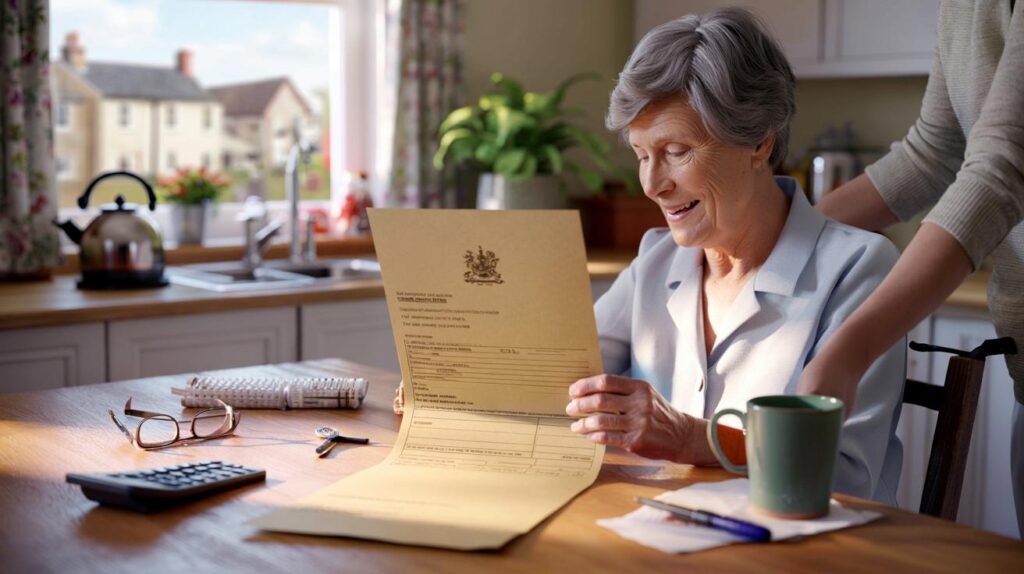
If illness or ageing turns simple tasks into hurdles, help could be closer than you think and worth more than bus fare.
Across Britain, older people quietly take on aches, fatigue and worry as part of daily life. Many don’t realise that support exists if a long-term condition makes personal care or staying safe difficult. Here is what Attendance Allowance can cover, how much it pays in 2025/26, and the full list of 48 health categories used in official statistics.
What Attendance Allowance is and who it helps
Attendance Allowance is a tax-free benefit for people over State Pension age who need regular help with personal care or supervision. It applies whether that help is actually provided by someone or you simply need it. Savings, income and National Insurance history do not affect eligibility.
Attendance Allowance supports care and supervision needs. It has no mobility component and does not fund travel or vehicle costs.
To qualify, your difficulties must have lasted at least six months unless you are applying under special rules for terminal illness. You can claim for physical or mental health problems, single conditions or a mix of issues that together create care needs.
The money on offer in 2025/26
Two rates are payable, depending on whether you need help during the day, the night, or both.
The current rates are £73.90 a week (lower rate) and £110.40 a week (higher rate), usually paid every four weeks.
That means typical payments of £295.60 or £441.60 each pay period. Over a full year, the allowance comes to roughly £5,740.80 at the higher rate. People often use it to fund small but vital support that keeps them independent at home—taxis to appointments, a cleaner, help with laundry, or a monitored alarm.
Almost 1.7 million people were receiving Attendance Allowance at the end of August 2024, according to Department for Work and Pensions figures.
The 48 conditions in the DWP statistics
The DWP groups claims by a “main disabling condition” to publish administrative statistics. The list below is not a checklist for entitlement. It simply shows how the department records conditions and the percentage displayed against each category in its data. Your award depends on your individual care needs, not the diagnosis label.
| Condition category (DWP label) | Percentage shown |
|---|---|
| Hearing disorders | 42% |
| Disease of the muscles, bones or joints | 40% |
| Trauma to limbs | 36% |
| Multiple sclerosis | 52% |
| Learning difficulties | 48% |
| Respiratory disorders and diseases | 33% |
| AIDS | 47% |
| Inflammatory bowel disease | 42% |
| Haemodialysis | 22% |
| Behavioural disorder | 28% |
| Malignant disease | 35% |
| Psychosis | 44% |
| Viral disease (diagnosis not specified) | 13% |
| Heart disease | 50% |
| Frailty | 100% |
| Bowel and stomach disease | 37% |
| Spondylosis | 48% |
| Asthma | 47% |
| Psychoneurosis | 38% |
| Cerebrovascular disease | 42% |
| Skin disease | 37% |
| Haemophilia | 39% |
| Arthritis | 47% |
| Tuberculosis | 53% |
| Chronic pain syndromes | 39% |
| Major trauma (other than traumatic paraplegia) | 45% |
| Dementia | 20% |
| Epilepsy | 44% |
| Cystic fibrosis | 27% |
| Multi-system disorders | 41% |
| Renal disorders | 26% |
| Blood disorders | 39% |
| Peripheral vascular disease | 41% |
| Motor neurone disease | 32% |
| Neurological diseases | 50% |
| Metabolic disease | 38% |
| Cognitive disorder (other) | 22% |
| Diabetes mellitus | 39% |
| Back pain (other/diagnosis not specified) | 43% |
| Multiple allergy syndrome | 44% |
| Traumatic paraplegia | 54% |
| Hyperkinetic syndrome | 27% |
| Alcohol and drug abuse | 37% |
| Bacterial disease (diagnosis not specified) | 43% |
| Visual disorders and diseases | 41% |
| Personality disorder | 48% |
| Coronavirus Covid-19 | 1% |
| Parkinson’s | 30% |
Treat the figures as a guide to the range of conditions seen in the system. DWP caseworkers award the benefit on evidence of care needs—getting in and out of bed, washing, dressing, eating, taking medication safely, and staying safe from harm—rather than on a diagnosis alone.
How to show you qualify
The Attendance Allowance form is long, but it gives you space to explain the real impact of your condition. Focus on need, not bravery. Describe your worst days, how often they happen, and what happens without support.
Describe your difficulties clearly
- Say how long tasks take, what pain or fatigue follows, and whether you need prompts or supervision.
- Note aids you use—perching stool, grab rails, shower chair, pill organiser—and whether you still need help despite them.
- Record falls, near-misses, confusion, or risks with cooking, bathing, or taking medicines.
- Explain night-time needs: toileting, pain relief, repositioning, panic, seizures or wandering.
- Include fluctuating conditions; give a typical weekly pattern and how bad days differ.
Evidence that strengthens a claim
- Recent clinic letters or test results that mention functional impact.
- Care plans, social care assessments, fall reports or alarm activations.
- Medication lists and any side effects that affect daily living.
- Statements from someone who helps you—family, friend, neighbour or paid carer.
If you have a terminal illness, you can claim under special rules with a fast-tracked process and no qualifying period. A clinician completes a short medical form to support this route.
Practical examples of how the benefit can help
People use Attendance Allowance to plug stubborn gaps in everyday life. One claimant pays a gardener to reduce falls risk outside. Another funds a weekly cleaner to keep the bathroom safe and the kitchen hygienic. Someone with dementia pays for a monitored alarm and a befriending visit that doubles as medication prompts. The key is control: you choose what support keeps you safe and steady at home.
What else Attendance Allowance can unlock
Receiving Attendance Allowance can increase entitlement to other support. It may boost Pension Credit via the severe disability addition if you live alone and no one claims Carer’s Allowance for looking after you. It can also increase Housing Benefit or Council Tax Reduction in some cases. If a relative or friend provides care for 35 hours a week, your award can allow them to claim Carer’s Allowance, subject to their income conditions.
Attendance Allowance doesn’t include transport help, but many claimants also qualify for local travel concessions, Blue Badge parking permits, and free NHS prescriptions by age. Check what your council offers and how your award can evidence need.
Key points to remember before you apply
Your diagnosis doesn’t decide your award—your care and supervision needs do. Write about the help you need, not just the help you receive.
Keep a two-week diary before filling in the form. Note good and bad days and the support you needed. Photocopy or scan your form and evidence so you can refer back if DWP asks questions. If writing feels daunting, ask Citizens Advice or a welfare rights team for help with wording and evidence. Calling sooner rather than later sets your claim date while you prepare the paperwork, which can protect weeks of arrears.



Really clear breakdown—had no idea Attendance Allowance could be used for a monitered alarm or a cleaner. Sharing this with my mum. Thanks! 🙂