
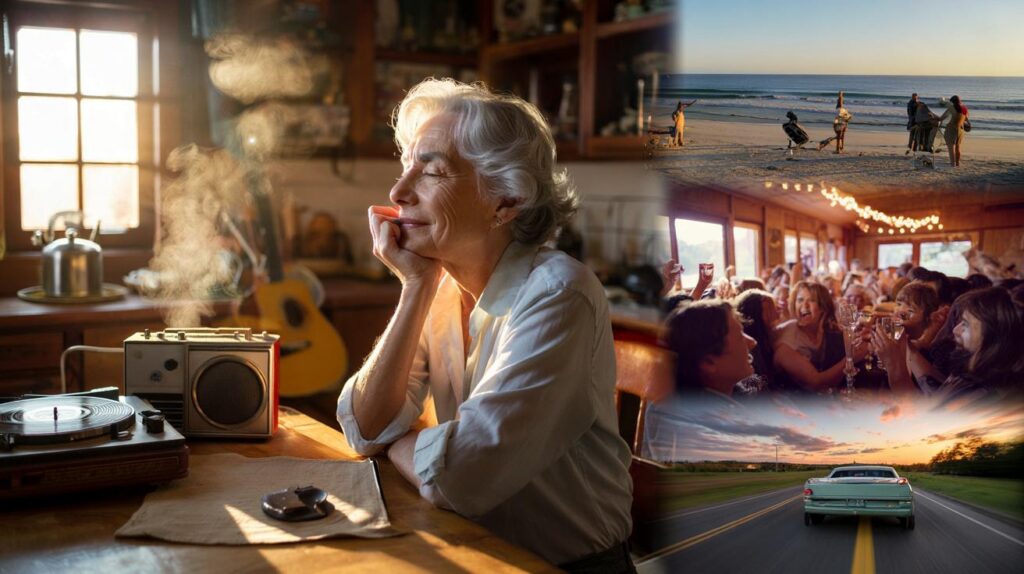
A familiar intro, a remembered verse, and a room changes temperature. Shoulders drop, eyes brighten, and time slips its leash.
Across reunions, pubs, festivals and family kitchens, a handful of 60s and 70s hits keep switching memories back on. VegOut’s nostalgia-stirring list has reignited the debate: why do these eight songs keep turning the clock, and what do they bring rushing back?
The science behind the shiver
Music that embeds in late adolescence and early adulthood carries unusual sticking power. Neuroscientists call this the reminiscence bump: songs heard frequently between 15 and 25 gain privileged access to emotional memory. When those tracks return, the brain recruits regions tied to reward, autobiographical recall and movement. That’s why knees bounce, lyrics resurface and the room feels warmer, even before the chorus lands.
Music encoded in youth behaves like a master key, unlocking multi-sensory memory faster than almost any other cue.
This effect also explains why the same eight records can move millions at once. Before music splintered into endless feeds, radio and shared turntables created common soundtracks. For boomers, that collective listening still binds strangers into a brief, word-perfect choir.
The eight songs that still switch the lights on
‘The Sound of Silence’ – a quiet that says everything
Simon & Garfunkel gave permission to sit with sadness rather than drown it out. Minor chords, spare phrasing and a lyric that sounds like a diary entry make private anxieties feel communal. It lands at memorials and late-night drives, where its hush feels honest rather than bleak.
‘Good Vibrations’ – sunshine engineered to order
The Beach Boys built joy from fragments: cellos, theremins, handclaps and stacked harmonies. It captures the last carefree breath before responsibilities arrived. At school reunions and summer parties, it flashes up suncream, surf wax and the first taste of independence.
‘White Rabbit’ – rebellion with footnotes
Jefferson Airplane turned a children’s tale into a coded manifesto. Its slow build and clipped commands feel both literary and dangerous. These days it sparks knowing smiles—a reminder of when reading differently felt like acting differently, and two minutes could feel like a leap.
‘Let It Be’ – the wisdom of easing off
When The Beatles leaned into acceptance, boomers heard a new kind of courage. Piano, gospel-tinged harmonies and a lyric about motherly reassurance now echo at weddings and farewells. The message translates across decades: some problems yield not to effort, but to kindness.
‘American Pie’ – a singalong elegy
Don McLean wrapped loss in a pub-friendly chorus. Verses spool like a scrapbook; the refrain arms a room of strangers with the same line. It’s both history lesson and hug, turning collective disappointment into something you can belt with friends and feel lighter afterwards.
‘Hotel California’ – glamour with a catch
The Eagles painted success as a corridor you never quite exit. Shimmering guitars sugared a lyric about traps we build for ourselves. It hits differently with age; glasses raise not to mystery, but to recognition that comfort can become a cage if you stop noticing.
‘Stairway to Heaven’ – patience rewarded
Led Zeppelin’s slow-burn epic taught tens of thousands how to wait for a payoff. Whisper to roar, folk to rock, it mirrors the arc of a long evening. In village halls and care homes, it still draws nods from those who danced to it when time felt elastic.
‘Bridge Over Troubled Water’ – the promise to stay
Simon & Garfunkel returned to offer presence rather than protest. That simple pledge—“I will lay me down”—now reads like the oath of carers, grandparents and friends showing up when the headlines fade. Sung softly, it can still steady a table of trembling hands.
| Song | Year | Typical memory cue | Where it resurfaces now |
|---|---|---|---|
| The Sound of Silence | 1964 | Late-night radio, first heartbreak | Funerals, reflective drives |
| Good Vibrations | 1966 | Beach trips, first car | Summer barbecues, reunions |
| White Rabbit | 1967 | College debates, curiosity | Pub quizzes, film soundtracks |
| Let It Be | 1970 | Family advice, new starts | Weddings, hospice rooms |
| American Pie | 1971 | Group singalongs, road trips | Karaoke nights, drive-time radio |
| Hotel California | 1976 | First job, first mortgage | Classic rock sets, guitar shops |
| Stairway to Heaven | 1971 | School dances, first slow dance | Anniversary parties, tribute gigs |
| Bridge Over Troubled Water | 1970 | Acts of care, family resilience | Charity events, bedside playlists |
Where the flashbacks happen
Certain settings amplify recall. Shared spaces add social glue; routine chores give the brain breathing room to retrieve detail. The same chorus can mean different things in different rooms, but the trigger remains reliable.
- Car journeys on familiar routes, especially at dusk.
- School reunions where faces change but lyrics do not.
- Care homes using music for mood and movement.
- Kitchens on a Sunday, with a radio humming behind the oven door.
- Pubs before closing time, when the barman turns to golden oldies.
Shared songs do double duty: they revive personal memories and rebuild a fleeting sense of togetherness in the present.
What the reaction says about all of us
Nostalgia is not a refusal of the present; it is a calibration tool. These tracks help listeners weigh today’s pressures against hard-won perspective. For boomers, the songs often mark the moment hope felt uncomplicated. For their children and grandchildren, they explain the stories behind old photographs and the reason Dad knows every verse.
Streaming figures still spike when these titles surface in films and television. Vinyl reissues sell steadily because sleeves and liner notes anchor ritual. Meanwhile, choirs, ukulele circles and amateur bands keep the arrangements alive, and keep muscles and minds busy.
Build your own time-machine setlist
A personalised sequence magnifies the memory effect. Short, familiar, unskippable. Balance energy and calm so you can ride the lift without a crash.
- Pick 10 tracks you knew by heart before 25; avoid later rediscoveries.
- Alternate tempos: one to move, one to breathe.
- Keep it under 40 minutes to preserve attention.
- Add one song linked to a clear place—bus stop, beach, sixth-form hall.
- Save the anthem for last; let the last line linger in silence.
Useful extras for the modern listener
Music therapy services increasingly use era-specific playlists in sessions with people living with dementia. Families who trial short, tailored sessions often report steadier moods and easier conversations afterwards. If you support an ageing relative, place a small speaker near favourite chairs and schedule music for the same time each day; repetition helps.
Hearing health matters. Many boomers lived through loud gigs and noisy workspaces. If high notes feel harsh, try gentle equaliser cuts around the top end instead of turning down the whole track. Vinyl and cassette-to-digital transfers keep old collections playable; label files with the year you first loved the song, not just the release date, to strengthen recall.
For small venues and community groups, check performance and copying licences before sharing playlists publicly. Live covers remain a powerful draw; simpler arrangements—voice, acoustic guitar, light percussion—make room for the lyric, which is often where the memory lives.



Wow, the reminiscence bump explanation finally makes sense of why my dad tears up before the chorus even lands. I tried a 30‑minute playlist just like you suggest—Good Vibrations into Let It Be—and the kitchen honestly felt warmer. Thanks for the practical tips about equaliser cuts; my ears have been too crispy since the 80s gigs. Definately bookmarking this.