
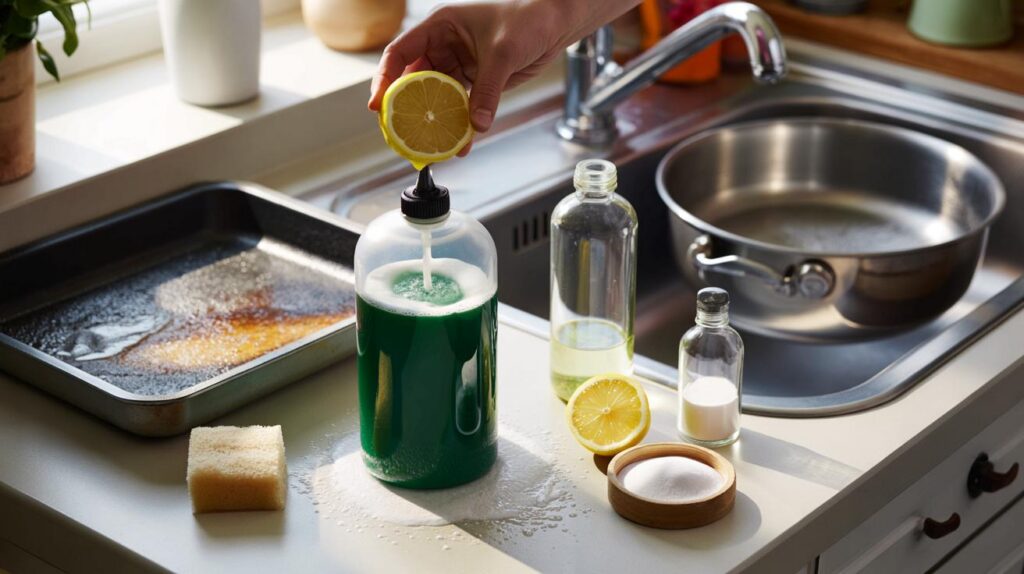
As energy and food prices bite, the humble sink becomes a battleground where tiny tricks decide waste, savings and sparkling results.
Millions of households bin half-used bottles once the suds fade or grease wins the fight. You don’t need a pricier product. You need a smarter mix that wakes up what you already own, trims plastic waste and keeps your plates shining when the big pans start piling up.
Why half-empty bottles keep failing you
Most people over-squeeze, flood the sponge, and chase foam rather than cleaning power. Surfactants work best at the right concentration, not in a bubbly avalanche. Diluting a tired bottle with tap water often unbalances the formula and dulls results. Cold, greasy pans blunt performance further, especially after roasts or stews.
These small missteps cost money. You go through bottles faster. You send more plastic to the bin. You flush more additives into drains. A better routine fixes all three without changing your brand or budget.
The five-ingredient upgrade: safe, fast, cheap
You can revive a fading bottle in two minutes using common cupboard staples. The method lifts baked-on grime, cuts odours, and restores sparkle without harsh fragrances or pricey boosters.
Exact quantities
- 200 ml washing-up liquid (the end of a bottle works perfectly)
- 2 tablespoons white vinegar (about 5% acetic acid)
- 1 tablespoon bicarbonate of soda (food-grade)
- 1 teaspoon fine salt
- Juice of half a lemon, or 1 tablespoon washing soda for stubborn grease
Step-by-step mixing order
Use a clean bottle with a tight cap. Keep the opening clear while fizzing.
Order matters: add vinegar before bicarbonate, cap loosely during the fizz, then seal and shake gently for 5 seconds.
This blend increases degreasing, improves rinse-off, and brightens glass and steel. The action comes from a few simple effects: salt raises ionic strength and helps break films; lemon’s citric acid tackles mineral haze and odours; washing soda, if used, raises alkalinity against stubborn fats; the brief fizz helps lift residues from surfaces and sponge fibres.
What changes at the sink
Grease, odour and glass clarity
Roasting tins, gratin dishes and stockpots clean faster. Grease releases with fewer swipes. The lemon note neutralises fridgey smells on plastic boxes. Glasses rinse clearer, with fewer water spots when your local water runs hard. On stainless steel, the finish looks brighter because the mix rinses cleanly and leaves less film.
Use warm, not scalding, water. Heat softens fats, while the upgraded mix breaks the bonds that keep grease clinging.
How much you could save
Stretching a tired bottle can shift your household maths. The figures below are an example for a family that hand-washes daily.
| Item | Typical figure | With the upgrade |
|---|---|---|
| Bottles per season | 6 | 4 |
| Cost per bottle | £1.50 | £1.50 |
| Add-on ingredient cost | — | ~£0.10 per mix |
| Estimated spend per season | £9.00 | ~£6.70 |
The mix reduces bottle purchases while adding pennies in cupboard staples. You also cut two pieces of plastic and reduce chemical load entering wastewater. You still get the comfort of your usual brand, just tuned to the job.
Science in simple terms
Washing-up liquid contains surfactants that loosen oils and hold them in water so you can rinse them away. A pinch of salt helps that process by changing the water’s behaviour at the surface. Lemon’s citric acid complexes minerals, so glass looks clearer and stainless steel loses that cloudy cast. A little bicarbonate shifts pH and introduces mild abrasiveness in the bubbles. If you swap lemon for washing soda, the higher alkalinity tackles polymerised cooking oils on oven trays and cast aluminium pans.
Do not chase mountains of foam. Focus on contact time and fresh, warm water. Fewer squeezes, better results.
Safety notes and surfaces to avoid
- Never mix the upgrade with bleach or chlorine-based cleaners. Acid plus bleach releases dangerous gas.
- Avoid prolonged contact with aluminium if you used washing soda. Strong alkalis can mark the surface.
- Skip natural stone like marble or limestone with the lemon or vinegar present. Acids etch calcium-based stone.
- Do not soak seasoned cast iron. Soap and alkalis strip the protective layer; wipe and dry instead.
- Label the bottle clearly and keep away from children and pets.
Store the mix capped. The fizz happens immediately and settles. Use within two weeks for best fragrance and performance. If the bottle feels pressurised after mixing, briefly loosen the cap to vent, then reseal.
Make your bottle last longer
Easy habit changes that compound the gains
- Pre-scrape plates with a spatula to keep fat out of the sink.
- Soak burnt pans for 10 minutes in hot water with a teaspoon of your upgraded liquid.
- Refresh the sponge mid-wash; a saturated sponge hoards grease and wastes product.
- Work from cleanest glasses to dirtiest trays to extend the power of one bowl.
- Air-dry on a rack to avoid towel lint and smears.
Environmental gains that add up
Fewer bottles mean less plastic to collect, transport and recycle. Using less product trims the total volume of fragrances and preservatives going down the drain. In hard-water areas, fewer re-washes save energy and litres of hot water. Kitchen routines scale: small shifts, repeated daily, nudge bills and bins in the right direction.
If you want to go further
Run a quick home test. Time how long a greasy pan takes to clean with your usual liquid. Repeat next day with the upgraded mix using the same water temperature and sponge. Note the swipes, rinse time and water used. You will spot where the gains appear for your setup, whether it is faster release of fat or better rinse-off.
You can also tailor the formula. For delicate glassware and gold-rimmed cups, use lemon rather than washing soda and halve the bicarbonate. For barbecue trays, choose washing soda and warm water, then finish with a clean rinse. For heavily stained plastic, sprinkle a pinch of bicarbonate on the sponge and apply the upgraded liquid on top to add gentle abrasion without scratching.
One bottle, five cupboard tweaks, real control. Keep your cash, clean faster, and send less plastic to the bin.



Tried this tonight on a burnt-on lasagne dish and WOW, it cut through the grease faster than my usual glug-glug routine. The lemon + salt combo gave the glasses a clearer finish too. I was worried the fizz meant I’d wrecked the mix, but following the order made it tame. Also loved the reminder to use warm (not scalding) water. I’ll defintely label the bottle—nearly grabbed the bleach out of habit last time. Small tweaks, big win.