
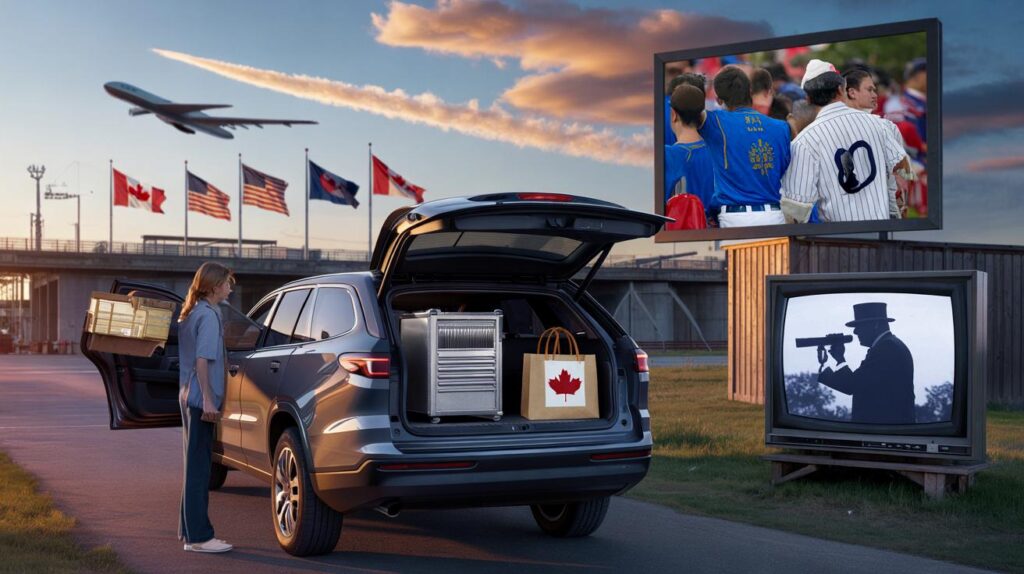
A nostalgic TV advert, a baseball showdown and a cross-Pacific flight set the stage for a fresh bout of trade theatre.
While flying to Malaysia for the Asean summit, Donald Trump said he would add 10 percentage points to existing US tariffs on Canadian imports, citing an Ontario government advert that re-edited Ronald Reagan’s anti-tariff remarks as the final straw.
What changed and when
The announcement landed on Saturday, mid-journey aboard Air Force One. The move piles a further 10 percentage points on top of current tariffs paid by importers of Canadian goods entering the United States. The message followed days of rancour over an Ontario-funded TV spot that used snippets from a 1987 Reagan address to argue that tariffs damage American consumers.
Trump denounced the advert as a “fraud” and demanded it be pulled immediately, particularly from high-visibility slots during the World Series between the Toronto Blue Jays and the Los Angeles Dodgers. Ontario’s premier, Doug Ford, said he would pause the campaign to help talks resume, but confirmed spots already booked for the baseball weekend would still air.
Trump says US importers of Canadian goods will face an additional 10 percentage points in tariffs on top of current rates.
The tariff picture: where the extra 10 points may bite
Washington already applies a patchwork of duties on Canadian products. A general levy of 35% sits on the books, though many goods are exempt under an existing free trade agreement. Sector-specific measures include 50% on metals and 25% on automobiles. If the new increase applies uniformly, firms could face the following indicative rates.
| Category | Current rate | If +10 points applies | Notes |
|---|---|---|---|
| General levy on Canadian goods | 35% | 45% | Many products exempt under an existing free trade agreement |
| Metals (e.g., steel, aluminium) | 50% | 60% | Sector-specific measure already in place |
| Automobiles | 25% | 35% | Ontario hosts a large share of Canada’s car production |
Tariffs are paid by the importing company at the US border. Costs can pass through to buyers depending on contracts and market conditions.
Why a Reagan advert touched a nerve
The advert at the heart of the dispute features Ronald Reagan’s line that tariffs “hurt every American”. The Ronald Reagan Foundation criticised Ontario’s use of selective footage and said the provincial government had not sought permission. Ontario argues it kept Reagan’s words intact, while rearranging the order of lines from a longer broadcast.
Ford had pledged to run the advert in every Republican-led district, turning the message into a pointed appeal to conservative voters. That calculation appears to have backfired with the White House, which cut off talks over the spot before Trump unveiled the tariff escalation.
Politics spilled into sport
The World Series became a stage. Ontario and California’s governors, Doug Ford and Gavin Newsom, joked on social media about wagers, tariffs and cross-border gifts: maple syrup one way, wine the other. The banter kept the dispute in view during one of North America’s most-watched sporting events.
Ottawa’s response and the regional angle
Prime Minister Mark Carney, speaking on the sidelines of the Asean summit, said Canada remained ready to keep talking with one of its biggest trading partners, while pushing on with a plan to diversify trade ties across Asia. He flagged an “ambitious” forthcoming budget aimed at long-term investment at home, signalling that Ottawa sees room to support affected sectors.
Trade minister Dominic LeBlanc stressed that progress with Washington tends to follow direct engagement. Trump, for his part, said he had no intention of meeting Carney in Malaysia. The pause in advertising may still open a door to technical contacts in the coming days, but neither side confirmed a timetable.
Three-quarters of Canadian exports head to the United States, underscoring the leverage and the risk on both sides of the border.
What it could mean for households and businesses
Ontario’s manufacturing heft, especially in autos, leaves both supply chains and consumers exposed. An extra 10 percentage points on top of existing levies alters the maths for importers and, potentially, retail prices. The impact hinges on contracts, inventories and how much cost retailers pass on. Here are three places you may feel it.
- Cars and parts: A Canadian-built family SUV valued at £30,000 that already faced a 25% duty would incur an additional £3,000 if the full 10 points apply, lifting the duty element to roughly £10,500. Dealers might share the pain through discounts, but choice could narrow.
- Metal-heavy goods: From machinery to kitchen appliances, a higher metal tariff raises input costs. Expect staggered price changes as existing stock clears, followed by firmer sticker prices if the duties remain.
- Cross-border shopping: Small retailers relying on Canadian suppliers may trim orders or switch to US or Mexican sources. That can reduce variety and squeeze margins, especially for niche items.
Who actually pays and how the bill travels
US importers pay the duty at customs. Some absorb it to defend market share; others renegotiate supply contracts or pass costs to the next buyer. The final shopper sees the effect only if increases ripple through wholesale and retail layers. In concentrated markets, pass-through tends to be higher and faster.
How this fits the wider trade picture
Canada is, according to officials, the only G7 country yet to reach a deal with Washington since the US began raising tariffs on major partners. The latest step complicates already delicate talks. It also arrives as Ottawa courts Asean economies to reduce reliance on the US market.
Business groups on both sides of the border urged a diplomatic fix, warning that ratcheting up duties erodes North American competitiveness. The Canadian Chamber of Commerce called for further negotiation and flagged the risk that a tit-for-tat cycle would sap investment plans.
Key timeline and stakeholders
- Saturday: Trump, en route to Malaysia, announces the extra 10 percentage points on Canadian imports.
- World Series weekend: Ontario’s Reagan advert airs in prime slots; Ford had paused the broader campaign but honoured existing bookings.
- Asean summit: Carney signals readiness to keep talking while advancing economic diversification and a major domestic budget.
- Next steps: No confirmed leader-level meeting; technical channels may handle contact if both sides soften rhetoric.
Practical takeaways for firms and consumers
Importers can run quick scenario tests: add 10 percentage points to current applicable rates and map outcomes for margins at different pass-through levels (for example, 0%, 50%, 100%). Consider splitting orders, extending delivery schedules to ride out volatility, or shifting to suppliers covered by preferential terms under existing free trade exemptions.
Households weighing big-ticket purchases might ask dealers about inventory dates and price guarantees. Stock imported before the new rate takes effect could be priced differently. If you’re shopping for appliances or a car, request a cost breakdown that clarifies any tariff component and how long quoted prices will stand.
A note on exemptions and effective rates
While headline tariffs look steep, the effective rate paid across the entire import basket can be lower because many lines are exempt under pre-existing arrangements. That gap between the headline and the effective rate explains why some categories move in price more slowly than others. Businesses should verify tariff codes and any available relief before re-pricing or re-sourcing.



If US importers pay at the border, how likely is a full pass-through to shoppers? In concentrated markets like autos, it usually hits faster. Any data on effective rates vs headline ones, and how long inventories can cushion the shock?
A re-cut Reagan ad triggers a 10-point hike? That feels like theater, not policy. Also, did anyone else notice the timing with the World Series—convenient distraction, or just coincedence?