
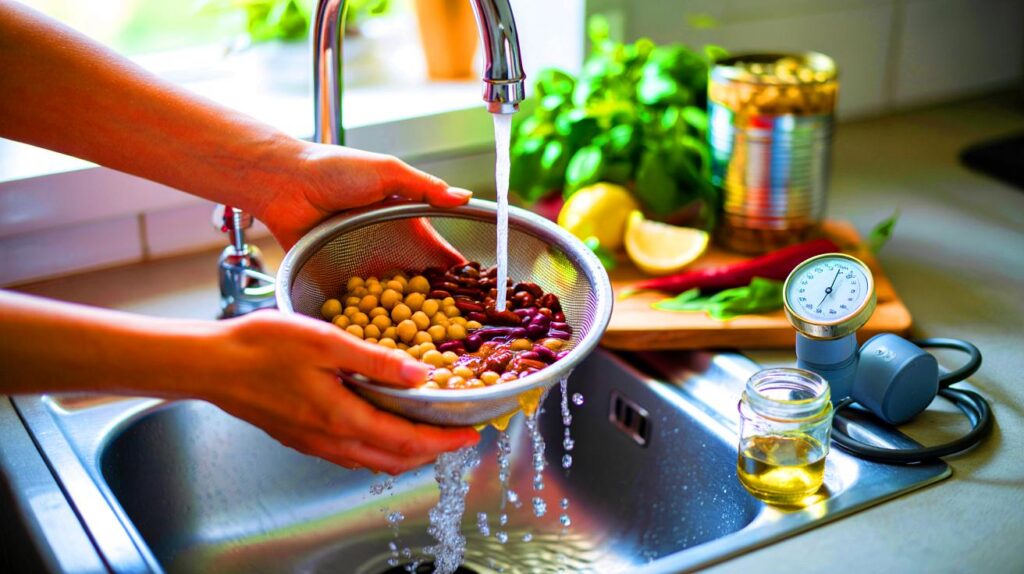
Your nan swore by it. Chefs whisper about it. And your blood pressure monitor might thank you for it sooner than you think.
Across Britain, cupboards brim with tins that save dinners and budgets. Yet one small step at the sink can change the flavour, salt load and how your gut reacts. The habit looks fussy. The gains stack up fast.
What rinsing actually changes
Most savoury tins sit in brine. That liquid keeps food safe and tasty on the shelf. It also carries a lot of sodium. Tip the tin into a sieve and run the tap, and you wash off a substantial share of that salt.
Rinsing common tinned vegetables and legumes can trim the sodium hit by up to 40%, without touching the portion size.
If you track salt because of high blood pressure, heart risk or simply taste, that is a big swing. UK guidance caps adult salt at around 6 g per day. A heavy-handful of brine can push you over. Rinsing pulls it back. You also free up the natural flavour of the food, which matters in salads, cold platters and lightly seasoned dishes.
The liquid itself is edible. Forgetting to rinse will not make you ill. You just keep the brine’s salt and its slightly metallic note. In the pan, that briny edge can mask spices and herbs. Under cold water, it goes down the drain.
Why legumes feel lighter after a rinse
Beans, chickpeas, lentils and peas carry complex sugars that your gut bacteria love. Those sugars produce wind and bloating. Much of that sits in the canning liquid and on the surface of the beans. A thorough rinse helps many people feel more comfortable.
Rinse, swirl, drain. Three quick moves reduce salt and the compounds that feed bloating, while leaving the fibre and protein you paid for.
How to rinse for the best result
- Tip the tin into a sieve. Discard the liquid unless you plan to use it (see aquafaba below).
- Run cold water for 10–20 seconds. Stir the beans gently with your hand or a spoon.
- Shake the sieve and let it drain for a minute. Pat dry for salads or dips.
- Taste a bean. If it still tastes salty, rinse a little longer.
Serve cold? Rinse every time. Heat in a saucy stew? You can keep a splash of the liquid if you want thicker texture or extra seasoning, then adjust salt later.
When not to rinse
Some tins bring their own useful liquid. Fruit usually sits in syrup that protects aroma and texture. Rinsing fruit dulls the flavour and can bruise the flesh. Labels also guide your choice. If a tin says “ready to eat”, use it as is. If it says “no added salt” or “low sodium”, rinsing is often optional.
| Food | Rinse | Keep liquid | Notes |
|---|---|---|---|
| Chickpeas, beans, lentils | Yes, especially for salads, dips and wraps | Sometimes | Keep some liquid for stews; see aquafaba for baking |
| Sweetcorn, peas, mixed veg in brine | Usually | Rarely | Rinse to dial back salt and briny taste |
| Fruit in syrup or juice | No | Yes | Rinsing flattens flavour; use juice for desserts |
| “Ready to eat” soups or baked beans | No | Yes | The liquid is part of the recipe balance |
| “No added salt” veg | Optional | Optional | Taste first; rinse if you still sense brine |
Aquafaba: plant-based magic from a tin
The liquid from tinned chickpeas, called aquafaba, whips into foams and binds bakes. Keep it for vegan meringues, chocolate mousse or mayonnaise. It adds body without eggs and keeps waste down. Just strain it into a clean jar and chill for a few days, or freeze in ice-cube trays for later.
Safety, storage and labels
Tinned foods go through heat treatment above 100°C. This process, called appertisation, kills microbes and keeps food safe for months or years. Once you open the tin, the clock starts again. Transfer leftovers to a clean, covered container, chill promptly and use within 48 hours.
Mind your utensils. Use a clean sieve and spoon to avoid cross-contamination from raw meat or unwashed veg on the board. Good habits preserve flavour as well as hygiene.
The liquid is safe to eat; the real question is taste, salt and how the dish will feel on your stomach.
Label reading helps. Compare “per 100 g” values and check whether figures refer to “drained” or “as sold”. A savvy swap to “no added salt” tins lowers sodium before you even turn the tap.
What this means for your shop and your health
One in three adults lives with high blood pressure in the UK. Salt nudges that risk upwards. If a tin lists 400 mg sodium per 100 g as sold, and you rinse away up to 40%, your eaten portion could drop to roughly 240 mg per 100 g equivalent. That difference stacks up across lunches and dinners.
You also get better control in the pan. Instead of fighting the brine, you season on your terms. Herbs, citrus and chilli taste brighter. Dressings need less sugar to balance salt. Kids often accept beans more readily when the briny tang goes.
Common questions, straight answers
Does rinsing wash away nutrients?
You lose a little of what sits in the liquid, mainly water-soluble bits from the soak and cook stage. The core remains: fibre, protein, slow carbs and most minerals. For many households, the lower salt and calmer digestion justify the rinse.
Is the water use worth it?
For a single tin, a short rinse uses a few hundred millilitres. If you rinse daily, be brisk: a steady, not blasting, stream works. You can catch the rinse water in a bowl and feed garden plants that tolerate it, as long as you keep detergents away.
Can I cook straight from the tin?
Yes, especially with products designed to be heated and served. For beans in brine, a quick rinse sharpens flavour. If you rely on the liquid to thicken a sauce, keep a little and taste as you go.
Smart ways to use what you keep
Do not bin every drop. Stir a spoon of bean liquid into soups for body. Slash the added salt to compensate. Fruit syrup sweetens porridge or yoghurt. You turn a shelf staple into two meals’ worth of flavour with no extra spend.
Trying to cut salt fast? Build a plan: rotate in “no added salt” tins, rinse standard ones, and season with lemon, garlic, smoked paprika and fresh herbs. Track your blood pressure at home for a month. Many readers report steadier numbers, fewer late-night thirsts and less bloating after switching their routine.



Rinse for salads, keep the chickpea liquid for baking—got it. Has anyone actually whipped aquafaba into decent meringues or mayo at home? 😄