
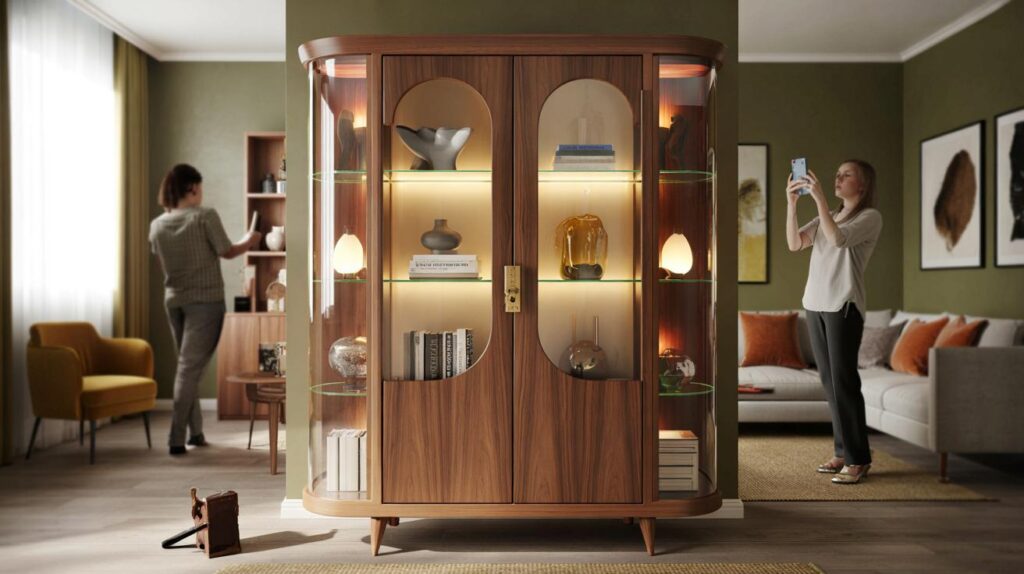
Across Britain, a familiar glass-fronted silhouette is reappearing in living rooms and shop windows alike, stirring quiet nostalgia.
Collectors call it a curio cabinet. Families call it gran’s pride and joy. Either way, this vintage display case has stepped back into the spotlight, powered by a swing to bold colour, maximalist styling and a growing appetite for second-hand quality over flat-pack sameness.
The comeback of the curio cabinet
The 1970s never fully left our homes. Rattan, amber glass and walnut veneers kept the ember glowing. In 2025 that ember has caught fire, and the curio cabinet sits right in the middle of it. These tall display cases, often with glazed doors, light fittings and mirrored backs, anchor a room and give treasured objects a proper stage.
Maximalism drives the look. People want layered shelves, mixed textures and unapologetic colour. A curio cabinet supports that shift because it keeps the visual drama contained. The outside stays neat. The inside tells the story.
Well-kept 1970s and 1980s display cabinets now trade from £150 to £600, while rarer designer or Italian-made pieces can pass £2,000.
Why now? Three reasons stand out. First, inflation pushes shoppers towards second-hand value and long-lasting joinery. Second, personalisation beats uniformity: a cabinet showcases your finds, not a catalogue’s. Third, sustainability matters. Extending a cabinet’s life avoids fresh manufacturing and gives old timber another decade of service.
Why the 1970s vibe resonates in 2025
Olive, burnt orange and mustard sit happily next to beige and charcoal. That palette softens the glass and chrome that many curio cabinets carry. The form also suits smaller British rooms. You gain vertical display without swallowing floor space, which makes landlords, flat-sharers and families smile.
What buyers actually pay this year
Prices vary by timber, hardware and condition. Internal lighting, bevelled glass and original keys raise value. Flat, scratched veneer and wobbly doors pull it down. Expect to see the following bands when you scan listings or visit salerooms.
| Type | Typical price | Signs of value |
|---|---|---|
| Standard veneered cabinet (unlit) | £120–£250 | Clean veneer, tight hinges, stable shelves |
| Glazed cabinet with lighting | £250–£600 | Working electrics, mirrored back, bevelled edges |
| Designer or Italian-made unit | £700–£2,200+ | Maker’s mark, solid hardwood, distinctive hardware |
| Modular wall system with display bay | £400–£1,200 | Complete modules, original brackets, no sun fade |
Condition wins the day. Clean glass, even colour and smooth-running doors add more value than a famous name alone.
How to style yours without clutter
Think of the cabinet as a frame. Give the eye rhythm, contrast and small pauses. Work in odd numbers, layer heights and add light to draw depth from the glass.
- Build in thirds: one shelf for books, one for ceramics, one for glass or metal.
- Mix textures: matte stone beside glossy glaze, linen beside brass.
- Limit each shelf to a colour story, such as rust, smoke and cream.
- Use risers or stacked books to vary heights and avoid a flat line.
- Add warm LED strips if the cabinet has no factory lighting.
- Leave a few centimetres of air around star pieces so they breathe.
Place the cabinet where daylight skims, not blasts. Harsh sun bleaches veneer and objects. Angle the case slightly to catch reflections without turning it into a mirror.
How to spot quality and avoid duds
Age alone does not guarantee craftsmanship. Many 1970s cabinets earned their keep through sensible design rather than premium materials. Check build and hardware before you fall for the glow.
Checklist before you bid
- Run your hand along edges. Lifting veneer signals hidden damp.
- Open and close doors. They should meet evenly and latch without force.
- Look at the back panel. A clean, tight back means the case stayed dry.
- Tap the glass. Even tone suggests uniform thickness; chips near hinges cut value.
- Check electrics. Original bulbs are cheap; frayed cords demand a rewire.
- Smell the inside. Stale odour hints at loft storage and possible mould.
If you need a quick rule: buy the best condition you can carry and afford; restoration costs rise faster than hammer prices.
Safety, restoration and sustainability
Secure tall cases to the wall, especially on carpet or if children visit. Use discreet L-brackets into studs or masonry. Fit safety film on older glass if you plan to use the cabinet in a busy hallway.
For restoration, start light. Clean with warm water and a drop of washing-up liquid, then revive the finish with a gentle furniture wax. Replace missing shelf clips with metal versions rated for glass. For deep scratches, a professional French polish brings back depth without stripping the veneer.
Rewiring built-in lights costs less than a night out and reduces risk. Ask an electrician to fit a modern inline switch and low-heat LEDs to protect both timber and treasures.
Where people actually find them
Supply sits in the usual places, but timing helps. Watch midweek local auctions. Visit charity superstores on delivery mornings. Check house-clearance depots, church fairs and village Facebook groups where collection beats postage. Many families also have a cabinet in storage. A polite ask often opens a loft door.
Eight signs yours could fetch top money
- Mirrored back panels with no foxing or clouding.
- Bevelled or curved glass rather than flat panes.
- Original key, lock and matching brassware.
- Maker’s label or stamp fixed inside a door or drawer.
- Integrated lighting with tidy factory routing, not a later drill job.
- Thick glass shelves with polished edges, not flimsy inserts.
- Even veneer grain across doors and sides, showing one batch of timber.
- Modules or wall system components still together and complete.
How to fold a curio cabinet into a modern room
Pair the rich timber with a crisp sofa and a jute rug to balance warmth and texture. Use contemporary art above or beside the case to avoid a theme-park feel. Keep cables invisible. If you collect toys, silver, shells or records, rotate displays every season so the cabinet feels alive.
Extra ideas that add mileage
Turn a narrow cabinet into a home bar. Fit a bottle rack on one shelf, keep glassware up top and store bar tools in a shallow tray. For kitchens, line the back with peel-and-stick cork to pin recipes and tasting notes behind the glass. In small flats, put a compact cabinet in the hallway and use it for keys, post and a rotating mini-gallery of travel mementoes.
For budgeting, set a ceiling before you start bidding. Add 15% wiggle room for transport, cleaning materials and any new lighting. If you plan to resell, photograph in daylight, measure precisely and list shelf load limits. Buyers pay more when they trust the details.



This is the first guide that actually explains what makes a 70s display cabinet valuable. The banding by features (bevelled glass, lighting, maker’s label) is super clear, and the styling tips are gold. I’d definately have skipped a wobbly hinge before; now I’ll check backs, glass tone and electrics first. Cheers!