
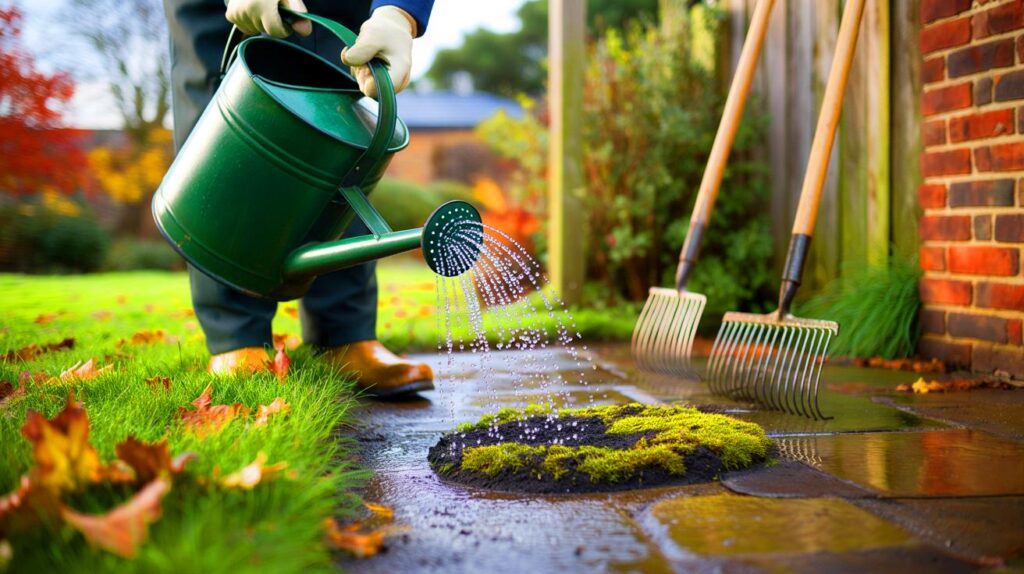
Rain-soaked evenings and cooler days are stacking the odds against your lawn, yet a simple seasonal tweak could change everything fast.
Across the country, patches of spongy growth are spreading as soil stays wet and compacted. Gardeners are turning to a single, inexpensive addition to their autumn routine that both checks the spread and deepens the colour of tired turf.
Why moss surges when the weather turns damp
Moss loves moisture, shade and compacted ground. After a dry summer, soil often tightens up. Then the first October rains sit on the surface instead of draining through. Thin grass struggles, light levels dip, and moss takes the opportunity.
Left alone, the problem grows. Walkways get slippery. Grass misses out on space, light and nutrients. By winter, swards look patchy and weak just when they need strength.
The simple item to use this month
Iron—most commonly applied as ferrous sulphate—pushes back hard at moss while giving grass a visible lift. It acts quickly in cool, wet conditions, so the timing suits British autumn weather.
How iron knocks moss back and greens grass up
Iron changes the surface conditions that moss relies on. It acidifies the immediate zone, dries out the fleshy moss and disrupts its growth. At the same time, iron feeds the plant process that makes lawns look green by supporting chlorophyll. You get control and cosmetic improvement in one pass.
One low-cost dose of iron can blacken moss in 24–48 hours and deepen lawn colour within the week, with coverage as high as 200 m² per kilogram.
Because iron is a micronutrient for grass, the lawn tolerates it well when you follow the label. Moss does not. That difference lets you improve appearance while you tackle the invader.
Step-by-step: apply iron the right way
- Pick a dry window: aim for 24 hours without rain and temperatures above 6°C.
- Choose your form: soluble ferrous sulphate crystals or a ready-to-spray liquid iron.
- Mix accurately: follow the product label; stronger is not better.
- Apply evenly: use a sprayer for liquids or a watering can with a fine rose.
- Keep off hard surfaces: iron can stain paving, decking and stone.
- Let it work: leave the lawn undisturbed for a day to two days.
- Rake out the blackened moss gently to avoid tearing living grass.
Plan for a no-rain window and clean up any splashes on patios immediately to prevent rust-coloured stains.
Rates and timing that make sense
Most home gardeners use 4–5 g of ferrous sulphate per square metre in solution for moss control. Liquid products vary by concentration, so rates differ; many labels guide you to 3–10 ml per square metre. Treat now, while soil stays cool and damp, then repeat light applications as needed through late autumn if moss persists.
Always read the label. Wear gloves, keep pets and children off the area until the spray has dried, and rinse equipment well after use.
What to do after treatment
Moss will blacken within two days. Rake it out with a spring-tine rake or a light scarifier. Collect and bin the debris rather than composting it. You will see thinned patches, which marks where moss had smothered grass.
Overseed, feed and improve the ground
Overseed bare areas with a shade-tolerant, fine-leaf mix. Brush seed into the surface, then topdress with a fine layer of compost or loam. Water lightly if the week turns dry. A balanced autumn fertiliser at low nitrogen supports root strength without forcing sappy growth.
Tackle the cause next. If compaction drove the issue, aerate. A simple garden fork every 10–15 cm helps small lawns. For heavy soils, hire a hollow-tine aerator and topdress with sand–loam to open the structure. If shade rules the border, thin low branches or consider reshaping beds with groundcovers that accept low light.
Costs, coverage and kit
| Product type | Typical rate | Coverage per 1 kg or 1 l | Approximate cost | Notes |
|---|---|---|---|---|
| Ferrous sulphate crystals | 4–5 g/m² in solution | 200–250 m² per kg | £6–£10 per kg | Fast action, can stain hard surfaces |
| Liquid iron (various strengths) | 3–10 ml/m² | 100–300 m² per litre | £8–£15 per litre | Convenient dosing, quick colour-up |
| Lawn sand (with iron) | As per label | Varies by brand | £7–£12 per 20 kg | Helps dry the surface, slower to apply |
At 5 g/m², a £7, 1 kg bag of crystals treats roughly 200 m². That’s about 3–4 pence per square metre—less than a first-class stamp covers on the envelope.
Common mistakes to avoid
- Overdosing to force quicker results, which can scorch grass tips.
- Applying before heavy rain, which dilutes and washes away the treatment.
- Skipping aeration and drainage fixes, which invites the moss straight back.
- Ignoring shade and mowing too short; scalped grass loses the fight.
- Leaving spills on paving; wipe and rinse immediately to prevent stains.
If you keep pets and children
Keep them off the lawn until the spray has dried or the granules have been watered in and the surface is dry. Store products securely and label your sprayer or watering can so it is never used on edibles. If your lawn drains towards a pond or stream, keep a buffer strip and avoid runoff.
When iron is not enough
Severe moss often signals a deeper issue. If water lingers for hours after rain, improve drainage with hollow-tine aeration and sand-based topdressing, or consider french drains on persistent, heavy clay. Deep shade may justify rethinking the space: extend beds, switch to bark, or sow a shade-class turf mix designed for 30–50 percent lower light.
Extra help this month
A quick soil check you can do today
Try a simple infiltration test. After a dry spell, mark out a 30 cm square, pour in one litre of water and time how long it takes to disappear. More than 10 minutes suggests compaction. Prioritise aeration and topdressing before you rely on repeat moss treatments.
Pair iron with smart mowing
Set blades higher, around 4–5 cm, while light levels fall. Longer leaf blades capture more light and outcompete moss. Sharpen the mower to avoid ragged tips that lose moisture and look grey.
A single autumn pass: iron to suppress moss, aeration to open the soil, and seed to thicken sward—this trio sets up a stronger winter lawn.
If you want a schedule, try this: week one, apply iron and rake after 48 hours; week two, aerate and topdress; week three, overseed and keep off heavy footfall for seven days. Repeat a light iron application in four to six weeks if new moss shows.



Tried ferrous sulphate last autumn and the moss blackened in 48 hours—spot on. At about 5 g/m², one cheap bag covered my small patch and the colour popped. Just rinse paving fast or youll get those rusty specks.