
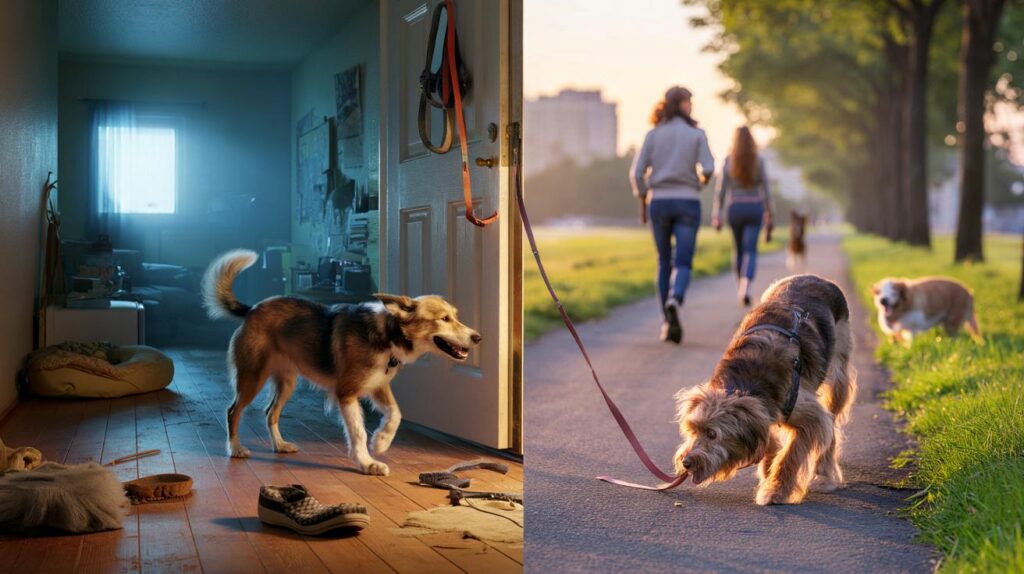
Chewed slippers, noisy nights, tense neighbours: the clues are piling up that many dogs lack the right daily routine.
Across the country, trainers and vets keep meeting the same pattern. Dogs with too little time outside show restlessness at home, short fuses on lead, and a growing list of health niggles. The fix starts with frequency and quality, not gadgets or gimmicks.
Why daily walking changes behaviour
Walking does more than tick off toilet breaks. A good outing blends movement, sniffing, and safe contact with the world. That mix burns energy, calms the nervous system, and gives your dog a job to do.
- Body: walking maintains muscle, supports joints, and helps control weight.
- Mind: new scents and sounds challenge the brain and blunt boredom.
- Social life: polite encounters teach manners and reduce friction with other dogs and people.
Movement + sniffing + short training games on each walk often reduce indoor chaos within days.
How often should you walk your dog
Needs vary by age, health and living set-up. The broad pattern below fits most households. Adjust the pace and terrain to match your dog’s shape and stamina.
| Life stage | Outings per day | Main walk length | Focus |
|---|---|---|---|
| Puppy | 5–8 brief toilet trips | 20–30 minutes, easy pace | Social sights and sounds, short training, rest after |
| Adult | 3–4 structured outings | 30–45 minutes once daily | Steady movement, sniff time, recall games |
| Senior or on medication | 4–5 gentle loops | 10–20 minutes, flat ground | Comfort, warm-up, frequent pauses |
Most healthy adult dogs do best with 3 to 4 outings daily, including one continuous walk of at least 30 minutes.
Flat or house with garden: why it still matters
Living in a flat means you schedule every toilet break. Plan three trips outside a day as a baseline, with one longer walk. A garden helps with convenience, but it does not replace the richer world beyond your gate. New paths, fresh scents and varied surfaces matter for confidence and calm.
Rotate locations during the week. Parks, woodlands and quiet streets all add different challenges. Short car rides to a new spot pay off in better behaviour at home.
Signs your dog needs more or better walks
- Chewing furniture, door frames or shoes after calm periods at home.
- Pacing, whining, or startling at minor noises.
- Housetraining setbacks, especially late afternoon or evening.
- Weight gain, stiff movement after naps, or low stamina.
- On-lead reactivity that fades once the dog has moved for 15–20 minutes.
Behaviour often improves when you add 10–15 minutes of true sniff time to the main walk.
Build a week that actually works
Structure beats guesswork. Anchor your day to predictable windows and keep the main walk at a time when your dog feels confident and alert.
A sample daily pattern for busy households
- Morning: 10–15 minutes around the block with two short training breaks.
- Midday: 20 minutes, slower pace, with three “sniff zones” where your dog leads the route.
- Late afternoon or evening: 30–45 minutes in a quieter area; add recall, hand-targeting, or fetch in short bursts.
- Before bed: 5–10 minutes for a calm toilet trip.
On two or three days a week, swap the evening route for a different environment. Add woods, a riverside path, or a safe, quiet estate to vary scents and surfaces.
Puppies and teenagers: special rules
Puppies need many short trips because their bladder and joints are still developing. Aim for a toilet break about every two hours when young, with controlled social exposure. Avoid long, forced marches. Use soft ground, limit stairs, and finish before the pup fades.
Adolescent dogs often look strong but struggle with impulse control. Keep the main walk structured. Mix heelwork for 1–2 minutes with two minutes of free sniffing. Repeat that cycle. You build focus without boiling the kettle of frustration.
Older dogs and those with health conditions
Short and frequent beats long and rare. Warm up for five minutes. Choose flat, grippy surfaces. Watch for head turns, slower steps, or lagging on corners. These cues say “time for a rest”. Use three or four shorter loops across the day rather than one big push.
Comfort rules the plan: frequent pauses and a gentle pace keep senior dogs keen to go out again tomorrow.
Quality turns a walk into therapy
Add simple upgrades
- Route variety: change direction often; let your dog select turns for five minutes.
- Sniff breaks: stand still and release the lead slightly so the nose can work.
- Micro-games: one-minute sits, hand targets, or scatter-feeding in grass.
- Timing: avoid hot pavements and rush-hour noise if your dog spooks easily.
- Reading the dog: yawns, tongue flicks, or pulling hard can signal stress. Adjust the route or pace.
Urban realities: when time runs tight
Not every day allows a 45-minute ramble. If you only have 20 minutes, use a “sniffari” setup. Walk two short blocks, then spend the rest of the time in a green spot with a long line and calm sniffing. You will often see better results than a fast lap of the same pavement.
On rainy days, combine a shorter outdoor trip with indoor brain work. Use a rolled towel with kibble hidden inside, a cardboard box sniff hunt, or three five-minute training bursts spread across the evening.
Weather, safety and practical numbers
- Heat: test the pavement with the back of your hand for five seconds. If it feels hot, shift to shade or grass.
- Cold: small or thin-coated breeds benefit from a jacket under 5°C and shorter routes in wind.
- Lead length: a standard 1.2–2 metre lead gives control in busy streets; a 5–10 metre long line suits quiet parks.
- Total daily movement: most adult pet dogs thrive on 60–90 minutes of mixed walking and sniffing spread across the day.
Think in blocks: three to four outings, with one longer, steady walk and at least ten minutes of true scent work.
When to seek extra help
If your dog lunges, freezes, or panics outside, shorten the route and choose quieter times. Ask a qualified trainer for a plan that pairs distance from triggers with rewards. Pain changes behaviour as well. Sudden dislike of stairs, slowing, or reluctance to jump into the car warrants a vet check.
Extra ideas that boost calm at home
Rotate toys weekly so novelty stays high. Feed one meal in a puzzle feeder. Teach a one-minute “settle on a mat” after walks while you sip tea. Keep the home routine steady; many dogs relax when they can predict mealtimes and bedtime.
If your schedule shifts, spread responsibility. Neighbours, trusted walkers, or a dog-share with a colleague can cover that crucial midday slot. Two 15-minute breaks can stabilise behaviour more than one long blast after work.
Breed type shapes ambition. A whippet may enjoy two brisk loops and a cosy afternoon. A husky mix often needs longer, cooler routes and greater sniff time to feel satisfied. Watch your dog after walks. A relaxed body, loose mouth, and a nap within 20 minutes signal you hit the mark.
Finally, track what works. Keep a simple weekly grid: outings per day, main walk length, and notes on barking, chewing or reactivity. Most owners spot a pattern within a fortnight. Adjust the dials—frequency, route variety, and sniff time—until your dog’s behaviour settles and your evenings grow quiet again.



Does the 30–45 minute main walk apply to brachycephalic breeds? My Frenchie overheats; would two 20-minute sniff-focused loops be equivalant, or is one continuous session still better on cool days?