
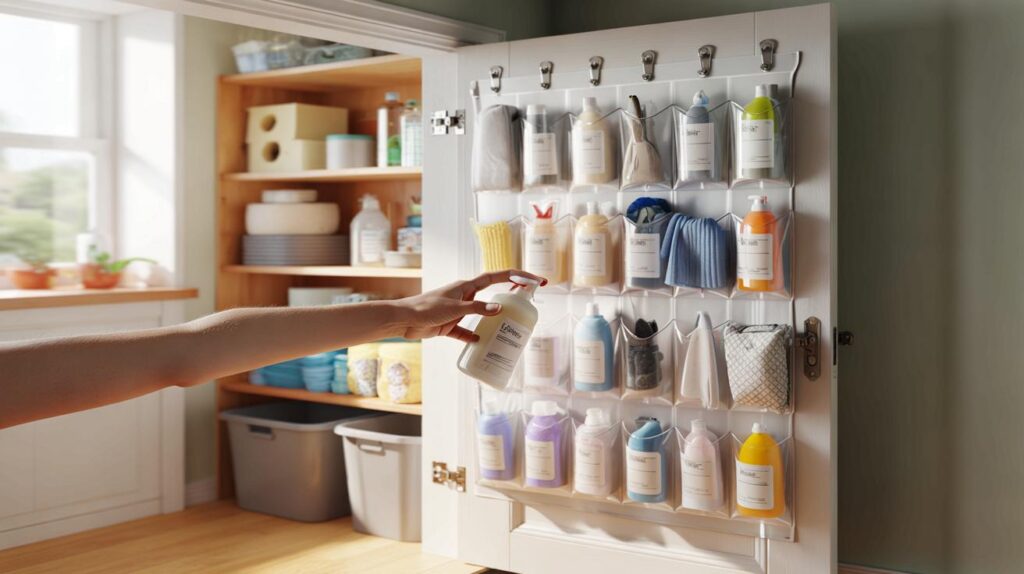
Tiny homes and overflowing cupboards push families to rethink storage. A forgotten wartime habit is quietly returning to British doors.
Rising prices and cramped flats mean every centimetre counts. The answer, say savvy households, hangs where few of us ever look.
Why a shoe organiser is beating crowded shelves
Grandparents made vertical space do the heavy lifting. They looked at doors, not floors. A clear, pocketed shoe organiser turns dead space into tidy storage. You see everything. You stop buying duplicates. You cut down mess and mishaps.
That back‑of‑the‑door zone is underused in most homes. Place pockets there and your cleaning gear no longer topples out. The result is calmer mornings and fewer spills. The idea is not fancy. It is cheap, quick and movable when you rent.
The vertical‑space maths: 40% reclaimed
A standard 24‑pocket organiser holds small bottles, cloths and brushes. Decant liquids into 250 ml containers. Keep the load light and balanced. You shift bulk off shelves and into clear, labelled pockets.
Use the back of a door to regain about 40% of a typical cleaning cupboard’s usable space and cut hunting time in half.
| Setup | Pockets/sections | Approx liquid capacity | Setup time | Floor space used |
|---|---|---|---|---|
| Over‑door shoe organiser | 24 | 6 litres (24 × 250 ml) | 20 minutes | 0 m² |
| New freestanding shelf | 3–4 tiers | Varies | 45–60 minutes | 0.15–0.25 m² |
What you need and how much it costs
- One transparent shoe organiser with 24 pockets (about £15).
- Four heavy‑duty adhesive hooks rated to 2.5 kg each.
- One roll of 19 mm double‑sided tape to stop swing.
- Moisture‑resistant labels for clear naming and dates.
- Small 250 ml plastic bottles to split large refills safely.
On a tight budget? A clear shower curtain with stitched pockets works too. Many households report years of reliable use from that option.
Step‑by‑step: from chaos to calm in 20 minutes
Clean the door back with a degreaser. Dry it for a full 10 minutes. Adhesive sticks better on a grease‑free surface.
Mark four points at the corners of the organiser. Aim for 38 cm between the left and right hooks and 1.8 m top‑to‑bottom spacing to match most door heights. Press each hook hard for 30 seconds.
Hang the organiser. Add a strip of 19 mm double‑sided tape along the bottom edge. That stops sway and deadens the thud as the door opens.
Sort by frequency. Daily sprays sit high and central. Rarely used items live low or far sides. Cap each pocket at roughly 200 g to keep stress off the hooks.
Keep each pocket under 200 g. Decant into 250 ml bottles. You get balance, visibility and safer handling for busy homes.
Pro techniques that make it work every day
- Create zones: kitchen degreasers together, bathroom descalers together, floor care together.
- Add odour control: slip a small fabric sachet of rice and a few drops of lavender inside one pocket to tame harsh smells.
- Shield light‑sensitive products: place them in lower rows where ambient light falls off.
- Rotate stock: first in, first out. New refills go to the back or bottom; older ones move forward.
- Label plainly: product name, dilution, date opened. Clear labels save mistakes and money.
Safety, maintenance and what to avoid
- Keep chemicals out of reach of children and pets. Fit a latch if the door is low and accessible.
- Never store acids and bleach together. Separate by zones to avoid dangerous mixing.
- Skip glass bottles on higher rows. Use unbreakable containers to reduce risk.
- Test adhesives on a hidden paint patch. Some paints peel under high‑tack hooks.
- Check hooks every three months. Replace any that loosen or lift at the edges.
- Do not overload. Four hooks at 2.5 kg each offer up to 10 kg in ideal conditions. Aim for less than half that in total.
- Avoid fire doors and doors near heat sources. Weight and heat can warp or compromise fixtures.
Real‑world gains for small UK homes
Studio flats, HMOs and busy family houses share the same pain point: crammed cupboards. This trick frees shelves for bulk packs of laundry powder, paper goods and bins. Light, daily items live at eye level in the pockets. You move with purpose. You stop the domino effect of bottles toppling from overstuffed shelves.
Renters face limits on drilling. Adhesive hooks and over‑door hangers skirt that issue. If the surface is tricky, use an over‑door metal bracket and still add the anti‑swing tape at the bottom. You keep the door intact and the inventory on show.
Beyond cleaning: six other high‑impact uses
- Pantry snacks and spice sachets in clear rows for easy meal prep.
- Beauty and grooming kits sorted by morning and evening routines.
- Craft supplies: glues, brushes, markers, washi tape and small pads.
- Pet care: leads, poo bags, treats, flea treatments and nail clippers.
- DIY odds and ends: sandpaper, small tins, rollers, filler and masking tape.
- Gardening: seed packets, twine, plant labels, moisture meters and gloves.
Quick comparison with buying new shelving
| Feature | Shoe organiser | Freestanding shelf |
|---|---|---|
| Typical cost | £15–£25 | £35–£80 |
| Install time | About 20 minutes | 45–60 minutes |
| Floor footprint | None | Moderate |
| Visibility of items | High | Medium |
| Best for | Small items, decanted liquids | Bulk packs and heavy containers |
Numbers that make sense in a busy week
Split six 1‑litre refills into 24 bottles of 250 ml. That fills a 24‑pocket organiser neatly. Each pocket stays under 200 g when you include the bottle. The load sits at roughly 4.8 kg across the whole unit, which pairs well with four 2.5 kg‑rated hooks used well below their limit.
This layout speeds tasks. One pocket holds microfibre cloths, another holds rubber gloves, a third holds limescale wipes. You open the door, grab, use and return in seconds. Fewer seconds per job adds up across a week of cleaning cycles.
Extra ways to push the benefit further
Colour‑code rows by room or day of the week. Monday rows for the kitchen, Tuesday for the bathroom, and so on. Add a small pencil and notepad in one pocket to jot low stocks. That simple habit ends last‑minute dashes to the corner shop.
If odours linger, swap the rice sachet for a small pouch of bicarbonate of soda or activated charcoal. Both absorb smells well. Refresh them monthly. If moisture builds up in steamy bathrooms, place the organiser on a utility room door instead and keep chemicals dry.



Just tried this with a clear 24‑pocket organiser on my utility door—no more bottle avalanches. Sanity restored 🙂
That 40% reclaimed claim feels… generous. How did you calc it? And four 2.5 kg hooks doesn’t defintely mean 10 kg on a hollow‑core door. Anyone had adhesives lift after a steamy summer?