
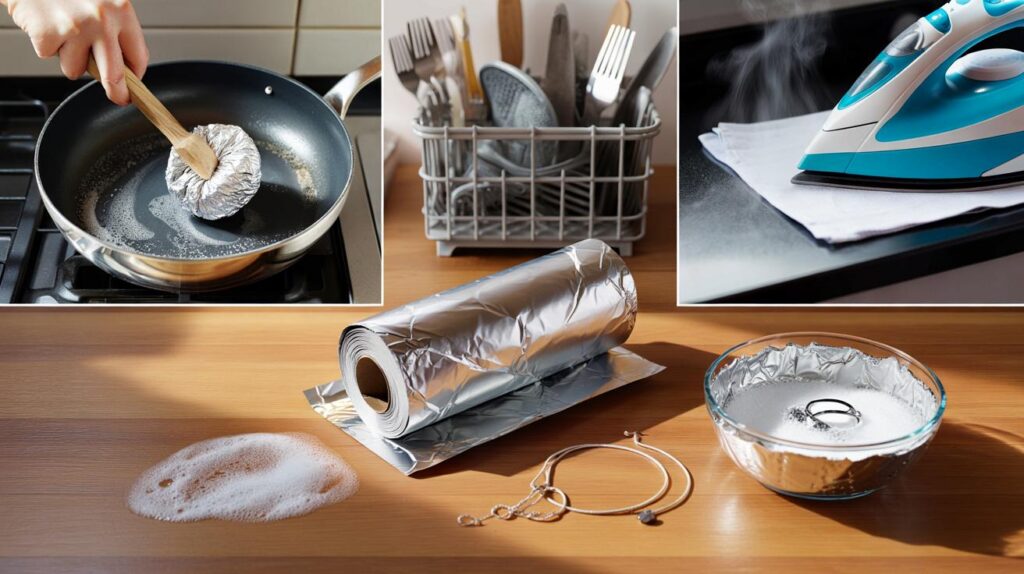
That quiet roll of aluminium foil sits by the hob, cheap and ignored, while weekend chores swallow time you had for yourself.
With household budgets under pressure, many people are turning to what they already own. Aluminium foil is tough, pliable and slightly abrasive. Used smartly, it lifts grime, speeds up pressing and revives dulled metals without pricey products.
Why foil belongs in your cleaning kit
Aluminium foil behaves like a flexible tool. It grips grease, reflects heat and shapes to awkward corners. A crumpled ball gives gentle abrasion with fewer scratches than scouring pads. Pair it with common agents such as washing-up liquid, white vinegar or bicarbonate of soda. The aim is speed and control, not brute force.
Rule of thumb: use foil on hard, uncoated metal and glass. Keep it away from non-stick, soft plastics, anodised aluminium and delicate coatings.
Six cleaning moves that turn foil into a go-to tool
1) Scour burnt pans, trays and barbecue grates
Crumple a piece of foil into a tight ball. Wet the surface, add a little washing-up liquid or warm vinegar, and scrub in small circles. The foil’s texture lifts carbon and baked-on fat from stainless steel pans, oven trays and cast-iron grates. Rinse well and dry to prevent spotting.
Skip this on non-stick pans or enamelled cookware. The abrasion can mark coatings and void warranties.
2) Sparkle silver in the dishwasher
Drop a tightly crumpled ball of foil into the cutlery basket, load tarnished silver-plated forks and spoons, and run a normal cycle. The foil acts as a sacrificial partner in a mild electrochemical exchange, helping to strip away the dull oxide layer. You get brighter cutlery without harsh polishes.
Check your machine’s manual first. Antique pieces with intentional patina should not go in. Dry immediately after the cycle to avoid water spots.
3) Cut ironing time with a reflective board hack
Lift the cover from your ironing board, lay a sheet of foil shiny side up, then refit the cover. The foil reflects heat and steam back through the fabric. Stubborn creases relax faster, and you make fewer passes across shirts, jeans and cotton bedding.
Expect time savings of 20–40% on thick cotton and linen. Keep steam vents clear and don’t cover the soleplate with foil.
4) Rescue jewellery with bicarbonate and hot water
Line a bowl with foil, add hot water and a heaped spoon of bicarbonate of soda. Drop in tarnished silver jewellery so it touches the foil. Leave for a few minutes, then rinse and buff dry with a soft cloth. The foil and bicarbonate combination targets tarnish without gritty polishing.
Avoid this on pieces with pearls, opals, turquoise or glued settings. Porous stones and adhesives can fail in hot solutions.
5) Sharpen tired scissors with folded foil
Fold a sheet of foil into several layers. Cut 20–30 thin strips from it using the entire blade length. This refines the micro-edge and removes residue that drags during cutting. Wipe the blades after to clear particles. It is a quick rescue for kitchen scissors and craft shears.
Do not use this on premium tailoring shears or serrated blades. Those need professional service to preserve the factory geometry.
6) Restore and protect metalwork during damp months
For surface rust on chrome fixtures or bike parts, rub gently with foil dipped in water or light oil. The foil forms fine aluminium oxide that polishes while lifting rust blooms. Wipe clean and dry. To slow fresh rust in toolboxes and sheds, loosely wrap vulnerable items in dry foil as a temporary moisture barrier, then add silica gel or a dehumidifier for better control.
Light rust on chrome often clears in minutes with wet foil. Deep pitting needs specialist treatment to stop progression.
When foil shines, and when to leave it on the roll
- Use on: stainless steel, cast iron, chrome, glass, most oven racks and grills.
- Avoid on: non-stick cookware, anodised aluminium, lacquered finishes, soft plastics and painted surfaces.
- Pair with: washing-up liquid for grease, vinegar for scale, bicarbonate for tarnish, a splash of oil for rust rubs.
- Test first: try a small, hidden patch before tackling the whole surface.
- Recycle right: ball clean foil into a fist-sized lump so sorting machines can capture it.
Does it really save time and money?
A supermarket 10 m roll can cost 70p–£1.20. That single roll covers months of spot jobs. Compare with steel wool, silver dips, ironing sprays and rust removers, which often sit half-used and go to waste. Foil is also low-shed, so there is less mess than with fibrous pads. The gains sit in minutes saved and products never bought.
| Task | Typical time saved | Best partner | Caveat |
|---|---|---|---|
| Burnt pan scrub | 6–10 minutes | Warm vinegar | Not for non-stick |
| Dishwasher silver boost | Manual polishing avoided | Standard tablet | Avoid antique patina |
| Ironing with foil board | 20–40% fewer passes | Steam setting | Keep vents unobstructed |
| Jewellery de-tarnish | 5–8 minutes | Bicarbonate + hot water | Not for porous stones |
| Scissor refresh | Trip to sharpener delayed | Folded foil | Skip premium shears |
| Chrome rust rub | 2–5 minutes | Water or light oil | Deep pits need repair |
Safety notes many people miss
Foil can scratch soft finishes, so pressure control matters. Wear light gloves if you scrub for long periods. Keep the dishwasher method away from aluminium cookware inside the machine, as mixed metals can discolour. Do not stuff foil into electrical appliances or around heating elements. Avoid combining foil with bleach or strong alkalis.
Make it a habit without the clutter
Pre-crumple two or three palm-sized balls and store them in a labelled jar under the sink. Keep one flat sheet folded with the ironing board. Slip a spare in the toolbox. A small routine beats a frantic search mid-clean.
Extra ideas if you want to go further
Try a two-shirt timing test with and without a foil-lined board to measure your gain. Keep notes on which fabrics respond best. For jewellery, set a calendar nudge every three months so tarnish never builds up. In damp sheds, combine foil wraps with monthly ventilation and a cheap hygrometer to track moisture trends.
Think about end-of-life. Foil only recycles when clean. Rinse it after use, let it dry, and scrunch it into a tight ball at least the size of a golf ball. If it is greasy beyond rescue, bin it rather than contaminating a whole recycling load.



Tried the foil-under-ironing-board hack and shaved about 30% off my shirts — brilliant! 🙂 Quick Q: do I need to lower steam to stop condensation under the cover?