
Baskets brim with glossy chestnuts, then disappointment sets in. They wrinkle, spot and smell before you get the pan hot.
Across the country, shoppers and foragers face the same autumn let-down: a rich haul that fades fast. There is a quiet fix, rooted in home life and passed along at the kitchen sink, that turns quick spoilage into weeks of reliable keeping.
Why your chestnuts spoil so fast
Chestnuts are alive when you bring them home. They breathe, lose moisture and stay vulnerable to mould. A warm kitchen accelerates water loss. A sealed bag traps condensation and invites fungus. Any tiny hole in the shell lets in air and pests. A single infested nut can taint a whole bowl.
The nut’s make-up adds pressure. Chestnuts hold around half their weight in water. That moisture moves to the shell and into the air unless you manage temperature and airflow. Under-dried shells soften and host mould. Over-dry air shrivels kernels and dulls flavour.
Keep nuts cool, keep air moving, and separate the weak from the strong within a day of getting them home.
The 24-hour water test that sorts the bad from the good
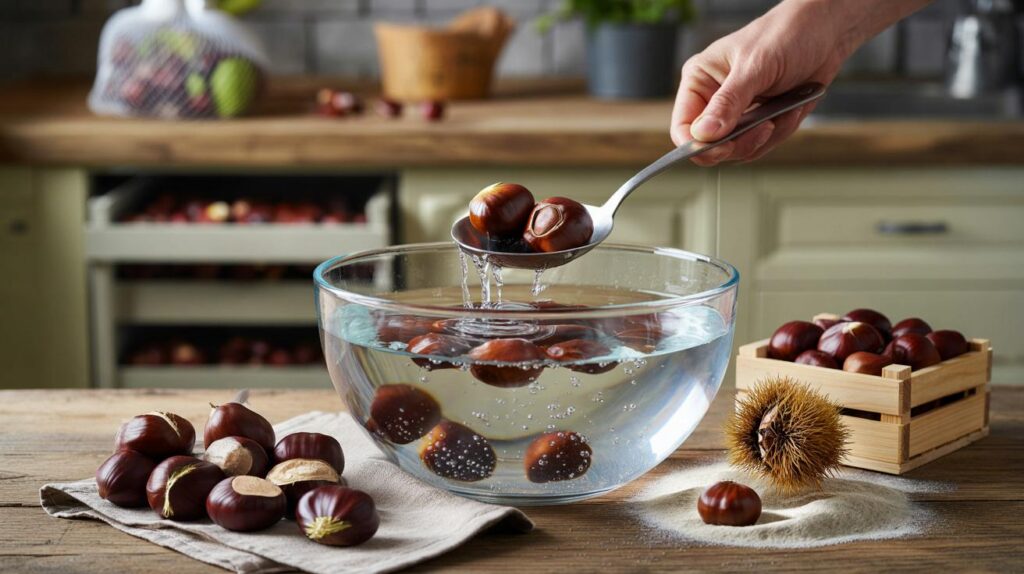
Fill a large bowl with cold water. Tip in your freshly gathered or bought chestnuts. Leave them to soak for 24 hours. Stir once or twice. The firm, dense nuts will sit at the bottom. Floaters tell another story. Air inside a nut points to hidden damage, dryness or a weevil’s tunnel. Skim them off and bin them.
This bath does more than sort. It rehydrates sound nuts, so the kernels stay plump. After the soak, drain well, then towel-dry the shells. Spread the nuts in a single layer for several hours so surface moisture evaporates.
Soak 24 hours. Discard floaters. Dry shells thoroughly. You have just rescued most of your crop from mould and shrinkage.
Smart storage for weeks, not days
Once dry, choose a cool, airy home. Aim for 0–5°C if you can, with steady humidity. A fridge vegetable drawer works. A cold shed or garage is fine if mice cannot reach the food. Use a breathable container so the nuts can ventilate.
Fridge or shed: what works
- Container: cloth bag, paper bag, mesh basket or wooden crate with gaps.
- Depth: keep layers shallow; two to three nuts deep is enough.
- Light: keep out of direct sun to avoid temperature swings.
- Checks: once a week, pick through and remove any soft, dark or musty nut.
What to avoid
- Closed plastic tubs or zip bags that trap moisture.
- Warm worktops or cupboards near the oven.
- Deep piles that hide early spoilage.
Alternative routes: freezing, sand boxes and jars
Big haul? Little storage space? Several options can hold quality from now to January and beyond.
Freezing, raw or cooked
- Raw: score the shell, then freeze in bags. Roast from frozen later. Scoring prevents bursts.
- Cooked: boil, peel, cool, spread on a tray to firm up, then bag. Texture stays tender.
Sand storage
Use a clean wooden box. Lay a thin bed of dry, clean sand. Add a single layer of chestnuts. Cover with sand. Repeat. Store in a cold spot. The sand curbs air flow and slows drying while letting slight moisture pass through.
Jars in brine or plain water
Peel the nuts, pack into heatproof jars, top with hot water and a pinch of salt if you like, then sterilise following safe home-canning practice. Label and date. This suits soups and purées later on.
| Method | Typical shelf life | Effort | Best for |
|---|---|---|---|
| 24-hour soak + cool storage | 3–6 weeks with weekly checks | Low | Regular roasting and quick weekday cooking |
| Freezing (scored raw) | Up to 6 months | Low | Roasting later without peeling first |
| Freezing (cooked, peeled) | 4–6 months | Medium | Instant stuffings, purées and sauces |
| Sand box | 4–8 weeks | Medium | Cold sheds with stable temperature |
| Sterilised jars | Several months | High | Batch cooking and pantry storage |
Spot the risks early
Weevil larvae leave tiny holes in shells and a bitter, dusty kernel. The water test catches many of these as floaters. Any nut that smells musty or leaks brown juice needs to go. If mould appears on several nuts, air the container, thin the layers and drop the temperature.
Keep chestnuts away from apples and pears. Those fruits release ethylene gas, which speeds ageing and toughens kernels.
Are you sure yours are edible chestnuts?
Sweet chestnut (Castanea sativa) is edible. Horse chestnut (Aesculus hippocastanum), the classic conker, is not food. The husk tells you a lot. Edible chestnuts sit in a husk covered in many fine, needle-like spines. Conkers sit in a thicker green husk with fewer, blunt spikes. The edible nut has a flat side with a lighter, felt-like base. When in doubt, leave it out.
Roasting and cooking with less waste
Score the shell with a cross before heat hits the nut. Steam for a few minutes before roasting to loosen inner skin. For midweek speed, keep a bag of cooked, peeled chestnuts in the freezer. Tip straight into stews, stuffings and pasta sauces.
Your baseline is simple: soak 24 hours, keep them cool and airy, cull weekly. The rest is a bonus.
A quick cost check for households
Fresh chestnuts often sit around £6–£9 per kilo in season. Buy a kilo at £7. If half spoils, you waste £3.50 and an evening’s plans. The soak-and-sort step usually cuts losses to a few nuts in the first week. Over a month, that can save several pounds and keep plans on track for roasts and soups.
If space is tight
Use two small paper bags rather than one large one. Rotate them every few days in the fridge drawer so airflow reaches both sides. If you only have room-temperature storage, choose the sand box and keep it on the coldest floor. Add a simple thermometer to watch for warm spells.
Foragers’ checklist before you head home
- Pick only firm, heavy nuts with glossy shells and no cracks.
- Avoid damp piles on the woodland floor that smell earthy.
- Bag in mesh or paper, not plastic.
- Start the water test within a few hours of picking.
Extra tips for better texture
After soaking and drying, rest the nuts 24 hours in the fridge before roasting. The kernels settle and peel more cleanly. If you like a sweeter taste, hold a portion for a week at 0–2°C. Natural starches shift toward sugars, and roasting brings out a deeper aroma.



Does soaking for 24 hours not wash out flavor? Sounds like a good way to waterlogg them. Has anyone compared soaked vs unsoaked in a blind taste test?