
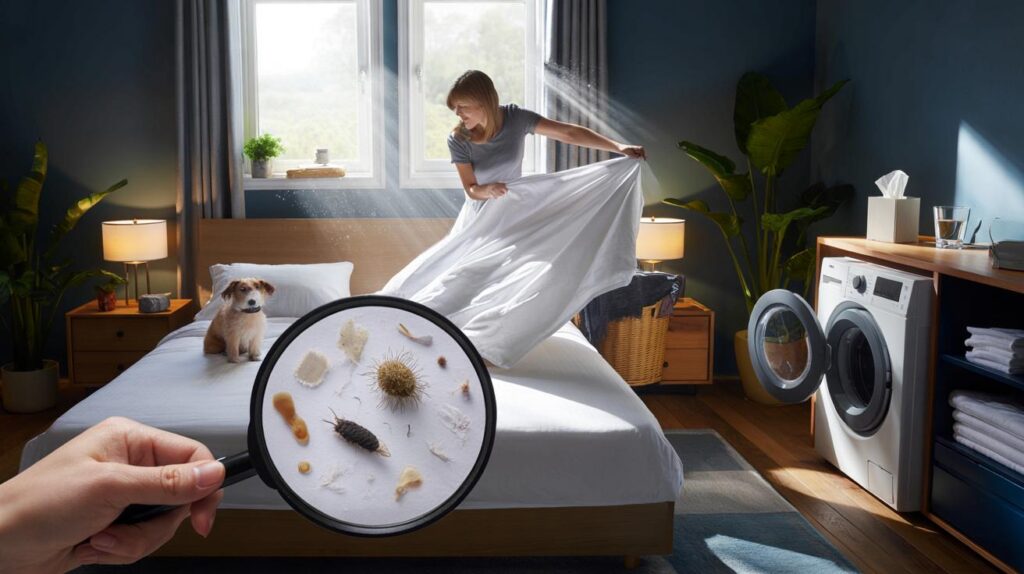
You wash, sleep and repeat, but what really lurks in the folds of your bedding may be rewriting household rules.
Fresh linen feels clean, yet microscopic passengers ride along after every night’s sleep. Health specialists now challenge the easy habit of changing sheets every fortnight, urging a stricter timetable that tackles allergens, sweat and odour before they settle in.
Why your fortnightly wash isn’t enough
Skin sheds. Sweat evaporates. Saliva, sebum and stray hairs collect. Even if your bed looks spotless, these residues feed dust mites and help bacteria thrive. They also trap moisture within fibres. That moisture creates a friendlier habitat for microbes and a perfect stage for musty odours.
For allergy sufferers, the stakes rise quickly. Dust mite fragments can irritate airways. They aggravate asthma. They inflame the skin. The longer sheets stay on the mattress, the more this build-up grows, and the closer it sits to your mouth and nose each night.
What your body leaves behind each night
- About 30–40 grams of skin cells each month spread across clothing, bedding and furniture.
- Sweat and breath add moisture that clings to cotton fibres.
- Make-up, hair products and skincare transfer to pillowcases and feed bacteria.
- Pollen, dust and pet dander hitch a ride from the day and stay until the next wash.
Change sheets every 7 days to cut down allergens, moisture and odour before they take hold.
What experts now advise
Microbiology research teams, including those involving University of Arizona microbiologist Charles Gerba, point to a weekly wash as a practical cut-off. Dermatologists such as Barcelona-based Alejandro Ruiz reach similar conclusions for skin health. A seven-day cycle keeps bacterial growth in check and brings allergen exposure down to tolerable levels for most households.
Temperature matters. At 60°C, cotton and polycotton tolerate a thorough clean that disrupts mites, loosens biofilms and shifts body oils. Many modern detergents perform at lower temperatures, but mites and their allergens tend to persist when cycles stay cool.
| Item | Recommended wash |
|---|---|
| Sheets and duvet cover | Every 7 days at 60°C (or hottest safe) |
| Pillowcases | Every 3–7 days; 60°C if skin prone to breakouts |
| Mattress protector | Every 4–8 weeks at 60°C |
| Pillows and duvet | Every 3–6 months (check care label) |
Who should wash more often
- During illness, switch to a 48-hour cycle, especially with fever or night sweats.
- If pets sleep on the bed, increase to twice weekly or use a dedicated washable throw changed every 2–3 days.
- For heavy sweating, hot weather or no pyjamas, shorten the cycle to every 3–4 days.
- For eczema, acne or allergic rhinitis, aim for midweek pillowcase changes.
- For snacking in bed, wash immediately after spills to prevent bacterial growth.
Fever, pets and night sweats shift the rule: wash every 48 hours until conditions settle.
How to build a sheet-changing routine that sticks
Regularity beats effort. Pick a fixed day. Keep two or three spare sets within easy reach. Rotate them so a fresh set is always ready. Set a phone reminder. Pair sheet day with towel day to streamline laundry runs.
Dry completely before making the bed. Lingering moisture invites mould odour and encourages mites. If you rely on indoor drying, run a dehumidifier or open windows to keep humidity below 55–60%. Avoid overloading the machine; water and detergent must circulate freely to remove grime.
Small upgrades that cut allergens
- Use zipped, allergen-proof encasements on pillows and the mattress.
- Vacuum the mattress monthly with a HEPA tool, then flip or rotate it.
- Air the duvet on a sunny, dry day to disperse moisture and odour.
- Ventilate the bedroom for 10–15 minutes each morning to flush humidity.
Wash at 60°C, dry fully, and ventilate daily to keep the bed hostile to mites and odours.
Beyond the sheets: pillowcases, duvets and mattresses
Pillowcases deserve special attention. They hold hair oils, cosmetics and bacteria near the face. A midweek change can calm breakouts and ease irritation. Mattress protectors trap sweat and crumbs before they sink into foams; they wash easily and prolong mattress life. Duvets and pillows need periodic laundering, but check the care label and use tennis balls or dryer balls to keep fillings lofty.
Fabric choice makes a difference. Crisp percale cotton breathes well and dries faster than heavy sateen. Linen wicks moisture efficiently in summer. Blended fabrics often resist creasing but may retain odour for longer. Choose according to climate, not just thread count.
The science of temperature and detergent
Detergents with enzymes break down sweat and food residues at lower temperatures, but heat still helps neutralise mites. Oxygen-based whitening agents lift dinginess on light colours. For darks, use colour-safe formulas and longer cycles rather than hotter washes to avoid fading. Pre-treat body oil marks along the pillow edge and the top sheet with a dab of liquid detergent to stop yellowing.
| Setting | Best for |
|---|---|
| 40°C cotton cycle | Lightly soiled bedding with enzyme detergent; follow with full drying |
| 60°C cotton cycle | Allergy control, illness, pet exposure, oily residues |
| Hottest safe (per label) | White cotton in high pollen season or humid homes |
Practical extras that save time and money
Energy costs often worry households. A smart compromise is a 60°C wash for sheets and pillowcases, paired with a cooler wash for duvet covers if not heavily soiled. Spin at a higher speed to shorten tumble time. Line-dry outside when possible; ultraviolet light assists with odour control.
If space is tight, assemble each set into one pillowcase for fast swaps. Keep a laundry basket in the bedroom so used linen doesn’t pile up on chairs. Mark the calendar during peak pollen months to add a midweek pillowcase change.
When the bedroom itself is the problem
Warm, damp rooms fuel mite growth. Aim for a bedroom temperature around 16–18°C at night. Keep relative humidity below 60%. Fix leaks and condensation patches rapidly. Use breathable mattress bases to prevent moisture trapping under the bed.
Seven days is the safe baseline; adjust down to two when illness, pets or heavy sweating raise the risks.



So my cat and I need a 48-hour laundry cycle now? Guess I’m investng in more pillowcases and a washable throw.