
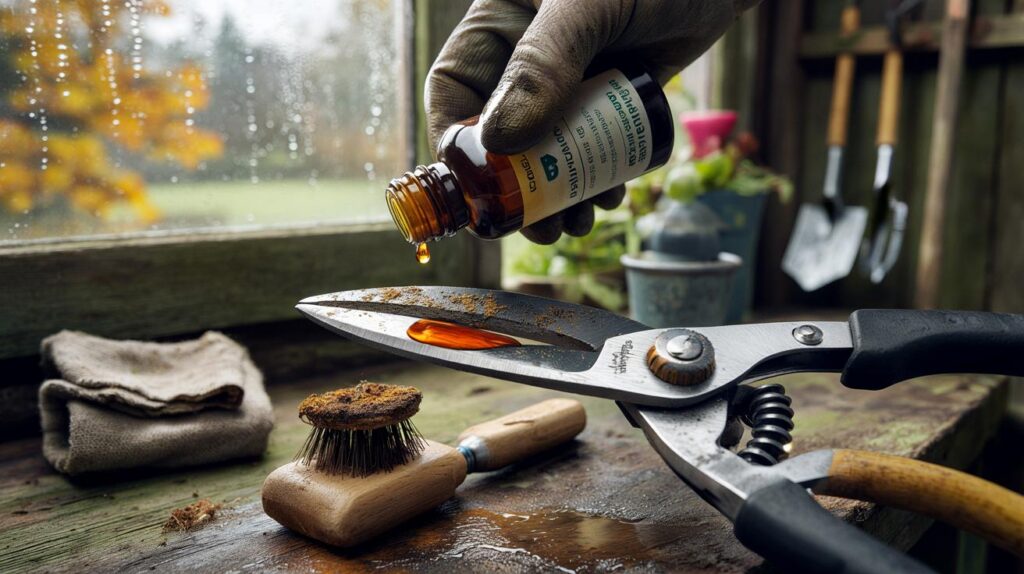
Autumn rain lingers. Sheds sweat. Steel turns dull overnight. The secret to stop the slide hides in a tiny routine.
Moisture creeps into hinges, pits bright blades and swells wooden handles. Ignore it now and you pay in spring, with stuck loppers and seized mower cables.
Why autumn humidity ambushes your tools
How moisture eats steel, fast
Steel suffers when air holds water. A thin oxide film usually shields it, but dew and drizzle strip that film and expose raw metal. Oxygen and water then bond to iron atoms and form rust. Repeated wetting accelerates the reaction, especially where sap and soil trap damp against the surface. Hinges, springs and blade edges corrode first, because friction has already thinned protection.
France and the UK share long, clammy Octobers. High overnight humidity pairs with cool mornings, so condensation settles on cold shafts and heads. In closed sheds, the air stays wet. That keeps the reaction running long after the rain stops.
Early warning signs you can spot now
- Orange freckles on spade necks and fork tines.
- A rasping squeak from secateurs or hedge shears.
- Roughness you feel when a gloved thumb slides along a blade.
- Blackened sap lines that hold water against steel.
- Handles that feel raised or furry, pointing to grain lift in the wood.
Oxidation never clocks off. It keeps gnawing at steel, weakens joints and turns sharp edges brittle if you let moisture sit.
The expert move most gardeners skip
Clean, dry, oil: three moves in four minutes
One quick ritual stops the rot. Knock off soil, wipe and dry every surface, then lay a thin oil film on metal and a light feed on wood. Most hand tools take under four minutes. That coat blocks oxygen, repels fresh dew and keeps pivots moving through winter.
- Clean: scrape and brush away soil, sap and grass with a stiff brush or wire wool.
- Dry: wipe thoroughly and let air pass around the tool for an hour away from spray.
- Oil: add 2–3 drops to moving parts and a fingertip film on blades; feed wood with linseed.
Spend four minutes this week and you avoid a spring shopping trip that can easily top £180 across replacements and repairs.
Why october is the cut-off
October gives you time and temperature. Days are cool but workable. Humidity rises early, then lingers. Treat tools before the first long cold snap and you sidestep weeks of trapped damp in closed sheds. After the last hedge trim or border tidy, run the routine while the gear is still out.
Mistakes that quietly wreck kit
Habits that brew rust all winter
- Leaning tools outside to “air dry”. Night dew undoes that within hours.
- Parking muddy blades in a plastic tote. Moisture stays, air does not.
- Rinsing under a tap and walking away. Water hides in joints and springs.
- Skipping lubrication after wet mowing or cutting sappy growth.
What not to do after a long session
Do not pile warm, wet tools into a closed shed and shut the door. Warm steel cools, then pulls moisture from air as it drops below the dew point. That film is enough to start corrosion in the crevices and under dried mud. Separate the tools. Get air moving. Wipe now, not tomorrow.
A quick method that brings tools back
Cleaning that actually works
Knock off clods with a scraper. Use a wire brush on tines and a toothbrush on hinges. For stubborn sap, dab white vinegar, wait five minutes, then wipe and rinse quickly. Avoid long soaks that swell wood and loosen rivets. A final pass with fine steel wool smooths minor pitting without chewing metal.
Drying that leaves no moisture
Pat every surface with a dry cloth. Stand tools so gravity drains water from joints. Leave them in a breezy spot, out of direct sun that can crack handles. A dehumidifier in a small shed pulls litres of water across a wet week and keeps corrosion down.
Smart oiling without mess
Use a few drops of vegetable oil on steel and pivots. Linseed nourishes wood; rapeseed suits metal films. Wipe off any excess. Greasy puddles catch dust and trap damp. On ratcheting pruners, open and close the handle while oil sits on the pivot so it creeps into the bearing surfaces.
| Tool | Rust hot spots | Care focus | Typical replacement cost |
|---|---|---|---|
| Secateurs | Pivot, spring, cutting edge | Brush, dry, 2–3 oil drops, light blade film | £20–£60 |
| Hedge shears | Blade flats, hinge bolt | Remove sap, align blades, oil hinge | £25–£80 |
| Spade and fork | Socket, heel, top edge | Scrape, wire-brush, thin oil layer | £30–£90 |
| Lawn mower (manual) | Reel, bedknife, bearings | Dry thoroughly, target oil on bearings | £70–£300 |
| Pruning saw | Teeth gullets, hinge on folding types | Remove resin, dry, tiny oil film | £15–£50 |
Make winter storage foolproof
Set up a simple maintenance station
- Assemble a tray: stiff brush, rag, fine steel wool, white vinegar, linseed or rapeseed oil.
- Mount a magnet strip or hooks to hang tools. Air movement beats floor storage.
- Slip silica gel packs into drawers and boxes. Replace when the indicator turns pink.
- Label a monthly reminder from october to february for a quick check and re‑wipe.
Hang tools, keep air moving and avoid sealed plastic tubs. Dry metal survives; boxed damp breeds rust.
Long-term payback you can count
Sharp, rust-free blades cut cleaner. Plants heal faster. Your hands work less for each snip or lift. A £6 bottle of linseed oil lasts several seasons and protects dozens of handles. A ten-minute monthly check through winter costs little and postpones replacements. Less waste leaves more room in your budget for plants and compost.
Extra tips for a tougher toolkit
If rust has already started
Remove surface bloom with fine steel wool and oil. For heavier scale, apply a paste of baking soda and water, scrub, then dry. Protect immediately after. Pitting on a cutting edge needs a resharpen. Hold a 20–25° angle on secateurs and shears, and finish with a light oil film.
Power and petrol equipment
Unplug batteries before cleaning. Dry metal housings and fasteners. Mist a corrosion inhibitor on exposed bolts and cable ends. For petrol kit, run the tank near empty or add stabiliser, then wipe and store somewhere ventilated.
A note on oils and safety
Vegetable oils protect steel and feed wood, but wipe off any excess to limit rancid smells. If you prefer a mineral spray, use it sparingly and avoid rubber grips. Rags soaked in linseed can self‑heat as they oxidise. Spread them to dry outdoors, then store in a metal tin or dispose of safely.
Moisture control inside the shed
Raise tools off the floor with rails. Fit vent grilles high and low to promote airflow. A small desiccant tub costs a few pounds and can pull 200–500 ml of water in a damp week. Keep fertiliser bags sealed; salts draw water and boost condensation nearby.



Just did the 4‑minute clean‑dry‑oil on my secateurs and spade after reading this. The squeak vanished and the blades feel slick again. Never realised how fast dew chews through edges in October. The tray idea + magnet strip is genius; I’ve been chucking everything in a plastic tote (guilty). Going to set a monthly reminder and see if I can actually avoide that £180 “spring tax”. Cheers!