
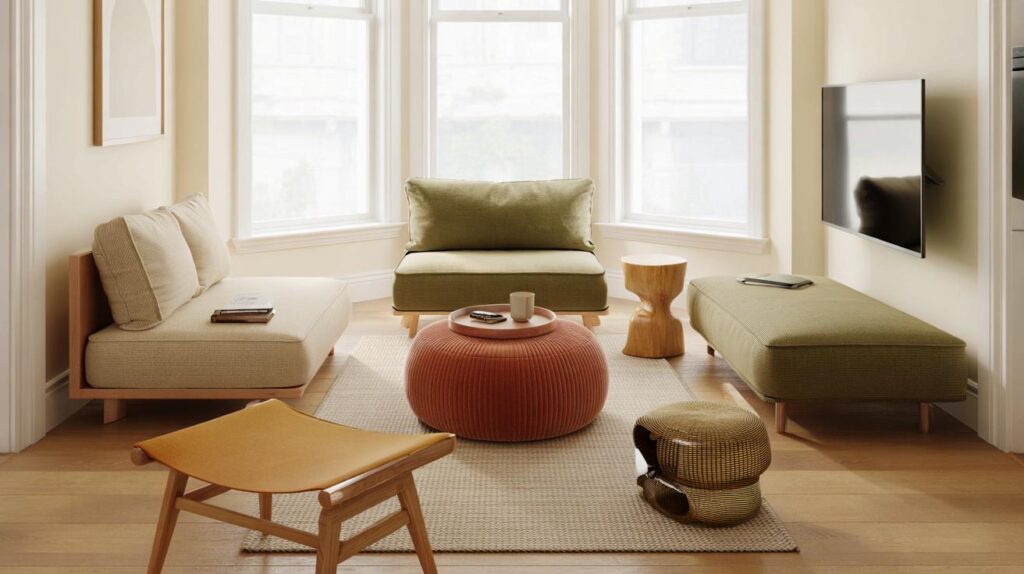
Your living room is changing: lighter pieces, lower seats and flexible layouts promise calmer nights and fewer bumped shins at home.
The classic matching armchair set is losing ground as households trade bulk for freedom. Lower, movable seating makes room for play, laptops and guests, while keeping budgets steady and cleaning simpler.
Why armchairs are stepping aside
Homes have to do more with less space. Video calls share the room with homework, yoga mats and weekend films. A bulky armchair can block circulation, crowd radiators and steal floor area that a family needs. Lower seating spreads people across the room, keeps sightlines clean and invites quick reconfigurations without scraping floors.
Think of your living room as a stage: furniture moves on and off, and nothing should dominate the scene.
Weight matters. A typical upholstered armchair can weigh 20–35 kg and demand 90–110 cm of width. A floor sofa module weighs half that and stacks when not needed. Covers come off for washing, which helps with pets and toddlers.
What replaces them in 2026
Instead of one heavy piece, people are building a kit of parts that can shift in seconds. The aim is comfort without the clutter.
- Modular floor sofas with 2–4 low blocks that clip or push together
- Oversized beanbags with supportive foam fill rather than loose beads
- Chaise longues that tuck into corners and double as reading daybeds
- Stackable pouffes and ottomans that act as seats, side tables or footrests
- Low accent stools in oak, rattan or recycled plastic for quick perches
- Fold-flat Japanese-style floor chairs with built-in backrest (zaisu)
- Convertible futon mattresses for overnight guests and film nights
Quick sizing rules that actually help
Seat height of 35–45 cm supports relaxed sitting without collapsing posture. Leave 60–90 cm walkways so prams, laundry baskets and small scooters pass without collisions. For a TV wall, keep the first row of low seating at 180–250 cm distance from a 55–65 inch screen.
Use one “anchor” piece, then layer light items around it. Aim for a 70:30 split between soft and hard surfaces.
How much it costs and what fits where
| Option | Typical price | Footprint (W × D) | Best for | Care |
|---|---|---|---|---|
| Modular floor sofa (2 blocks) | £250–£600 | 140–180 cm × 80–95 cm | Open plans, family film nights | Removable covers, rotate blocks |
| Giant foam beanbag | £120–£300 | 90–120 cm diameter | Renters, teens’ rooms | Vacuum weekly, spot clean |
| Chaise longue | £200–£700 | 70–85 cm × 150–170 cm | Reading corners, napping | Brush pile fabrics, protect sunlight |
| Pouffe or ottoman | £60–£250 | 45–60 cm × 45–60 cm | Extra seat, tray table | Rotate to avoid flattening |
| Zaisu floor chair | £40–£120 | 48–55 cm × 48–60 cm | Compact flats, gaming | Check hinges, lint roll |
| Convertible futon | £130–£400 | 90–140 cm × 200 cm laid flat | Guests, studio spaces | Air weekly, flip mattress |
Design cues people are choosing
Colours are warmer and grounded: terracotta, saffron, olive and chocolate calm the glow of screens. Rounded edges reduce knocks and soften echo in hard-floored rooms. Linen, bouclé and cotton twill feel relaxed and breathe in summer. Timber trays and woven baskets add a touch of craft without overwhelming the room.
Limit patterns to one hero piece. Keep everything else textured rather than busy.
Layout ideas for real homes
For a 3 × 4 m lounge, place a two-block floor sofa on the long wall, one beanbag on the diagonal facing the TV, and a pouffe central on a 160 × 230 cm rug. In a through lounge, use two ottomans as a movable “gate” between play and work zones. In a bay window, a chaise longue turns dead space into a reading nook.
Comfort and health: getting the support right
Lower seating can still support posture. Combine a 10–15 cm lumbar cushion with a firmer base block for adults. Foam-filled beanbags hold shape better than bead fills and make standing easier. If knees protest, mix heights: one low module, one 45–48 cm stool, and a pouffe. That gives each guest a workable choice.
- Keep coffee tables 30–45 cm from the front edge of seating to avoid hunching.
- Choose breathable covers if you run warm; wool blends if you feel chilly.
- Add a slim side table, 55–60 cm high, next to the anchor seat for mugs and remotes.
What this means for families and renters
Parents gain floor area for toys without moving furniture to the hallway. Covers zip off after paint or jam incidents. Renters can carry modules up stairs alone and reconfigure them in a new flat. Guests get a futon instead of the sagging spare chair. For pets, tightly woven fabrics reduce snags, while washable throws shelter lighter colours.
Risks, trade-offs and how to avoid them
Very low seating can tire hips over long evenings. Mix in one higher perch. Cheap bead-filled bags flatten quickly; look for foam crumbs or layered cores. Shiny faux leather sticks in summer; cotton, linen and performance chenille breathe better. Tiny rooms can feel crowded by too many small items, so aim for one clear floor area at least 120 × 180 cm for circulation and play.
Plan your switch in 15 minutes
Measure the room and mark a 90 cm walkway with masking tape. Choose a single anchor piece, then add two light helpers from the list. Set a fabric plan: one textured neutral, one warm colour, one pattern. Keep total seating spend under £400 by buying modules in stages. Photograph the room in daylight before and after to see what actually opens sightlines.
Extra pointers you will use next year
If you host often, store two fold-flat floor chairs behind a bookcase. For movie nights, layer a futon mattress over the rug to raise comfort without dragging in a spare bed. If you work from the sofa, a lap desk at 60–65 cm eye height reduces neck strain.
Target seat heights of 35–45 cm, walkways of 60–90 cm, and one clear zone of 120 × 180 cm. Comfort follows.



Love the practical sizing rules and the under-£400 swaps—finally feels doable. Any UK brands you’d recommend for foam-filled beanbags that don’t flatten after a year?