
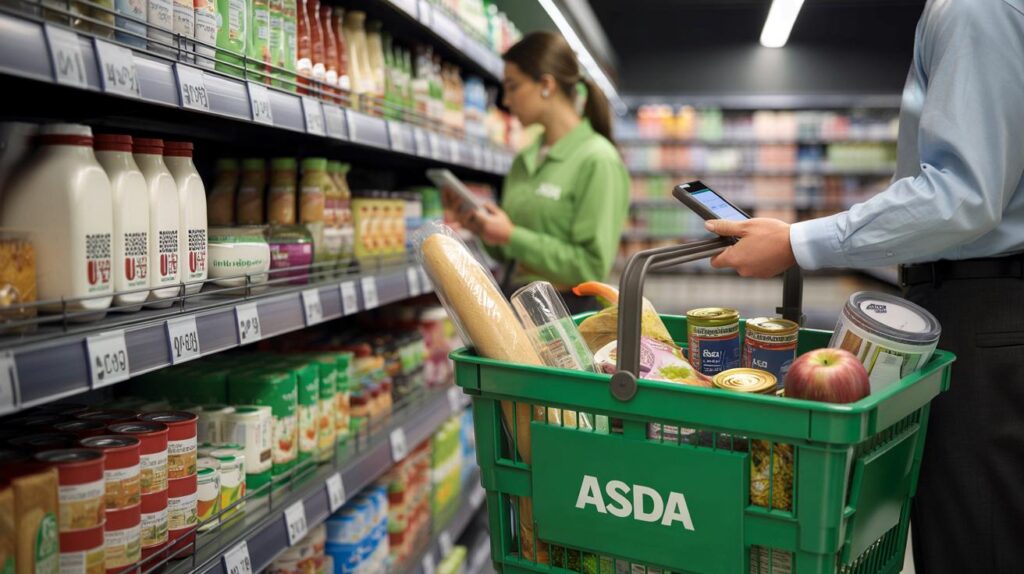
Shoppers will soon see small screens where paper tags once sat, hinting at a quieter shift in how prices move.
One of Britain’s biggest grocers is rolling out electronic shelf‑edge labels in hundreds of convenience sites, promising faster updates, clearer product details and fewer paper tags. The move brings new tech to everyday shopping without changing the familiar rhythm of filling a basket.
What is changing in your local store
Asda will fit digital price tags across 250 Asda Express stores, replacing many paper labels with e-ink screens that update wirelessly. The retailer says about 2,800 labels will be installed in total, removing much of the pen‑and‑paper slog that staff used to face.
Asda will deploy electronic shelf‑edge labels to 250 Express stores, covering around 2,800 individual tags.
The tags show price, weight and the unit price. QR codes on selected labels can also point to allergen details and product information provided via VusionGroup’s software platform.
Where and when
The retrofit targets the Express estate first. Asda is also opening up to 20 additional convenience stores by year‑end, so shoppers in urban areas are the most likely to see the screens appear first.
How the tags work
E-ink displays use little power and remain readable under store lighting. Managers push approved price files from a central system to shelf labels via a secure radio network. The updates land in minutes, and the same system can flag any labels that fail to refresh, helping teams fix issues quickly.
What Asda says and what it means for staff
Executives frame the project as an operations upgrade, not a headcount cut. The grocer says colleagues will gain time for customer service, deliveries and faster restocking.
Asda says there are no plans for staff reductions and no switch to surge‑style “dynamic pricing”.
Colleagues should spend less time hunting for the right paper strip, finding a free label holder and double‑checking figures. That time can shift to keeping fresh produce topped up and tills moving.
What this means for prices
Digital labels make changing prices easier, but Asda stresses it will not adopt real‑time price surges tied to demand. That matters for trust. British shoppers view supermarkets as stable-price environments, with promotions clearly marked and unit pricing comparable across sizes.
The technology should tighten price accuracy. What’s on the shelf should match what scans at the till, reducing awkward refunds and the need for “price promise” overrides at busy times.
How rivals are moving
UK chains including Lidl, Co‑op and Currys already use ESLs. Co‑op has experimented with labels that launch membership pages when tapped by phone, linking discounts to digital accounts.
The competitive backdrop remains fierce. Analysts say Tesco shows no sign of loosening its grip on the top spot. Its latest trading update reported 4.6% group sales growth in the first quarter and a market share of 28.4%, while rivals such as Sainsbury’s and Asda have edged lower. Aldi and Lidl continue to attract value‑driven households, forcing everyone to run tighter operations.
Benefits and risks at a glance
- Speed: central teams can change prices across many stores in minutes rather than hours.
- Accuracy: fewer mismatches between shelf price and checkout price.
- Clarity: unit pricing and weight data sit next to the main price, aiding quick comparisons.
- Allergens: QR codes can direct shoppers to product information and warnings.
- Staff focus: colleagues spend more time on availability and service, less on paperwork.
- Battery life: e‑ink labels typically last several years; replacements require handling and recycling.
- Outages: if a store network drops, labels may lag; teams need a fallback check.
- Perception: some shoppers may worry about hidden price changes; clear signage helps trust.
A quick comparison
| Task | Paper labels | Digital labels |
|---|---|---|
| Change a multi‑buy price across store | 1–3 hours, aisle by aisle | 5–10 minutes via remote update |
| Check unit pricing is present | Manual spot checks | Template enforces unit price display |
| Correct an error | Reprint and replace label | Push fix to all affected tags |
| Allergen guidance | Separate signage or leaflet | QR code links to product data |
What shoppers will notice
Labels look crisp and tidy. They don’t glow like a phone; e‑ink resembles paper. Promotions still appear in bold with percentage or “club price” styles, just rendered on a screen. For shoppers comparing tins or multi‑packs, the unit price sits in the same field of vision as the headline price, making “price per 100g” checks quicker.
What store teams will measure
Managers will track mis‑scan corrections, the time saved on routine price changes and on‑shelf availability. Those metrics feed directly into basket value and customer satisfaction, where seconds count at lunchtime in city sites.
The bigger strategy
Asda continues its turnaround plan, trimming prices on selected everyday lines and adding new convenience outlets. ESLs support that strategy by lowering the friction of changeovers when promotions rotate. The retailer also avoids a public backlash by explicitly ruling out demand‑driven price spikes.
Numbers that put it in context
- 250 Express stores set to receive digital labels.
- About 2,800 individual labels in the initial tranche.
- Up to 20 new convenience stores due to open by year‑end.
- 28.4%: Tesco’s latest UK share, with 4.6% quarterly sales growth, raising the bar for rivals.
Tips for using the new labels
- Use unit pricing to compare sizes; the cheapest sticker isn’t always the best value per kilogram.
- Scan QR codes if you manage allergies; confirm ingredients on the product itself before buying.
- Keep receipts; if a shelf price looks different, customer services can check the label’s update status.
- Watch date‑time stamps on promotions where shown; they indicate when a change took effect.
Potential pitfalls and how they’re handled
Any system can fail. If the store network drops, labels may lag behind the till price. Retailers counter this with exception alerts, extra checks during change windows and visible timestamps. Batteries will eventually need replacing. The industry’s next challenge is setting clear recycling routes for old tags to cut e‑waste.
What to watch next
Expect more grocers to expand digital labels beyond convenience, especially in categories with frequent promotions. If central teams can turn price files around faster, shoppers should see sharper execution on deals and fewer gaps on popular lines. The test for Asda will be whether these small screens help it hold ground against discounters while keeping service friendly and queues short.



Love seeing unit pricing right on the tag—makes comparisons quicker. If this really cuts mis‑scans at the till, great. Just dont creep into dynamic pricing later, please.
So my basket gets cheaper by 2p just because it’s on e‑ink? 😂