
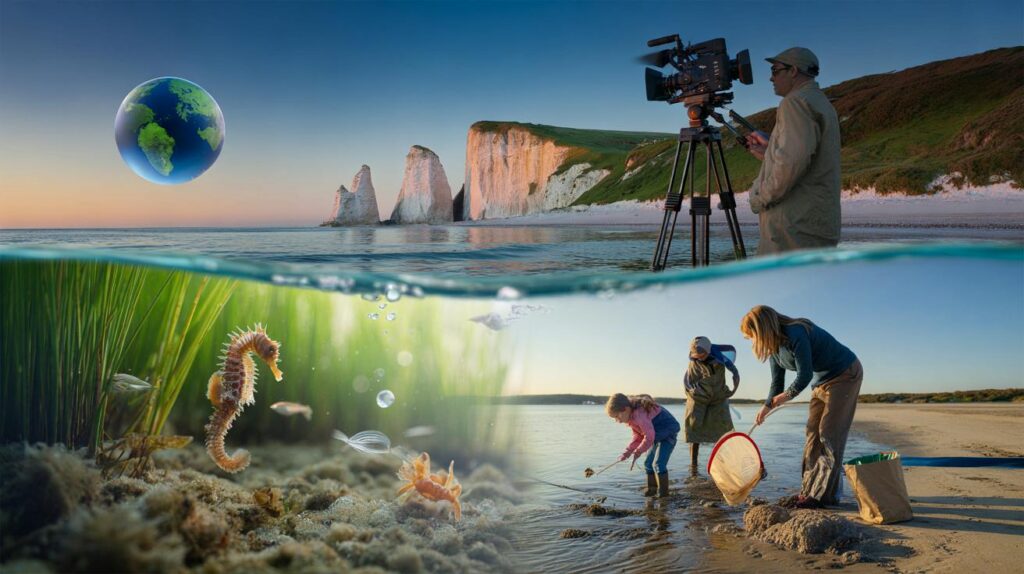
Under chalk cliffs and cinema lights, Dorset gathers pace for a season of sea‑minded events that promise hope and hard truths.
Studland and Old Harry Rocks, where Sir David Attenborough filmed his final location scenes for Ocean, now anchor a run of Swanage gatherings led by Planet Purbeck and Greenpeace. Three public dates in September and October blend science, storytelling and local action — and ask residents to turn concern into measurable change.
From screen to shoreline
The Mowlem will screen Ocean on Friday 12 September 2025 at 7.30 pm. The documentary, narrated and presented by Sir David Attenborough for the Discovery Channel, opens and closes on Dorset’s coast. Filmed in 2024 at Shell Bay, Studland, and beside Old Harry Rocks, those bookends became his last ever location shoot, released globally on his 99th birthday in May 2025.
The film frames a global ocean story with Swanage’s shore, then brings the question home: what will we do with it?
Ocean celebrates the age of marine discovery while confronting the state of the seas. Its core message lands plainly: restore the ocean and you restore planetary stability. The cinematography dazzles; the final call is practical.
Protecting our oceans: science, stories and local action
One week after the screening, Planet Purbeck and Greenpeace host a public evening, Protecting Our Oceans, at Emmanuel Baptist Church, Swanage, on Friday 19 September 2025. Organisers promise clear science, local examples and steps residents can take together.
Greenpeace researchers will set out evidence from Antarctica, where warming waters and changing sea ice affect global circulation. Speakers will also unpack progress on the so‑called Ocean Treaty, with a push to reach 61 national ratifications so that at least 30 percent of the seas can gain protection under international law.
Marine ecologist Dr Owen Exeter brings footage from near‑pristine Scilly Isles habitats to show what recovery can look like when disturbance reduces. Planet Purbeck will share projects designed to connect Purbeck’s children with the shore — from growing native plants to safe, guided rockpooling that builds knowledge and care.
Save the sea, save the world: the thread running through Swanage’s autumn programme is community power, not despair.
Doug Skinner, who chairs Planet Purbeck and volunteers with Greenpeace in Dorset, has seen Ocean and says it hits hard. He also argues that collective action lifts the sense of helplessness many people feel. His message to local families is simple: bring your curiosity, ask questions, and leave with a job to do.
What you can do now
- Book the Ocean screening at The Mowlem and stay for the post‑film conversation with neighbours.
- Attend Protecting Our Oceans on 19 September and choose one concrete pledge you can measure.
- Write to your MP about backing the Ocean Treaty’s 30 percent protection goal and robust enforcement at sea.
- Shift seafood purchases away from bottom‑trawled sources; choose lower‑impact local catches where available.
- Join a shoreline survey, litter pick or seagrass monitoring day; log observations with citizen‑science apps.
- Cut single‑use plastics at home, at school and at work; take a refill bottle to every event this month.
- Support repair, reuse and sharing initiatives to reduce waste that can reach the bay during storms.
Discovery Fest brings Shore Road to life
On Saturday 20 September 2025, Shore Road turns into a free, family‑friendly strip of music, science and hands‑on activity from 10 am to 3 pm. The Discovery Fest marks Planet Purbeck’s autumn series, with guided walks along the Jurassic Coast — dinosaur footprints included — and coastal discovery drop‑ins for all ages.
More than 30 groups plan stalls, including Dorset Wildlife Trust and Amphibian and Reptile Conservation. Sustainable Swanage, Sustainable Wareham and the Swanage and Purbeck Repair Cafe will offer practical advice on fixing, reusing and cutting waste. Other stands cover outdoor adventures, wellbeing and local heritage.
Hands on, feet wet, minds open: a day to meet scientists, mend kit, and connect coast, countryside and community.
A star‑powered fundraiser with a local purpose
Further momentum arrives on Saturday 11 October 2025, when Oscar‑winning actor Sir Mark Rylance teams up with journalist George Monbiot for a Planet Purbeck fundraiser. The evening will show how place‑based groups can influence national and global policy when they work in public and stick with evidence.
Sir Mark Rylance will also auction a signed portrait of himself as Thomas Cromwell from the BBC drama Wolf Hall. The theme is clear: think internationally, act locally, and stitch both scales together until national systems move.
Why Dorset’s seas feel the heat
The English Channel has warmed fast in recent years, lifting baseline temperatures and magnifying marine heatwaves. Warmer water shifts species ranges and stresses kelp, seagrass and shellfish, which need stable conditions. Rising acidity eats away at shells and slows growth. Higher sea levels and stormier winters reshuffle beaches, cliffs and saltmarsh, changing nursery grounds for fish.
Local fishers and beachgoers notice the change first. Rockpools that once sheltered anemones and shrimps now run hotter on still days; sudden downpours push polluted runoff off roads and into bays. While the UK has designated marine protected areas, protection only works when rules limit damaging gear and patrols check compliance. Residents often see industrial‑scale trawlers pass through the Channel; those encounters sharpen the demand for fair rules and real enforcement.
| Date | Time | Where | What |
|---|---|---|---|
| Fri 12 Sept 2025 | 7.30 pm | The Mowlem, Swanage | Ocean film screening |
| Fri 19 Sept 2025 | Evening | Emmanuel Baptist Church | Protecting Our Oceans event |
| Sat 20 Sept 2025 | 10 am – 3 pm | Shore Road, Swanage | Discovery Fest: music, science, activities |
| Sat 11 Oct 2025 | TBC | Swanage (venue TBC) | Fundraiser with Sir Mark Rylance and George Monbiot |
The treaty in plain terms
The Ocean Treaty — often called the High Seas Treaty — creates the legal tools to protect biodiversity in waters beyond national borders. It enables large marine protected areas on the high seas, sets rules for environmental impact assessments, and supports capacity‑building so poorer nations can implement protections. Campaigners want at least 61 countries on board to bring it into force and make 30 percent ocean protection achievable. The UK has signalled support; community pressure helps turn support into binding ratification and strong domestic follow‑through.
Practical extras for families and coastal users
Rockpooling works best at low tide with small buckets, a soft‑mesh net and quick returns to the water. Check local tide times, wear grippy footwear and keep hands wet when handling creatures. Photograph, don’t pocket. Teach children to leave stones as they found them so crabs keep their homes.
For seafood choices, ask where and how fish were caught; methods such as pole‑and‑line and pots often have lower seabed impact. If you sail, paddle or swim, wash down kit to stop invasive species hitching a lift. When storms loom, secure bins and garden plastics; what stays put on land does not turn up on the strandline after a blow.
Small moves add up when events create shared focus. September’s dates give residents a clear path: learn the science, see what recovery looks like, meet the people doing the graft, and leave with a task sized to your life. That is how a final day’s filming on a Dorset beach becomes a season of action for the sea that shapes us all.



Absolutely buzzing for this—Attenborough’s last location at Studland gives this real weight. I’ll be at The Mowlem and the 19 Sept talk. Any guidance on writing MPs to push those 61 ratificaitons?
Love the ambition, but how do local litter picks counter industrial trawlers cruising the Channel? Feels like bailing a boat with a thimble. Show me enforcement plans, not just feel‑good vibes.