
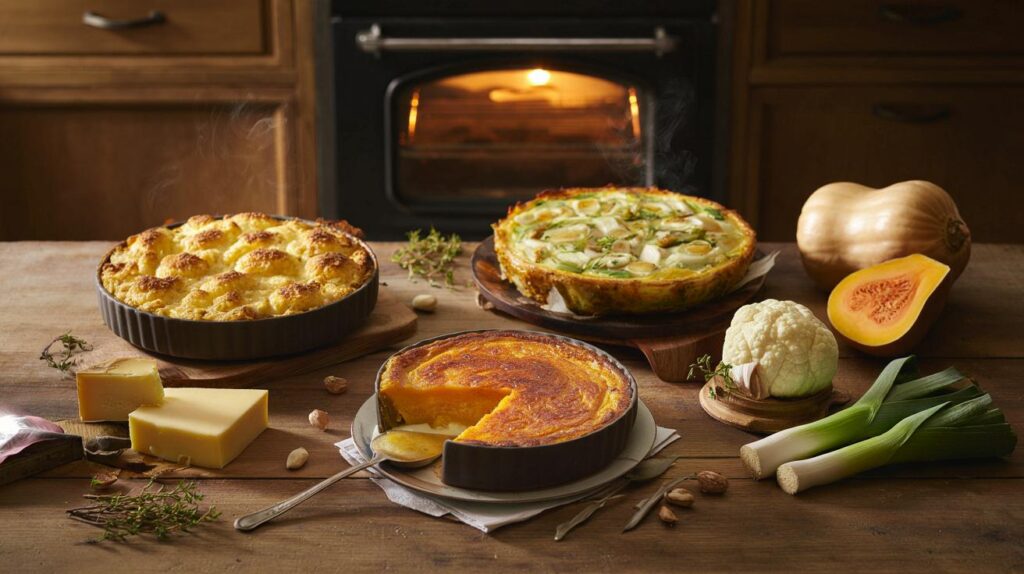
Cold evenings nip at your windows as markets brim with squash and leeks; your oven promises warmth, fragrance and ease.
That promise lands on your table with three generous bakes built for the season. Each tray layers peak vegetables, honest dairy and a golden crust that invites spoons to crack through. You get steps that work midweek, textures that soothe, and timings that respect your schedule.
Why autumn gratins hit the spot
Seasonal vegetables are abundant now, so you pay less and eat fresher. Gentle heat teases out sweetness from squash, cauliflower and leeks. Cheese and cream bind moisture, so leftovers reheat well without drying out. One dish feeds a crowd and leaves only a single tray to wash.
One tin, one temperature, real comfort: that is the autumn equation when energy and time both feel tight.
There is range, too. Subtle goat’s cheese keeps things bright. Comté delivers depth and a nutty finish. Hazelnuts add crunch and aroma. Each tray comes together while you set the table and warm plates.
Gratin one: butternut squash with comté
What you need
- 1 kg butternut squash, peeled, deseeded and thinly sliced
- 120 g comté, finely grated
- 200 ml crème fraîche (or double cream)
- 30 g unsalted butter
- 1 garlic clove
- Sea salt, black pepper, a pinch of freshly grated nutmeg
How to make it
Heat the oven to 180°C. Halve the garlic clove and rub it over the inside of your baking dish. Lay a neat layer of squash, season lightly and dust with nutmeg. Dot with butter and sprinkle comté. Repeat layers, finishing with a thicker shower of cheese. Pour crème fraîche evenly across the top so it trickles between slices.
Bake for 45–55 minutes until the top is burnished and the centre yields to a knife. Rest for five minutes so the juices settle and the slices hold together on the plate.
Thin slices and a bold top layer of cheese produce a tender middle and a proper golden lid.
Serve it with
Balance richness with a crisp salad. Lamb’s lettuce loves a nutty dressing. Whisk these in a small bowl and toss at the last moment:
- 2 tablespoons walnut oil
- 1 tablespoon cider vinegar
- 1 teaspoon Dijon mustard
- A pinch of salt and a twist of pepper
Gratin two: cauliflower with hazelnut crust
What you need
- 1 large cauliflower, cut into bite-sized florets
- 60 g hazelnuts, toasted and roughly chopped
- 40 g butter
- 40 g plain flour
- 500 ml whole milk
- 120 g grated Gruyère or Emmental
- 1 tablespoon wholegrain mustard
- Salt, pepper, a little nutmeg
Method
Bring a large pan of salted water to the boil. Blanch florets for 8–10 minutes until they keep some bite. Drain well and steam-dry for a minute to avoid watery sauce.
For a thick béchamel, melt butter in a saucepan, stir in flour and cook for two minutes. Gradually whisk in milk until smooth and glossy. Off the heat, stir through mustard, seasoning and nutmeg. Fold in the cauliflower, spoon into a baking dish, then top with cheese and hazelnuts.
Bake at 200°C for 20–25 minutes until the sauce bubbles and the crust turns golden and fragrant.
Best way to eat
Slice rustic bread, brush with olive oil and toast until the edges catch. The toast adds chew and helps you chase every last ribbon of sauce.
Gratin three: leeks with fresh goat’s cheese
What you need
- 5 medium leeks, trimmed, washed and finely sliced
- 150 g soft goat’s cheese
- 100 g grated hard cheese (Comté or Emmental work well)
- 200 ml single cream
- 2 eggs
- 1 tablespoon olive oil
- Salt and pepper
Method
Warm oil in a wide pan. Add leeks and a pinch of salt. Cook on medium heat for 10–12 minutes until silky and lightly caramelised. In a bowl, whisk goat’s cheese with cream and eggs, then season. Fold in the warm leeks.
Oil a baking dish, pour in the mixture and scatter the grated cheese. Bake at 190°C for about 30 minutes until the surface bronzes and the centre sets with a gentle wobble.
Presentation tips
Spoon into hot ramekins or mini cocottes for neat portions. Finish with toasted seeds or a sprig of thyme. A side of young leaves keeps the plate fresh.
Quick comparison at a glance
| Main veg | Oven temp | Bake time | Cheese | Texture goal | Good side |
|---|---|---|---|---|---|
| Butternut squash | 180°C | 45–55 min | Comté | Soft centre, crisp lid | Lamb’s lettuce, walnut dressing |
| Cauliflower | 200°C | 20–25 min | Gruyère/Emmental | Firm florets, nutty crust | Grilled country bread |
| Leeks | 190°C | 30 min | Goat’s cheese + hard cheese | Silky, gently set | Young leaf salad |
Make-ahead, storage and reheating
Assemble in the morning and chill, then bake in the evening. Cooked gratins keep in the fridge for up to three days. Cool quickly, cover and label. For the best second-day texture, reheat in the oven at 160°C for 15–20 minutes, loosely covered with foil. Uncover for the last five minutes to revive the crust.
Fridge: 3 days. Oven reheat: 160°C for 15–20 minutes. Air fryer: 160°C for 8–10 minutes for a fast, crisp finish.
Portion leftovers before chilling to speed up cooling and reheating. Skip the microwave if you want a crunchy top. A non-stick pan on low heat works well for single portions.
Smart swaps and shortcuts
- Vegetarian rennet: pick cheeses labelled with vegetarian rennet if that matters to you.
- Gluten-free: use cornflour for the béchamel; whisk 25 g into cold milk, heat, then enrich with butter.
- No hazelnuts at home: almonds, walnuts or pumpkin seeds bring the same lifted crunch.
- Lower dairy: swap half the cream for milk; season a touch more and keep a decent cheese layer on top.
- Time-saver: buy prepped veg or slice the day before; store in an airtight box with kitchen paper.
- Extra veg: add spinach to leeks, roast carrots with squash, or tuck kale ribbons into the cauliflower tray.
Nutrition, cost and energy notes
A typical adult portion sits around 300–350 g. The squash bake lands at roughly 450–550 kcal per serving, depending on cheese and cream. The cauliflower tray skews lighter, especially if you go easy on the béchamel. Leeks bring fibre and a softer chew for younger eaters.
Cheese drives cost, so use it strategically: a thin layer between veg, a generous layer on top. That way the flavour carries while the centre stays light. Buy cheese in blocks and grate at home to save money and avoid clumping agents.
Oven use has a price tag. A 50‑minute bake at 180°C uses roughly 1.0–1.3 kWh in a modern electric oven, which comes to about 30–45 p under typical tariffs. The 200°C cauliflower bake takes 20–25 minutes, closer to 0.6–0.8 kWh, or about 18–24 p. Batch two trays at once when you can and bank tomorrow’s meal for near‑free heat.
Extra ways to stretch the tray
Turn leftovers into lunches. Spoon squash gratin into wraps with rocket and a squeeze of lemon. Mash cauliflower gratin and pan-fry little cakes for a crisp-edged side. Fold sliced leek gratin into an omelette for a fast brunch.
Feeding different diets at the same table can feel tricky. Bake the base vegetables on one large sheet, then split into smaller dishes with tailored toppings: nuts on one, goat’s cheese on another, a dairy‑light version with breadcrumbs for a third. The timings stay similar, and everyone gets a tray they can share with confidence.



I can almost smell the hazelnut crust from here 😋 The 180°C squash + Comté is calling my name—love the walnut oil salad tip, too. Thanks for the clear timings and the kWh note; batch-baking two trays is a smart move! 🔥