
Cold light in the late afternoon, leaves in the gutter, and a diary that suddenly looks wide open. Autumn can stretch for miles when you’ve retired. The trick is finding a rhythm that warms the house and the heart, and maybe, quietly, makes Christmas feel closer. This year’s gentle trend? Hobbies that fit a teacup of time and leave a little sparkle on the table.
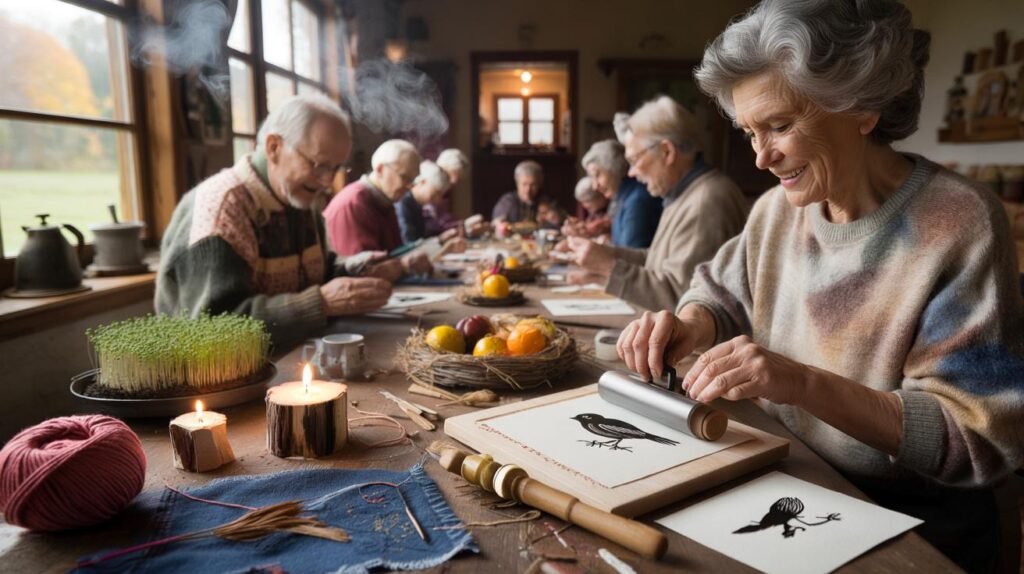
I’m in a village hall where the radiators clank like old bells. Three long tables, kettles steaming, and half a dozen people in warm jumpers passing around tiny ink rollers for lino printing. “Push, not press,” says the tutor, and June, 74, lets out a laugh when her first robin appears on the scrap card. Two seats over, a retired postie strings dried orange slices onto twine for a wreath he swears he’ll hang by the end of November. The air smells of PVA, tea and wet leaves. A choir is warming up in the next room, practising a carol they don’t yet know they love. The sparkle is contagious.
Autumn’s cosy wave: what seniors are picking up now
Across the country, the mood has shifted from “someday” to “tonight at half six”. Smaller, calmer hobbies are winning the hour after tea. People are carving lino for Christmas cards, slow-stitching visible mending onto old denim, and hand-building clay tealight holders that look like moon craters. It’s a season built for making, not rushing.
You can feel it in places we used to pass by. Libraries are running “scan your memories” afternoons with shoe boxes of old photos. Men’s Sheds have added gentle wood-whittling for candle blocks. Garden centres are selling grow-light kits for windowsill microgreens next to the poinsettias. *Yes, that counts as exercise.* The magic is that these projects end up giftable. A jar of spiced apple chutney. A knitted mug cosy. A printed card with your initials tucked in the corner.
There’s a simple reason it works. Autumn gives structure without pressure. Daylight narrows, which frames a session. Warm spaces open their doors. Kit stays cheap: a bench knife, a tub of Mod Podge, a packet of basil seeds. And the brain adores rhythm at any age. Fifteen minutes every other evening is enough to feel mastery creeping in. Let’s be honest: nobody really does that every day. The sweet spot is little-but-often, taken with a cuppa and a lamp you actually like.
From first step to gift-ready by December
Start with a basket by your favourite chair. Keep one project in it and nothing else: the block, the roller, the ink, a stack of cut card. Time it with something you already do. When the kettle clicks, set a soft timer for 12–15 minutes. Make one print. Clean the roller. Stop while it’s still fun. The brain loves small wins that end on a high. The secret is **small wins, often**.
Most people trip on two things: too much kit and too big a promise. Skip the deluxe bundle. Borrow from a friend, or check the charity shop for odd skeins and frames. Pick a project that delivers in one evening, not one month. A single ornament, not the entire garland. Find a buddy, in person or on a WhatsApp thread, and send a photo of your progress once a week. We’ve all had that moment when the sofa calls louder than the hobby. A nudge from a friendly voice undoes that.
If your hands are stiff or your eyes get tired, choose forgiving materials and bold shapes. Paint with sponge dabbers. Try chunky yarn and big needles. Switch to daylight bulbs after 4pm. And give yourself permission to do it your way.
“I thought my hands were too stiff for carving,” says Malik, 68. “Then I tried soft-cut lino and made four cards in one go. My granddaughter asked for one for her wall.”
- Under-£20 starter ideas: soft-cut lino kit, air-dry clay and tealight moulds, beeswax wrap kit, pressed-leaf frame, microgreen tray.
- Low-effort, high-joy: memory-map journalling (trace your street, add a note), choir taster session, five-photo storybook using a free app.
- Weekend treat: pick-and-paint pottery café, wreath workshop at a garden centre, chutney cook-up with neighbours.
Stories that stick: why these hobbies brighten the season
June, a retired nurse from Hull, started “memory maps” in a cheap sketchbook. She walks the same short loop, traces it when she’s home, and adds one detail: the shop that changed hands, the cat with the bell, the smell of rain near the bus stop. After three weeks she had twelve pages. Her son scanned them at the library. In December last year they printed a calendar and gave it to the family. This year she’s adding tiny lino stamps to each page, ready for Christmas post. It’s light, it’s local, and it taught her to notice again.
Another trend pulling in fans is indoor microgreens. A seed tray on a windowsill, a grow light on a timer, and you’ve got peppery radish shoots in a week. People swear their sandwiches taste like spring even as the sky turns grey at four. It’s science and salad in one, and it suits the British instinct to potter. Pickleball is having a moment too, especially in leisure centres that now block-book warm courts and lend paddles at reception. The bounce is gentle. The laughs travel.
What ties it together is social oxygen. A choir gives you Thursday night and a reason to drink more water. A craft group turns an empty afternoon into a routine of faces and stories. A photography walk makes the same park look new when the light drops early and everything catches gold. These aren’t grand goals. They’re small rituals that build a week you actually want to live in. Make it **gift-ready by December** and you’ve got a deadline that feels like joy, not a job.
Practical playbook: keep it safe, simple and shareable
Set a “no strain” rule. If your shoulders climb, stop. Swap a heavy tool for something softer. If your neck gets tight, raise the table or bring the work to your lap with a cushion. Use a tray so you can slide the whole project away when the doorbell rings. Finish with a tiny tidy: wipe, stack, lid on. You’ll thank yourself tomorrow.
Common wobbles are normal. The room feels cold. The lighting is off. You lose the pattern. Try warm spaces near you: libraries, community centres, church halls. Ask about free taster sessions; lots of places run them before Christmas fairs. Print large-font instructions. If reading strains your eyes, watch a three-minute video with captions. If you miss a week, smile and restart. Progress doesn’t vanish. **Low-impact joy** sticks when you treat it gently.
Some people thrive on a whisper of accountability. Others need a cheer. Name what helps and build for it. If you like company, book a workshop and take the seat near the kettle. If you prefer home, schedule a Tuesday call with a friend and show each other what you made.
“I’m not crafty,” said Rita, 71, “but I can tie a beautiful bow. Now I add ribbons to everyone’s gifts, and it feels like mine.”
- Quick wins you can gift: hand-printed tags, a trio of tealight pots, a jar of rosemary salt, a photo bookmark, knitted dishcloths.
- Soft starts: one song with a community choir, ten-throw pickleball warm-up, five-minute sketch from your window.
- Places to look: U3A listings, Men’s Sheds, WI craft nights, library makerspaces, leisure centre noticeboards.
A bright season, made by hand
There’s a gentle rebellion in choosing a small habit and giving it room. It turns grey afternoons into time you can taste. It also leaves a trail: a card on the mantel, a jar on the shelf, a photo that makes someone’s shoulders drop when they see it. These are tiny anchors in a month that can feel busy and oddly blank at once.
Autumn hobbies don’t need grand talent, just a doorway and a lamp. One song learned and sung with others. One tray of herbs snipped for a friend. One handmade star that catches fairy lights on Christmas Eve. If a new habit carries you into January with a little more pep, that’s a quiet win. If it starts a tradition, that’s a gift you didn’t know you needed.
Share what you make. Teach one trick to someone younger. Borrow a trick from someone older. The season glows when skills change hands, and the room gets warmer when the kettle clicks and everyone slides their chair a little closer.
| Key points | Details | Interest for reader |
|---|---|---|
| Cosy, low-cost hobbies are trending | Lino cards, slow stitching, clay tealight holders, microgreens, choir nights | Easy entry, quick wins, and giftable results before Christmas 2025 |
| Micro-habits beat grand plans | 12–15 minute sessions, basket-by-the-chair, tie to the kettle routine | Build momentum without fatigue or fuss |
| Social spaces amplify the glow | Libraries, Men’s Sheds, WI, leisure centres, warm-space workshops | New friends, safer setups, and a weekly anchor through dark evenings |
FAQ :
- What’s the easiest autumn hobby to start at home?Hand-printed gift tags or a single lino stamp. One tool, one ink pad, and you’re making in ten minutes.
- Can I join a choir if I can’t read music?Yes. Many community choirs learn by ear. You’ll pick it up fast, and the social boost is gold.
- What if my hands ache or I have limited grip?Choose soft-cut lino, chunky yarn, sponge brushes, or air-dry clay. Short sessions and warm-ups help.
- How do I make a hobby feel festive by Christmas 2025?Set a simple December goal: twelve cards, three ornaments, or one photo book. Tie it to a weekly slot.
- Where can I find affordable kit?Charity shops, library makerspaces, community swaps, and basic starter kits online. Borrow first, upgrade later.



I retired last spring and this is the first guide that actually feels doable. The basket-by-the-chair trick is genius; I set a 12-minute kettle timer and printed two little robins before the tea even cooled. Memory-map journalling is my new nightly loop—definately noticing more on my walks. If I can keep this rhythm, a dozen hand-printed cards by early December sounds possible! Also love the tip about soft-cut lino for stiff hands. Thank you for making creativity feel small, warm, and gift-ready.
Honest question: isn’t lino printing rough on wrists with arthritis? Soft-cut helps, but the pressure still gets me. And those “under-£20” kits creep up once you add ink, roller, postage, etc. Any truely budget path—like library makerspaces that lend tools—or is there a better starter?