
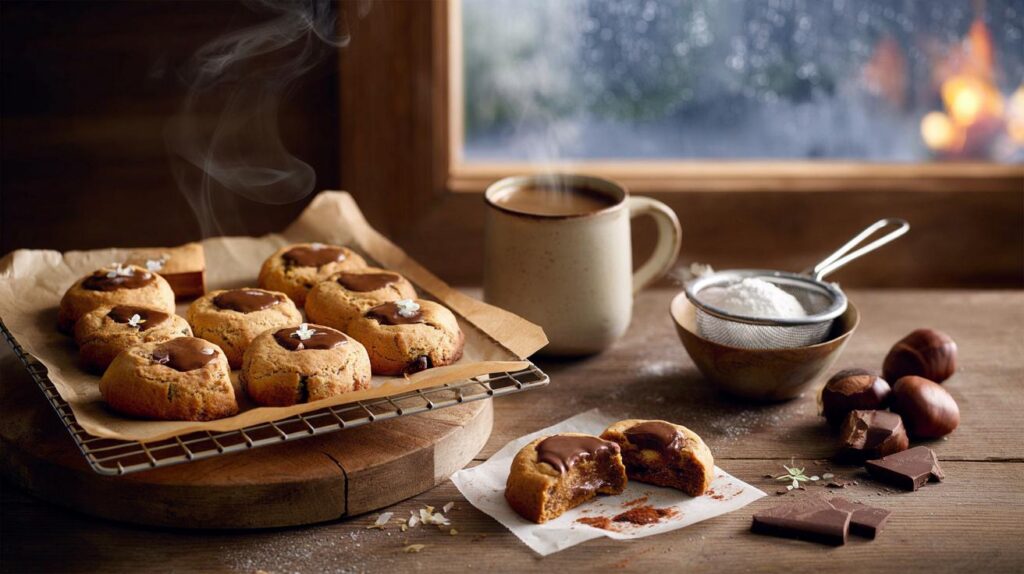
The season drifts in with woodsmoke and wet pavements, and the kitchen light feels warmer than the street outside.
This is when a tray of crisp, nutty biscuits earns its place on the table. Chestnut flour and dark chocolate give a scent that lingers, a texture that crunches at the edge, and a centre that stays soft enough to comfort tired hands.
A scented pause for autumn afternoons
Across October, families reach for bakes that taste like woodland walks and slow sunsets. Chestnut flour brings a gentle sweetness and a faintly woody depth. Dark chocolate adds the contrast. The combination works because each element does a different job: fat delivers tenderness, sugar hardens the crust, and the oven sets the snap.
Set the oven to 170°C and aim for 13–15 minutes: golden rims, a soft centre, and a crunch that builds as they cool.
What goes into the crunch
The seasonal core
- 100 g chestnut flour for aroma and a tender bite
- 80 g plain flour, or go all-chestnut with a spoon of milk or apple purée for suppleness
- 80 g unsalted butter, softened, for richness and structure
- 70 g light brown sugar for caramel notes and edge crispness
- 1 egg to bind and add gloss
- 1 pinch fine salt to sharpen the chocolate
- 80 g dark chocolate chips for pockets of melt
- Optional: 1 tsp vanilla or the fine zest of an untreated orange
Chestnut flour clumps easily, so whisk or sieve it before adding. The salt matters. It balances sweetness and helps the chocolate sing without turning the bake salty.
Short method, reliable results
Cream butter and sugar until pale. Beat in the egg until smooth. Fold in chestnut flour, plain flour, and salt to make a soft, non-sticky dough. Stir through the chips and any aromatics. Roll walnut-sized pieces, flatten lightly, and space on a lined tray. Bake at 170°C for 13–15 minutes. Cool on the tray for five minutes, then move to a rack.
Chill the dough for 20 minutes before shaping. You’ll get neater rounds and a sharper crunch after the bake.
Small upgrades that make a big difference
Flavour lifts that stay honest
- A light sprinkle of fleur de sel on raw dough heightens both chestnut and chocolate.
- A pinch of cinnamon or cardamom brings warmth without masking the nutty profile.
- Grated tonka or a touch of orange zest matches the flour’s woodland tone.
- A few diced pear pieces or a thread of chestnut honey adds a mellow finish.
Texture control for your crowd
For crisper biscuits, bake to the deeper side of the window and let them cool fully on a rack. For softer centres, pull the tray as soon as the rims colour. Chestnut flour browns quickly, so watch the last two minutes closely.
Why chestnut flour is back on the shelf
Chestnut has deep roots in European kitchens. It is naturally sweet, gluten free, and rich in fibre and potassium. That gives bakers two wins: less added sugar for the same perception of sweetness, and a satisfying crumb without heavy doughiness. It also carries a roasted note that matches coffee and dark chocolate. In autumn, shops stock it more widely, and home cooks use it for cakes, pancakes, and biscuits that feel seasonal without fuss.
Supply can vary by harvest. Store the flour sealed and cool, as it picks up moisture and odours. Fresh chestnut flour smells clean and nutty. If it smells flat or musty, the tin needs replacing.
From mixing bowl to tray
Prevent the usual pitfalls
- Weigh in grams. Chestnut flour is thirsty; small errors change texture fast.
- If going 100% chestnut, add 1–2 tbsp milk or apple purée to keep the dough pliable.
- Space the rounds well. The butter encourages gentle spread.
- Rotate the tray once if your oven has hot spots.
Pairings that warm the hands
Serve with thick hot chocolate, a filter coffee with a robust roast, or a spiced herbal infusion. A few squares of 70% chocolate on the side echoes the chips and extends the pause. Present them on a wooden board for a touch of theatre, or offer them still warm on greaseproof paper for a kitchen-table moment.
At-a-glance bake facts
| Oven temperature | 170°C, fan if available |
| Bake time | 13–15 minutes |
| Batch size | 18–22 biscuits, walnut-sized |
| Storage | Up to 5 days in an airtight metal tin |
| Allergen notes | Chestnut is a tree nut; check with guests before serving |
Make them yours
Personalise without losing the autumn feel
Swap a handful of chips for chopped hazelnuts if you like extra crunch. Stir in raisins or candied orange for pockets of chew and citrus lift. Keep total mix-ins near 80 g so the dough holds its shape. If you want a deeper caramel edge, substitute part of the brown sugar with dark muscovado and add one extra minute in the oven.
For a gluten-free tin, use all chestnut flour and add a spoon of milk to keep the dough supple.
Storage, safety and wise swaps
Let the biscuits cool fully before boxing them. A metal tin protects crunch better than plastic. To refresh yesterday’s batch, warm on a tray at 140°C for five minutes. If you bake ahead, freeze raw, shaped rounds on a tray, then bag them. Bake from frozen at 170°C for 15–17 minutes.
For dairy-free, replace butter with a plant block that lists at least 75% fat. Avoid spreadable tubs; they add water and flatten the bake. For egg-free, use 1 tbsp ground flax mixed with 3 tbsp water and rest for 10 minutes before adding.
A broader take: costs, nutrition and timing
Chestnut flour costs more than plain, yet a little carries far. The 100 g here provides distinct flavour without tipping the budget. Each biscuit lands in the small treat bracket, with fibre from the flour moderating the sweetness. Bake time stays under 20 minutes, washing-up is light, and the result fits weekday evenings as well as a weekend walk return.
If you host mixed diets, plate two trays: one standard, one all-chestnut, and label them. The method barely changes, and everyone gets a biscuit that feels considered. For children, shape smaller rounds and cut bake time to 10–11 minutes for a gentle bite. For gifts, tie the tin with twine and tuck in a card listing the oven temperature, time, and allergen note. That tiny detail helps a friend recreate the warmth on another damp night.



Made a batch tonight and wow—the chestnut flour + dark chocolate really does the woodland-walk thing. I chilled the dough 20 minutes as you suggest and the rounds came out neat with that sharper crunch after cooling. Used a dash of orange zest and a whisper of fleur de sel; the edges were golden at 14 minutes, centres still plush. This is deffo my autumn snack, and the metal tin trick kept them crisp till the next day.
Quick question: if I go 100% chestnut flour, is 1 tbsp milk enough, or should I add apple purée too? Last time my dough got a bit crumbly and the biscits spread weird.