
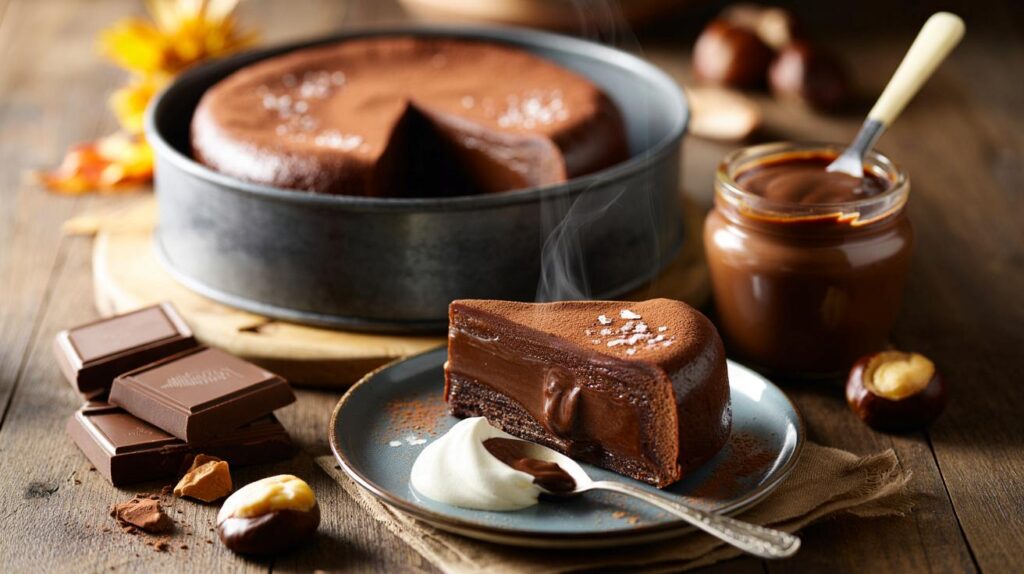
As evenings draw in, ovens warm kitchens and thoughts drift to gentler puddings that comfort, invite sharing, and feel seasonal.
Across Britain, home bakers reach for cocoa-rich bakes that don’t demand hours at the hob. A flourless chocolate and chestnut fondant now steals the spotlight, pairing dark chocolate with velvety chestnut cream for texture you cut with a spoon, not a knife.
What makes this fondant different
This pudding relies on the natural starches in chestnut cream rather than flour. The result lands between truffle and sponge: dense at the edge, softly yielding at the centre, with a clean cocoa finish. It suits gluten-free guests when you choose certified ingredients and grease the tin carefully.
Five core ingredients, no flour, gentle heat: dark chocolate meets chestnut cream for a spoonable, autumn-first finish.
Chestnut cream brings sweetness, subtle smokiness and a faint nuttiness without actual nut chunks. Dark chocolate (around 65% cocoa solids) restores balance, steering the sweetness and delivering depth. Butter binds and enriches. Eggs give lift and that coveted tremble in the middle.
Ingredients and method at a glance
| Item | Amount | What it does |
|---|---|---|
| Dark chocolate | 200 g (≈65% cocoa) | Structure, bitterness, cocoa aroma |
| Chestnut cream | 250 g | Sweetness, body, silky texture |
| Eggs | 4 | Lift, set, fondant centre |
| Butter | 80 g | Gloss, richness, tender crumb |
| Salt | 1 pinch | Sharpens flavours |
| Sugar (optional) | 1 tbsp | Only if your chestnut cream tastes muted |
Step-by-step
- Melt chocolate with butter over a gentle bain-marie, keeping steam away from the bowl to prevent seizing.
- Whisk in eggs one by one until the mixture looks glossy and uniform.
- Fold in chestnut cream and a pinch of salt. Taste, then decide if the tablespoon of sugar is needed.
- Scrape into a well-buttered tin. Bake at 165 °C (fan) for 20–25 minutes.
- Remove when the rim looks set and the centre quivers when you nudge the tin.
Bake low and slow: 165 °C for 20–25 minutes. Aim for a barely wobbly centre and a satiny rim.
Why it suits the season
Late October favours puddings that lean into warmth rather than height. Chestnut brings woodland notes that sit naturally beside cocoa, while the flourless method keeps the bite soft and almost custardy. Serve it after a hearty stew or alongside tea; the fondant’s gentle sweetness won’t bully the palate.
Texture matters here. A fine surface skin gives way to a spoon-soft core. The fondant yields without collapsing, and a small portion satisfies because flavour concentrates rather than bloats with starch.
Serving ideas that raise the game
- Lightly whipped cream with a pinch of salt for contrast.
- A single scoop of vanilla ice cream for hot–cold play.
- Crushed marrons glacés for sparkle and crunch.
- A few flakes of sea salt just before serving.
- A whisper of grated tonka bean or orange zest for perfume.
Technique notes that save your bake
Control the melt. Keep the water in your bain-marie below a simmer and the bowl dry; stray droplets can seize chocolate. Add the eggs gradually; the batter thickens and emulsifies rather than curdling. Don’t chase a clean skewer. This is a fondant, not a sponge—remove it when the centre still shivers.
Grease and line the tin if you plan to unmould, or simply serve straight from a ceramic dish. Rest the fondant for 10 minutes before slicing to keep the structure intact while the centre stays soft.
Nutrition, storage and make-ahead
Chestnut cream carries natural starch and some fibre, though it also brings sugar. A modest slice goes a long way, especially with something cool and unsweetened on the side. Choose chocolate with clear cocoa percentages and butter with a higher fat content for a cleaner melt.
Keep leftovers in the fridge for two to three days, well wrapped. Warm a slice briefly in the microwave or let it return to room temperature to regain that supple centre. You can bake a day ahead; the flavour deepens overnight.
Smart swaps and flavour twists
Want a toasted edge? Fold in a handful of roasted hazelnuts or pecans for crunch. Prefer a lighter note? Trade some butter for crème fraîche to nudge the profile towards tangy. Dairy-free bakers can use plant-based butter and a dairy-free dark chocolate; the centre sets a touch looser, which many people love.
If you cook for coeliacs, check every label for gluten status and line tins with fresh baking paper to avoid contamination. For less sweetness, look for unsweetened chestnut purée and add sugar to taste, tablespoon by tablespoon.
Cost and time: plan your bake
- Prep: about 10 minutes if you melt chocolate while weighing other ingredients.
- Bake: 20–25 minutes at 165 °C (fan).
- Rest: 10 minutes before serving for clean slices.
- Shopping note: 250 g jars of chestnut cream appear widely in autumn; stock one in the cupboard and you’re halfway there.
Who this pudding suits
Families who want a table-centre dessert that cuts neatly into eight smaller portions. Dinner hosts who need a make-ahead option that still tastes freshly made when warmed. Gluten-avoiders who miss the softness of traditional bakes. Chocolate fans who fancy cocoa’s darker side without bitterness dominating.
One tin, eight tidy slices, and a centre that leans molten rather than cakey—built for sharing, not fuss.
Troubleshooting and risk checks
- If the top cracks deeply, your oven ran hot; drop the temperature by 10 °C next time.
- If the centre collapses, you underbaked; add 3–4 minutes, watching for a gentle wobble, not a ripple.
- If the batter turns dull and grainy, water touched the melted chocolate; start over and dry the bowl thoroughly.
- If sweetness feels heavy, serve with unsweetened yogurt or crème fraîche to correct the balance.
Ideas to broaden the moment
Pair a slice with poached pears or roasted figs to build a simple dessert course without extra pastry. For a café-style plate, dust with cocoa, add a spoon of whipped cream, and scatter cocoa nibs for crunch. Coffee drinkers might choose a short, bitter espresso; tea drinkers can pour a malty Assam to underline the chestnut notes.
Curious about chestnut beyond pudding? Roast whole chestnuts and fold the chopped kernels through whipped cream for a fast parfait, or stir chestnut purée into pancake batter for weekend breakfasts. The same jar stretches across several small projects, which keeps waste down and flavour up as the season settles in.



Between truffle and sponge? That’s my autumn love language. Dark chocolate + chestnut cream sounds dangerously spoonable 😋