
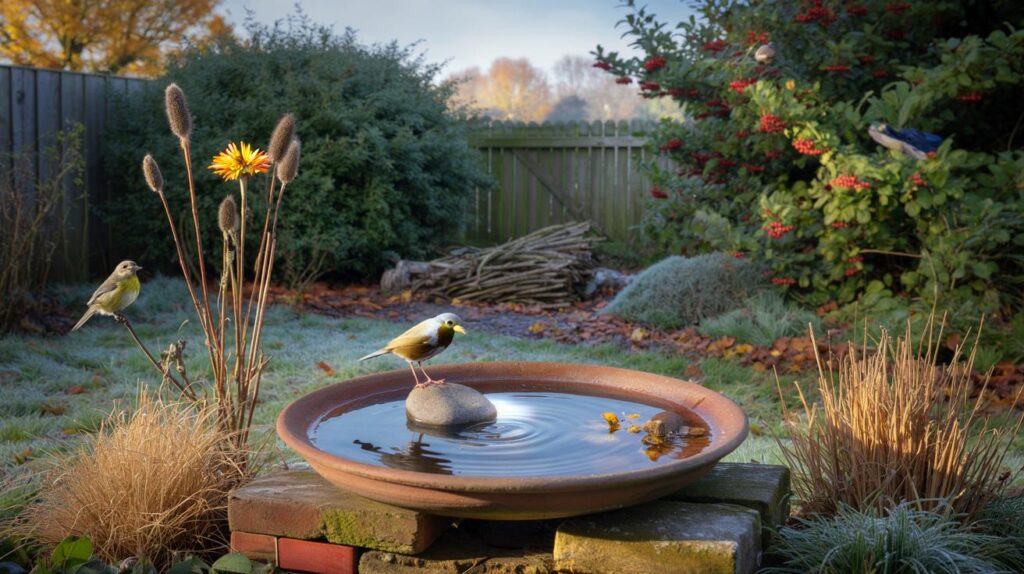
Frost is close and gardens risk falling quiet. A small autumn rethink now could decide who visits your fence in January.
Across the country, well-meaning clear-ups strip borders bare just as temperatures fall. That tidy impulse starves wildlife. Three simple, low-cost moves will keep birds coming back, even through a cold snap.
The autumn habit that empties your garden
Blitzing borders, scalping lawns and cutting every shrub feels productive. It also removes food, shelter and water when birds need them most. Seed heads vanish. Insects and larvae get raked out. Dense cover shrinks to neat outlines that offer little protection from wind, sleet and cats.
The clean sweep mistake
A pristine plot looks smart in October. By December it can feel lifeless. Leaving some structure is not neglect. It is strategy. Keep a little mess and you create micro-habitats that hold heat, damp and food through hard weather.
Strip everything back in autumn and you cut the supply lines: seeds, insects, cover and accessible water.
What birds lose when we tidy
- Seed supply from grasses, teasels, rudbeckias, cosmos and poppies.
- Hidden insects in hollow stems, leaf litter and rough edges.
- Windbreaks and roosts in unpruned hedges and tangled shrubs.
- Shallow water sources once saucers and trays are stored away.
Water: the overlooked life saver
When ponds crust over, the right puddle can be a magnet. A wide, shallow dish set at ground level offers safe drinking and bathing, even on cold days.
Set up a shallow drinker in 10 minutes
Use a terracotta pot saucer, roasting tin or metal tray. Keep the water 5–8 cm deep. Drop in a flat stone to give sure footing. Place it in a wind-sheltered spot with a clear view around it so birds can scan for cats.
Keep water under 8 cm deep and refresh daily; add a stone for grip and safe exit.
Keep it safe and ice-free
- Top up each morning with lukewarm water to loosen ice. Never use salt, glycerine or chemicals.
- Move the tray a metre or two closer to the house during cold spells for a slight microclimate boost.
- Clean weekly with a stiff brush and hot water to reduce disease risk.
- Raise the dish 30–50 cm on bricks if cats patrol your borders.
Food: grow your own winter buffet
Packets of feed have their place, but your best long-term ally is planting and restraint. Standing seed heads and fruiting shrubs can feed visitors for months without constant refilling.
Leave seed heads standing
Let grasses, teasels, echinaceas, sedums and sunflowers ripen and dry on the stem. Goldfinches and sparrows pick at them right through winter. If heavy winds flatten tall stems, tie a few to a simple stake so the heads stay accessible above snow or wet ground.
Plant shrubs that feed at the coldest moment
Choose native and wildlife-friendly species that stagger their crop so something is available every month. Mix hawthorn hedging for autumn haws, rowan for mid-season clusters, and evergreen holly for late fruit when options are thin.
| Plant | Peak feed window | Who shows up | Notes |
|---|---|---|---|
| Hawthorn | October–December | Thrushes, blackbirds | Dense shelter and thorns deter cats |
| Rowan | September–November | Redwings, waxwings | Best in full sun; berries vanish quickly in cold snaps |
| Holly | December–February | Fieldfares, song thrushes | Female plants need a male nearby to fruit |
| Guelder rose | November–January | Bullfinches, robins | Moist soil keeps crops generous |
| Ivy | January–March | Woodpigeons, blackcaps | Late berries bridge the hunger gap |
Natural food beats a refill: seed heads and berries feed quietly every day without spooking shy species.
Shelter: delay the pruning
Cutting hedges and shrubs now removes the calm, windproof pockets birds use after dusk. Thick cover means fewer calories lost to wind chill and better odds against predators.
Make cover, not clutter
- Shift hedge cutting to late winter so birds keep their shelter through the hardest weeks.
- Leave a discreet log or twig pile under a bush to trap warmth and support insects that feed wrens and robins.
- Let a corner grow rough with bramble or dog rose to create snug roosts.
- Leave dry leaves under shrubs; they insulate soil, hide invertebrates and protect roots.
Delay hedge work until late winter to keep roosts intact and avoid stripping out the last food.
Place any feeders with care
If you do supplement, avoid netted fat balls, which can trap feet. Offer high-energy suet blocks, black sunflower, sunflower hearts and nyjer in proper feeders. Site them within a short dash of cover but keep a two‑metre open arc so birds can spot danger. Clean feeders and trays regularly to reduce disease.
Your three-step weekend plan
- Water: set a shallow dish 5–8 cm deep, add a flat stone, refresh daily. Cost: under £10 if you repurpose a saucer.
- Food: stop deadheading key perennials; let seeds stand. Plant one berry shrub now for next winter. Cost: £5–£15.
- Shelter: postpone hedge trimming; build a small twig pile; keep one rough corner. Cost: £0 and one hour.
Extra tips that save birds and headaches
Window strikes rise in bright winter sun. Place feeders either within one metre of glass or more than ten metres away. Add simple silhouettes on large panes to cut reflections. If cats share your garden, use a quick-release collar with a bell and time their outdoor hours away from dawn and dusk when birds feed hardest.
Watch hygiene. Rinse bird baths and feeders with hot water weekly and let them dry. Remove soggy seed, which moulds fast. If you notice sick birds, pause feeding for a few days and scrub equipment before restarting with fresh supplies.
Aim for a spread of energy: seed heads for daily grazing, suet for icy days, and berries for midwinter. That mix keeps small birds above their nightly energy threshold, so they greet you on the fence at first light rather than vanishing to warmer ground.



Loved the practical three-step plan—set a shallow dish with a flat stone, stop deadheading, and leave a twig pile. Simple, cheap, and doable this weekend with the kids! 🙂
Isn’t placing the water at ground level just inviting cats to ambush? You mention raising it 30–50 cm—do birds still use it reliably when elevated like that?