
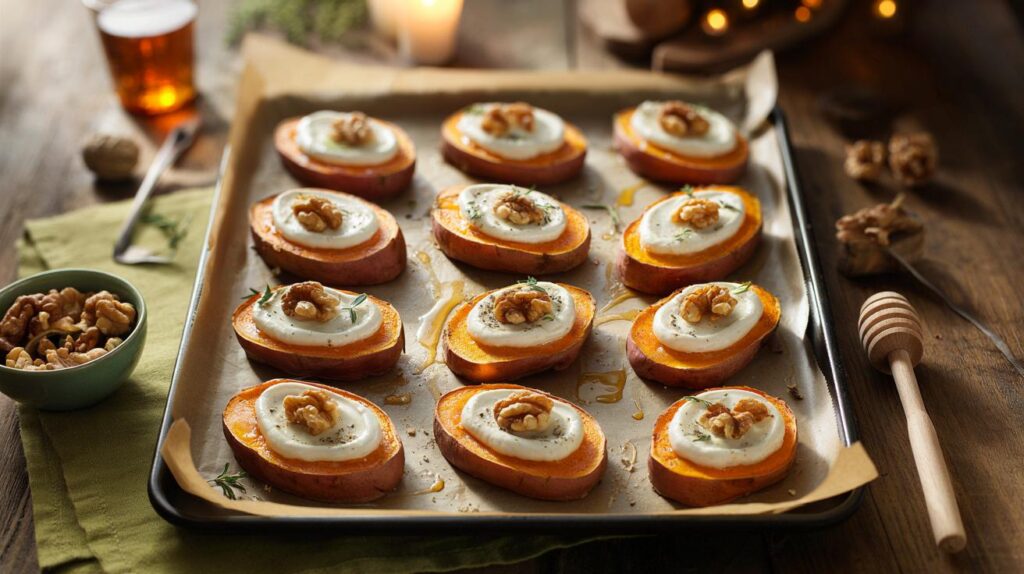
Cooler evenings are back, and hosts across Britain want warming bites that feel indulgent yet don’t drain time or budgets.
Across living rooms and kitchen counters, a quietly clever idea is stealing the season: swapping bread for thick-roasted sweet potato slices, then layering soft goat’s cheese and crushed walnuts. The result looks polished, eats like comfort food, and lands on the table in the gap between pouring drinks and lighting candles. It is thrifty, naturally gluten free, and flexible enough to suit a last-minute crowd.
What’s behind the autumn toast buzz
Texture wins here. You get caramelised edges, a soft centre, a cool, creamy layer, then a nutty snap on top. The flavours nod to hedgerows and harvest: thyme, honey, and the woody depth of walnuts. There’s no bread to slice, no pan to watch. Just a tray, an oven, and ingredients you can find in any supermarket.
One tray, twelve bites, about 20 minutes at 200°C. A seasonal nibble that looks luxe and costs sensibly.
Families like the swap because it feels lighter than mini toasts or crackers. Hosts like the predictability: slices hold their shape, and you can garnish them moments before guests arrive. For anyone juggling allergies, the base change removes wheat without fuss.
Ingredients and quick method
Shopping list for 12 bites
- 2 medium sweet potatoes, about 500 g in total
- 180 g soft goat’s cheese
- 40 g walnut pieces
- 2 tbsp olive oil
- 1 tbsp runny honey
- Fresh thyme sprigs
- Sea salt and black pepper
From tray to table in 20 minutes
- Heat the oven to 200°C. Line a baking tray.
- Peel the sweet potatoes. Slice lengthways into 1 cm slabs.
- Brush with olive oil. Season with salt, pepper, and thyme leaves.
- Roast for about 20 minutes. The centres should be tender, edges just golden.
- Cool slightly. Spread goat’s cheese generously.
- Scatter crushed walnuts. Drizzle honey. Finish with a pinch of thyme.
Skip the microwave for reheating. Bring slices back at 150°C, then add cheese, nuts, and honey just before serving.
Why sweet potato beats bread
Sweet potato brings colour and natural sweetness without turning heavy. It has more fibre than white bread and a lower glycaemic index, so energy releases more steadily. Beta-carotene, which your body converts to vitamin A, rides in with that deep orange flesh. Crucially, thick slices behave like a stable base when roasted; they don’t shatter as brittle crostini can.
For the cheese layer, soft goat’s cheese offers tang, creaminess, and a clean finish that keeps bites bright rather than cloying. Walnuts add crunch and plant fats that feel satisfying. A trickle of honey ties everything together, balancing the cheese’s lactic notes and the root’s gentle sugars.
Swaps that keep guests happy
Vegan and dairy-free
- Use a cashew cream or a smooth tofu, walnut, and lemon blend in place of goat’s cheese.
- Maple syrup, date syrup, or a thyme-infused olive oil can stand in for honey.
Fruit and herb twists
- Add sliced fresh figs or quick-pan apples for a sweet-tart accent.
- Trade walnuts for toasted hazelnuts or pumpkin seeds if nuts are off the table.
- Use rosemary or sage if thyme is not to hand.
Bolder flavour in seconds
- Stir lemon zest into the cheese for lift.
- Shake over Aleppo chilli or smoked paprika for warmth.
- Finish with pomegranate seeds for colour and a pop of acidity.
Cost, calories and portions
Prices move, but a sensible shop keeps the tray friendly to your purse. Here is a rough guide for a dozen bites made with supermarket own brands.
| Item | Approx quantity | Estimated cost | Energy (approx) |
|---|---|---|---|
| Sweet potatoes | 500 g | £0.60–£1.00 | ~430 kcal |
| Soft goat’s cheese | 180 g | £2.00–£2.80 | ~450–500 kcal |
| Walnuts | 40 g | £0.40–£0.70 | ~260 kcal |
| Olive oil | 2 tbsp | ~£0.10 | ~240 kcal |
| Honey | 1 tbsp | ~£0.10 | ~60 kcal |
| Herbs and seasoning | Pinches | ~£0.05 | Negligible |
| Total | 12 bites | £3.25–£4.75 | ~1,440–1,590 kcal per tray |
That works out to roughly 120–130 kcal per bite and about 55p–40p each, depending on brands. As a pre-dinner nibble, plan two per person. For brunch, three or four make a generous portion beside a salad.
Serving and storage
Lay the slices like a fan on a wooden board or run them in neat rows on a bright platter. A few thyme sprigs signal freshness. Orange zest or a dusting of sumac boosts aroma and gives a sharp edge that balances the honey.
Cook the bases up to 24 hours in advance and chill in a lidded box. Bring them back to life at 150°C for a short spell, then add cheese, walnuts, and honey. If you assemble too early, the cheese can soften the base and the nuts lose crunch.
For best texture: roast, chill, reheat, then garnish. Each step protects crunch, colour and structure.
When should you serve it
These bites suit Friday night drinks, a cosy film evening, or a Bonfire Night spread. They sit neatly alongside pumpkin soup, crisp salad leaves, or a platter of sliced pears and grapes. Dry cider, a malty bitter, or a pot of strong tea all meet the flavours without overpowering them.
Useful extras to widen your options
Allergy watch: walnuts and dairy both carry risks for some guests. Keep a seed-topped, dairy-free batch on a separate board and use a clean knife for spreading. Label platters if you set them down buffet-style.
Nutrition note: sweet potatoes bring fibre and carotenoids; walnuts add omega-3 fats; goat’s cheese provides protein and calcium. If you prefer less sugar, brush the cheese with olive oil and thyme and skip the honey. For more protein, fold in crushed chickpeas with the cheese to make a sturdier spread.
Leftovers adapt easily. Chop any remaining slices and toss with rocket, olive oil, lemon juice, and extra walnuts for a quick lunch salad. Or dice the roasted bases, warm them in a pan, and spoon over yoghurt with herbs for a five-minute brunch side.



Bookmarking for Bonfire Night—cheap, cosy, and gluten-free.
Calling it “toast” feels like cheating, but I’m intrigued. Do the slices stay firm after 20 minutes, or do they sag under the walnuts and honey? Any reccomendations to avoid sogginess?