
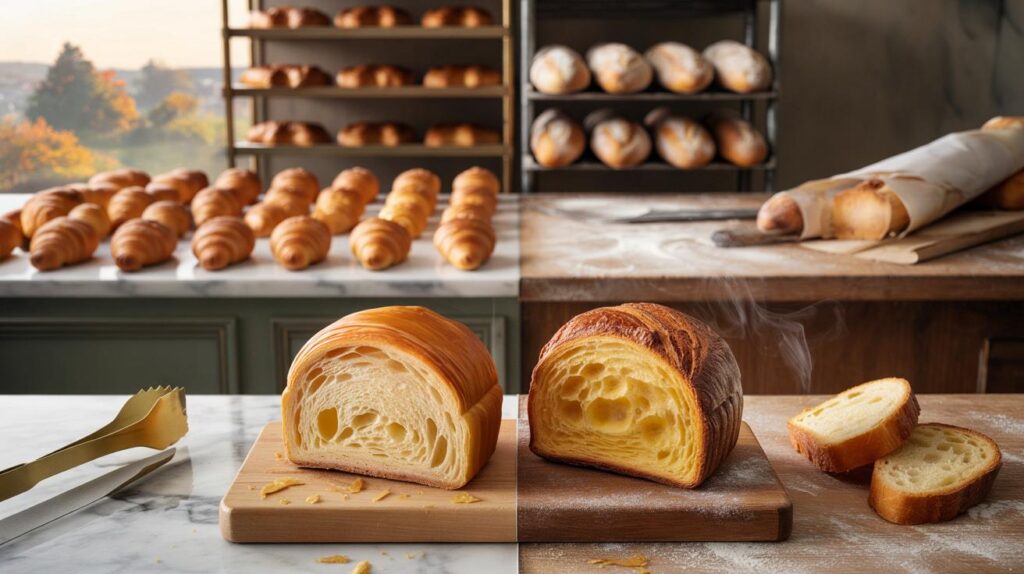
The smell of warm bread can cloud judgement. Behind glossy counters, shortcuts creep in as prices quietly creep up.
Autumn 2025 brings comfort bakes, but also fresh warnings. From faux butter to reheated loaves, shoppers face costly surprises.
Hidden shortcuts behind the counter
Many shopfronts still promise old-world craft. Yet some counters serve a new mix of industrial methods and clever marketing. The target is your morning pastry. Labels suggest butter-rich indulgence, but recipes sometimes tell another story.
“Pure butter” should mean no other fat. Reports from consumer groups suggest some batches contain less than 18% butter by weight. Cheaper vegetable fats bulk out the dough. Additives prop up texture and shelf life. A glossy finish often comes from an egg wash and colourants, not craft.
Pure butter on the label should mean butter in the layers. If you taste bland fat and feel rubber, question the claim.
Appearance misleads with bread too. Par‑baked loaves shipped frozen crisp up in a shop oven within minutes. They smell enticing. They look artisan. They are neither mixed nor fermented on site. The word “artisan” sometimes appears, yet the dough never met the premises. Controls over who can display the term vary, and checks are uneven.
Frozen and par‑baked posed as fresh
Industrial doughs standardise taste and texture. Bakers receive consistent volume and colour on tight margins. Customers get speed over character. You may notice a thin, brittle crust and a uniform, tight crumb. Real fermentation leaves irregular bubbles and a deeper aroma.
When artisan becomes a costume
Some businesses keep a token mixer in view and a stack of bags out back. The real work happens at a distant plant. Batches arrive part-baked, then finish in the in‑store oven. The sign says “boulangerie-pâtisserie”. The loaf says “factory”.
What it costs you
Price gaps have widened as dairy and energy have climbed. A genuine butter croissant costs money to make. Paying less than the going rate usually signals a make‑do recipe. In tourist zones, complaints pile up about mark‑ups without clear signage. Shoppers report baguettes at double a neighbourhood price around busy landmarks.
Hidden pricing or no external display is a red flag. If a price looks too good—or too steep—ask why.
Weight games add another sting. Shrinkflation hides in smaller dough pieces and extra bake time that drives out moisture. A baguette may feel lighter, dry sooner and taste hollow. You leave with less bread for more money.
| Claim | What to check | Typical fair price (2025) |
|---|---|---|
| Pure butter croissant | Buttery aroma, crisp shell, tender layers, no greasy film | €1.30–€1.80 in non‑tourist areas |
| Traditional baguette | Irregular crumb, warm wheat aroma, cooling crackle, steady weight | €1.20–€1.60 depending on region |
| Artisan loaf | On‑site mixing and shaping, labelled flours, visible production | €3.00–€5.50 for 500–800 g |
| Tourist strip offer | Clear outdoor price board, price per kilo shown | Expect up to 2× local price; weigh value against quality |
Seven signs your “fresh” bake is anything but
- All‑day abundance: trays always full, identical shapes, little variation in size or colour.
- Suspiciously cheap croissants: a “pure butter” price below €1.30 where costs have risen sharply.
- Rubbery layers: croissants that stretch or squeak, with a bland, waxy aftertaste.
- Uniform crumb: baguettes with tiny, even bubbles and no aroma punch when torn.
- Vague labels: “artisan” and “house recipe” without details on flour, fermentation or origin.
- Hidden or patchy pricing: no outside board, unclear weight, or promotions that mask the base price.
- Night‑time delivery of par‑bakes: racks arriving wrapped and pale, then baked off at dawn.
How to spot the real baker
Good shops have nothing to hide. Staff can explain the process. Prices are posted inside and out. Dough proofs on site. Batches look alive, not cloned. Ask simple, direct questions at the till.
Quick tests you can do in 30 seconds
- Sniff: a butter croissant smells nutty and clean, not like oil.
- Press: the crust should flake and spring back; the crumb should not feel spongy.
- Look: layers should be distinct and tender, not dense and laminated into a chewy mat.
- Wait: day‑old factory bakes turn leathery fast; real butter layers stale differently, keeping flavour longer.
What to ask without feeling awkward
- Do you laminate with butter only, and which butter do you use?
- Where is the dough mixed and shaped, here or off‑site?
- How long do you ferment your baguette dough?
- Can I see the price per kilo for this loaf?
Transparent bakers welcome questions. If answers are evasive, take your appetite elsewhere.
Know your labels and your rights
Terms differ by country, but the principle holds: clear prices and truthful ingredient claims. “Pure butter” should exclude other fats. Labels such as AOP for butter indicate origin and standards. If a shop trades on craft, it should show where and how it bakes. Ask to view an ingredient list for pastries if you have allergy concerns.
Prices must be visible before ordering in many jurisdictions. So must the weight or price per kilo for bread. Lack of display, or pricing only after you order, undermines transparency. Photograph boards if you plan to challenge a charge later.
Why your senses beat the signboard
Trust your mouth. Butter delivers aroma, a clean melt and a lingering flavour. Vegetable fat coats the palate and fades quickly. A well‑fermented baguette hums with wheat and a hint of acidity. A reheated par‑bake smells like an oven, not grain.
Real bakers vary batch to batch because weather, flour and time change dough. Industrial lines deliver uniformity. Consistency can soothe, but it often strips character. If every crumb looks identical, you may be eating a narrative, not a loaf.
Practical extras that save money and disappointment
Plan a weekend test. Buy one croissant and one baguette from three nearby shops. Note price, aroma, texture after two hours and the next morning. Score each out of ten for flavour, texture and transparency. Choose your regular based on the results, not the sign.
Run a simple cost check. Paying €0.40 more for a true butter croissant once a week costs about €20 a year. The sensory return may justify it. If you buy in batches, freeze high‑quality bakes on day one. Reheat at 160°C for 5–7 minutes to revive the crust without drying the crumb.
Mind allergens. Mixed fats can hide milk powders, emulsifiers and colourants. If you react to certain additives, insist on seeing the recipe sheet. Genuine butter bakes are simpler, which can reduce risk if dairy suits you.
Support skilled work. Small batches, slow fermentation and proper butter push up costs but also deliver flavour and digestibility. When you find a baker who shows their work, reward them with repeat custom and word‑of‑mouth. That pressure shapes the market faster than any sign on a window.



18% “pure butter”? Ouch. Is that even legal, or just clever labelling?