
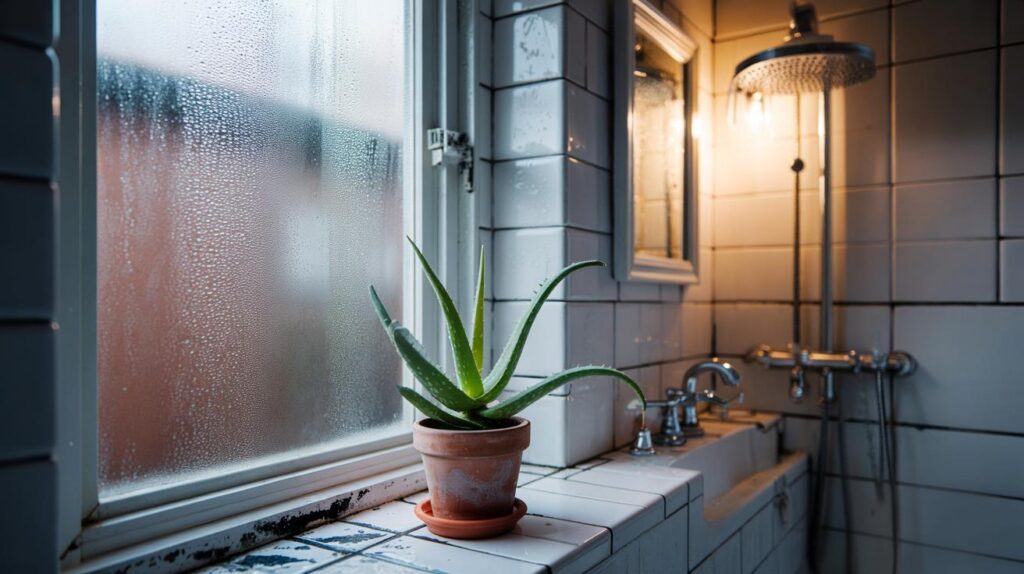
British bathrooms turn steamy, bills creep up, and black spots return. A cheap green ally whispers a quieter, fresher winter.
Condensation rises as temperatures fall, and many homes see the same pattern: fogged mirrors, damp grout and a familiar musty sting. This season, a humble succulent is being pressed into service by cash‑strapped households looking to keep mould at bay without cranking up energy costs.
What’s really behind those black spots
Hot showers push humidity in a small bathroom beyond 80%. Moist air hits a cold wall or window, and water condenses. Within days, mould spores settle and feed on soap scum and dust. Families notice black specks around window seals, silicone and ceilings first.
That isn’t just cosmetic. Prolonged exposure can irritate airways and worsen asthma, especially for children. The more often condensation forms, the quicker it returns after cleaning, which nudges costs up through sprays, repainting and extractor fan use.
Target a bathroom relative humidity of 40–60%. Above 70% for hours at a time, mould gains ground fast.
The plant making a splash this winter
Aloe vera, usually bought for its soothing gel, is earning a second reputation in the bathroom. Many supermarkets and DIY chains are selling healthy plants for around £13.99, and households are putting them on steamy sills as a simple moisture buffer.
How a plant helps reduce humidity spikes
- Leaf and soil buffering: the fleshy leaves and gritty compost hold water and can dampen short, sharp humidity peaks after a shower.
- Microclimate: a plant increases air movement at leaf level, which can stop droplets settling on adjacent tiles and grout.
- Surface interception: moisture condenses on cool plant surfaces and soil rather than on paint, buying time before droplets run and stain.
- Habit shift: putting a living plant near the shower often nudges people to crack a window or run a fan longer, which compounds the gain.
An aloe won’t replace ventilation or a dehumidifier, but it can trim the peaks that cause the worst condensation.
Care that takes seconds, not schedules
Aloe vera thrives on neglect. That suits busy homes already juggling school runs and laundry.
- Water lightly every 3–4 weeks in winter; wait until the soil feels dry to the first knuckle.
- Give it bright, indirect light; a frosty sill is fine if leaves avoid touching the glass.
- Rotate the pot fortnightly for even growth.
- Repot every two to three years in a cacti–succulent mix for free‑draining roots.
- Keep leaves out of direct shower spray to prevent rot.
Where to place yours for real results
Placement matters more than pot colour. Aim to catch the steamiest air without drowning the plant.
- On a windowsill above the bath or near the shower—but set back from the spray zone.
- Opposite the extractor fan so airflow brushes past the leaves.
- On a high shelf if curious toddlers or pets share the bathroom.
- Never on a hot radiator; heat stresses succulents and dries soil too fast.
Can a £13.99 plant beat the mould bill?
Households often underestimate how much small fixes add up. Anti‑mould paint, sprays and power use sit alongside the occasional regrout. Here’s a worked example for a typical winter in a two‑bed flat.
| Item | Typical spend |
|---|---|
| Anti‑mould bathroom paint (1 tin) | £25 |
| Bleach/specialist sprays (2 bottles) | £8 |
| Dehumidifier running (200 W, 2 h/day, 5 months at 28p/kWh) | £42 |
| Extractor fan cleaning and new filter | £15 |
| Regrouting small shower area | £120 |
| Misc. cloths, squeegee, sealant | £21 |
| Total example | £231 |
In larger homes, add repainting a ceiling (£40–£80) or replacing a mouldy shower screen seal (£20–£35), and the seasonal tally can creep towards £280 without a big one‑off repair. Against that backdrop, a £13.99 aloe looks like a modest, low‑risk experiment.
Your quick bathroom action plan
Pair the plant with a few simple, low‑effort habits. The combination matters far more than any one gadget.
- Run the extractor for 15 minutes after each shower; if it has a timer, set it to the maximum.
- Open the window a crack for 5–10 minutes to purge humid air, even on cold days.
- Use a squeegee on tiles and glass; a 30‑second sweep removes litres of surface water each week.
- Dry towels outside the bathroom when you can.
- Place an aloe vera on the sill and a microfibre cloth nearby for quick wipe‑downs.
- Add a £10 hygrometer; keep an eye on the 40–60% sweet spot.
Does it really work? The gains and the limits
An aloe vera will not pull cups of water from the air like a compressor dehumidifier. What it can do is reduce the frequency and intensity of wet surfaces in the immediate area, which is where mould takes hold. Households report fewer beads of water on nearby tiles and less musty smell when the plant is combined with better fan use.
If paint already flakes or mould spreads beyond small patches, treat and fix the underlying causes—leaks, failed seals, faulty fans—before expecting a plant to help. Think of aloe as a supporting player in a wider cast of basic maintenance.
If humidity stays high even with venting and a plant, upgrade the fan. Look for 15–30 litres per second extraction.
Aloe extras you’ll actually use
Kitchen and playtime mishaps
The clear gel inside aloe leaves often soothes minor burns and scrapes. Many families keep a small offcut in the fridge for baking days and barbeques. Patch‑test on skin first, and seek medical advice for anything more serious than a minor surface burn.
Pet and child safety
Aloe vera leaves contain compounds that can upset cats and dogs if chewed. Place the pot out of reach and wipe drips of yellow latex if you trim a leaf. If pets or toddlers can reach every shelf, pick a different plant or lean harder on ventilation and squeegeeing.
When to skip plants entirely
If you rent and the bathroom has no window and a weak fan, push for a fan upgrade rather than filling the room with greenery. In cases of persistent black mould on ceilings or around windows, treat with appropriate products and consider professional advice. Plants support a dry strategy; they don’t substitute for it.
For readers who like to quantify the gains, try a simple test: note humidity after a shower on day one with no plant, repeat a week later with an aloe on the sill and the same shower length, and compare the peak and the time to drop below 60%. Even a five‑minute improvement cuts the time mould has to colonise damp joints.
Finally, if the £13.99 tag tips the decision, check the plant looks firm and upright at purchase, with no mushy leaves and a pot that drains freely. A healthy aloe pays back with a tidier, drier bathroom and a small green lift in the grey months ahead.



Just tried this: aloe on the bathroom sill + cheap hygrometer. Peak humidity dropped faster than last week, and fewer beads on the tiles. For £13.99, I’m in—as long as it doesn’t replace ventilation.