
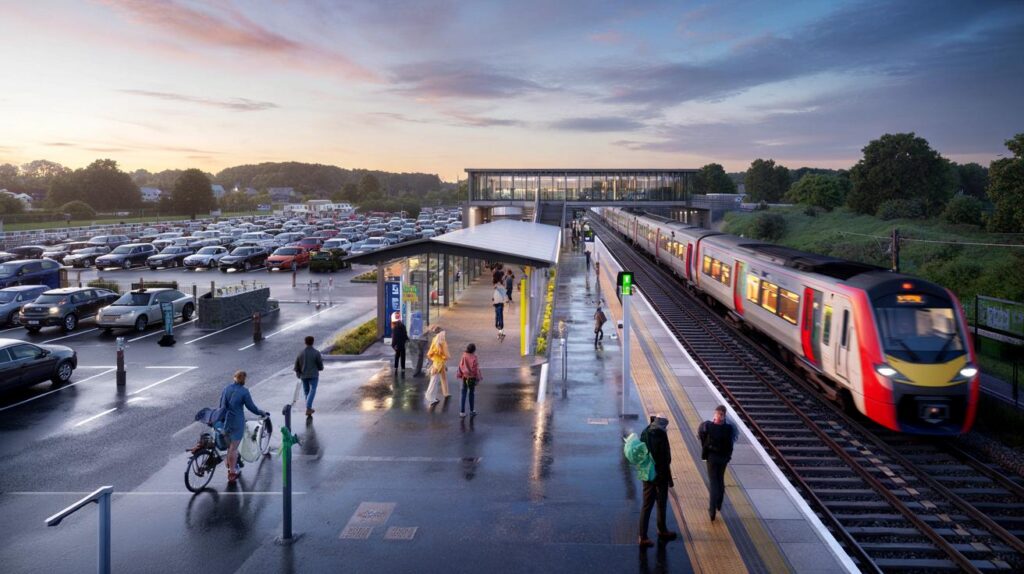
Before dawn, north Chelmsford residents queued with coffees, chasing shorter commutes and a glimpse of their area’s next big chapter.
By mid-morning, the first regular trains were rolling, signalling the start of passenger services at Beaulieu Park, a new station with three platforms, a 705-space car park and direct links to London and Norwich. The project, delivered slightly ahead of schedule, brings a fresh node to the Great Eastern Main Line for the first time in a century.
What opened and when
Services began on Sunday with the inaugural scheduled departure at 07:20 to London. The station sits to the north of Chelmsford, built to serve the growing Beaulieu development and surrounding communities. Construction started in March 2023 and wrapped up earlier than anticipated. Backers point to careful planning and a clear brief as reasons for the brisk delivery.
The first new stop on the Great Eastern Main Line in 100 years now connects north Chelmsford to London in about 40 minutes.
The build carried a price tag of around £175 million. That funding underpins more than a station; it underpins a gateway to a major housing-led scheme, with road upgrades and thousands of new homes planned nearby.
Why Beaulieu Park matters
Chelmsford’s main station has long handled heavy flows, with around 6.5 million passenger movements each year. Crowded platforms and busy concourses tell the story of a city that outgrew its single central hub. Beaulieu Park offers an alternative. It gives residents in the north of the city a closer boarding point and spreads demand across two locations.
For rail operators, a new stop can unlock timetable flexibility. Trains can be spaced differently through the day. Dwell times can shorten at Chelmsford, reducing pinch-points. For passengers, shorter trips to the station, more parking and a choice of services can nudge behaviour away from car-only travel. The effect may take months to settle, but the direction is clear.
Extra capacity, a second Chelmsford gateway and a car park with 705 spaces aim to thin queues and calm peak‑time pressure.
What passengers can expect today
Beaulieu Park opens with three platforms, a staffed presence and ticketing facilities typical of a modern commuter stop. Trains run to London Liverpool Street and towards Norwich. The London journey takes around 40 minutes, placing the station firmly in the daily reach of city workers.
- First scheduled departure: 07:20 to London
- Platforms: 3
- Parking: 705 spaces
- Line: Great Eastern Main Line
- Typical London journey time: about 40 minutes
- Project cost: approximately £175 million
At-a-glance facts
| Feature | Detail |
|---|---|
| Opening date | Sunday, 26 October 2025 |
| Location | North Chelmsford, serving the Beaulieu development |
| Primary destinations | London Liverpool Street, Norwich |
| Parking capacity | 705 spaces |
| Platforms | 3 |
| Line significance | First new station on the Great Eastern Main Line in 100 years |
| Project budget | ~£175 million |
Voices and numbers
Essex County Council’s deputy leader, Louise McKinlay, framed the opening as a long-planned shift in how the county moves. She pointed to a network designed for growth rather than catch-up. Her message mirrors a wider regional aim: keep Essex connected to London’s labour market while supporting local jobs and services.
The numbers offer a practical lens. A 40-minute run to London is competitive. Three platforms give operators room to handle fast and stopping services. A car park of this size signals a park-and-ride function as much as a neighbourhood stop. Together, those elements suggest a station built for a mixed audience: commuters, school runs, and weekend trips.
From school-day shuttles to office commutes, the new stop seeks to spread demand and shorten the first and last mile.
What it means for Chelmsford
Chelmsford has grown quickly, with new estates stretching north and east. Many households face a choice each morning: brave traffic or board a packed train. Beaulieu Park shifts that calculation. It shortens the drive for thousands of residents north of the city centre. It adds parking, which reduces the hunt for a bay near the main station. It creates a second funnel for early trains, where minor delays no longer hinge on a single set of platforms.
Planners also see the stop as the anchor for future streets. New bus links can loop through the station forecourt. Cycle routes can plug into the ticket hall. These details sound modest, yet they decide whether people feel the service works for everyday life. If the interchange feels smooth, loyalty follows.
What happens next
Early weeks bring teething tests. Passenger flows change. Timetables face real-world stress. Car parks fill faster than forecasts, or sit half empty until habits set. Operators often adjust calling patterns and staffing as the picture emerges. Residents will watch for reliable peak services, punctual evening returns and a sense of safety after dark.
Local retailers will notice, too. A station draws footfall at specific times. Coffee shops thrive before seven. Convenience stores pick up trade after nine. As more homes come online—plans talk of up to 14,000 across the wider estate—the catchment grows. That gives the station a moving target: serve today’s community well and prepare for tomorrow’s one.
Practical notes for your first trip
Give yourself a margin. New stations create fresh patterns, and the first fortnight often runs busier than expected. Check the latest timetable before you leave. If you drive, arrive early while routines settle. If you walk or cycle, test the route in daylight once, then plan your return in the dark with lights and reflective kit.
- Allow extra minutes for parking and wayfinding during the first weeks.
- Confirm platform allocations on screens; early operations sometimes change formations.
- Keep an eye on weekend engineering notices, especially on long-distance services.
- If you transfer at Chelmsford or Stratford, factor in connection buffers.
A wider view of the line
The Great Eastern Main Line ties Essex and East Anglia to the capital. Stations along the route often run near capacity at peak times. Adding a new stop after a century marks a policy turn towards resilience. It spreads boarding points, improves access for new communities and gives planners more levers to manage crowding without adding daily road miles.
There is risk in any shift. If services bunch or car traffic backs up at the entrance, goodwill fades fast. If staffing falls short, first impressions suffer. Yet the upside looks tangible: shorter first-mile journeys, a straight run to London in about 40 minutes and a second Chelmsford front door for a city still growing. For many households, that could be the nudge that changes Monday morning for good.



Finally! A second gateway for Chelmsford. If this really shaves my door-to-desk to under an hour with the 40‑min run, I’m definately switching from driving. Kudos to everyone who got it done ahead of schedule.
£175m and 705 parking bays—great headline, but what’s the plan if queues build on the access roads at 7:30? Were peak-time traffic flows actually modeled?