
Britain’s bedrooms keep shrinking while clutter grows. A quiet shift in furniture is nudging households to rethink night-time habits.
Big-box cabinets are slipping out of small rooms as storage beds take their place. B&Q’s latest headboard-shelf design, paired with a sturdy metal frame, aims to park your lamp, book and phone above the pillow and shift everything else beneath the mattress. For many households, that swap removes the need for two bedside tables altogether.
A small-space shift in plain sight
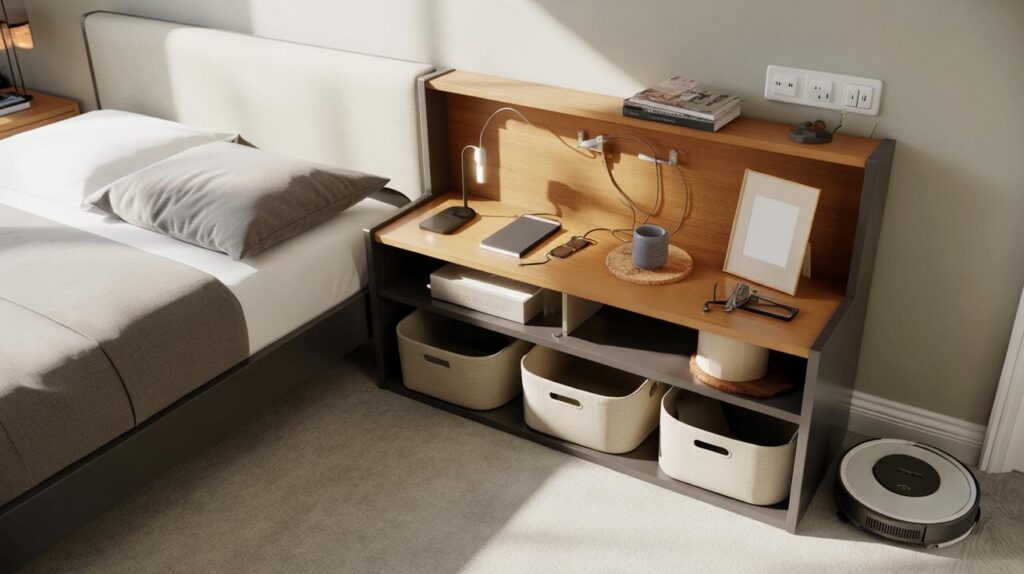
Traditional set-ups give each sleeper a cabinet or table, plus a tangle of cables and a permanent dust trap at floor level. A headboard with built-in shelving changes that geometry. You place essentials on the ledge where you already reach, and you open the floor under the bed for boxes or baskets. HOMCOM’s 4.8ft double frame, stocked by B&Q, brings both ideas together: a wood-effect headboard with shelves, a metal structure, and clear, usable space underneath.
Two bedside cabinets can swallow roughly 0.3–0.4 m². Reclaiming that footprint matters in box rooms, guest rooms and rented flats.
If your room squeezes a double against a wall or under a window, every centimetre of clearance counts. Removing cabinet bulk can create a safer route around the bed, reduce stubbed-toe incidents and make sheet changes faster. You also keep the room feeling calmer, because the ledge gathers your night kit in one line rather than two competing towers.
What the headboard-shelf bed brings to the room
- Headboard bookshelf: space for a lamp, alarm, glasses, charger, photos and the book you actually read.
- Under-bed zone: open storage for labelled boxes, soft baskets or vacuum bags of spare bedding.
- Metal frame: stable support that resists wobbles and reduces mid-night squeaks.
- Warm finish: a wood-effect panel that softens the look without extra furniture.
- Flat-pack logic: parts that go together without specialist tools, typically within a single afternoon.
Parents like the shelf for story time and quick tidy-ups; teens turn it into a mini display ledge; night-shift workers appreciate the reach-to-dim convenience without knocking over a table lamp.
How it stacks up against the old bedside routine
| Feature | Two bedside tables | Headboard-shelf bed |
|---|---|---|
| Floor space used | About 0.3–0.4 m² for two small units | Zero extra footprint |
| Reach to essentials | Arm’s length to the side | Directly above the pillow |
| Cable clutter | High: cables drape to floor | Lower: cables route behind headboard |
| Cleaning time | More edges and legs to dust | Open floor for quick sweep or robot vac |
| Adaptability | Fixed storage volume | Scalable: swap boxes beneath as needs change |
Think of it as two storage zones in one footprint: a ledge for what you touch nightly, and a floor bay for what you stash seasonally.
Assembly and day-to-day use
Owners report building this style of frame solo in a few hours with a screwdriver and patience. Labels on parts help, and the repeat pattern of slats and fixings keeps the process predictable. Once in place, the metal structure holds firm, the headboard acts as a tidy rail for cables and the shelf spares you the 3am floor-fumble for glasses or phone.
Under-bed space works best when you set rules. Give each box a job: shoes, spare linens, travel gear, kids’ craft overflow. Use low, wide containers so nothing snags on slats. If you run a robot vacuum, measure its height and keep boxes against the wall so the bot can clean the front edge without help.
Who benefits most
- Small doubles and box rooms where two tables make the bed feel hemmed in.
- Teen rooms that need display space without adding more furniture.
- Guest rooms used as home offices between visits.
- Renters who want order without drilling shelves into party walls.
Safety, sizing and set-up checks
Measure skirting-to-skirting and aim for at least 60 cm of walkway on the main side of the bed. Check the headboard height against window sills and radiators, and confirm plug sockets sit within cable reach without stretching. Choose low-heat LED lamps and keep fabric shades clear of the shelf edge. Use felt pads where the frame meets the floorboards to cut vibration. Keep the shelf load modest: a lamp, a mug, a phone and a book, not a stack of hardbacks plus a plant pot filled with water.
Small changes add up: a 60 cm clear route on one side reduces night-time collisions and speeds laundry turns on clean-sheet day.
For allergies, swap lidded plastic under-bed boxes for zipped fabric bags you can hoover. Wipe the headboard ledge during weekly bedding change; short, regular routines beat seasonal panic-cleans. If you charge devices on the shelf, run a short cable and clip it to the back panel so it cannot slip under the pillow.
The wider picture: why people are binning bedside tables
Multifunction furniture reflects how we live now. Spare rooms double as studies, and second bedrooms often serve children through several stages. A bed that moves storage off the floor and into a single, consolidated unit brings flexibility without a full refit. It also trims the purchases list: one frame replaces two tables and a separate under-bed drawer set. That simplification lowers visual noise and makes tidying a faster, more repeatable job.
Try this five‑minute planning drill
- Empty your current tables onto the bed and split items into nightly, weekly and rarely used piles.
- Nightly items earn a space on the headboard shelf; weekly items move under the bed; rarely used items go to a cupboard or donation box.
- Mark two under-bed boxes with masking tape labels you can change as life changes.
- Route one short charging cable to the headboard and bin the spares you never reach for.
- Set a two-minute timer before lights-out to reset the shelf; habits keep surfaces clear.
If the shelf bed won’t fit, smart swaps still claw back space
Try a narrow wall-mounted ledge above the pillow, a clamp-on lamp to free surface area, or a soft caddy that slips between mattress and base for glasses and remotes. A shallow peg rail behind the bed can hold headphones and a light robe without bulking out the room. The aim stays the same: keep nightly essentials at hand height and leave the floor visible.
Storage beds with headboard shelves suit busy homes because they curate by default. HOMCOM’s 4.8ft double version from B&Q leans into that idea with a warm panel, a stable frame and honest, usable space underneath. If you want a calmer room without adding cupboards, shifting storage into the bed might be the neatest move you make this season.



Just measured our tiny box room—ditching two dinky tables would claw back ~0.35m². The headboard shelf idea actually makes sense; fewer toe-stubs, fewer cables. Any tips on hiding a CPAP hose up there without making it look messy?
So we’re moving the mess from beside the bed to above our faces? What could possiblie go wrong. Also, where do my towering stack of “to read someday” hardbacks live now—under the mattress like a princess and the pea?