
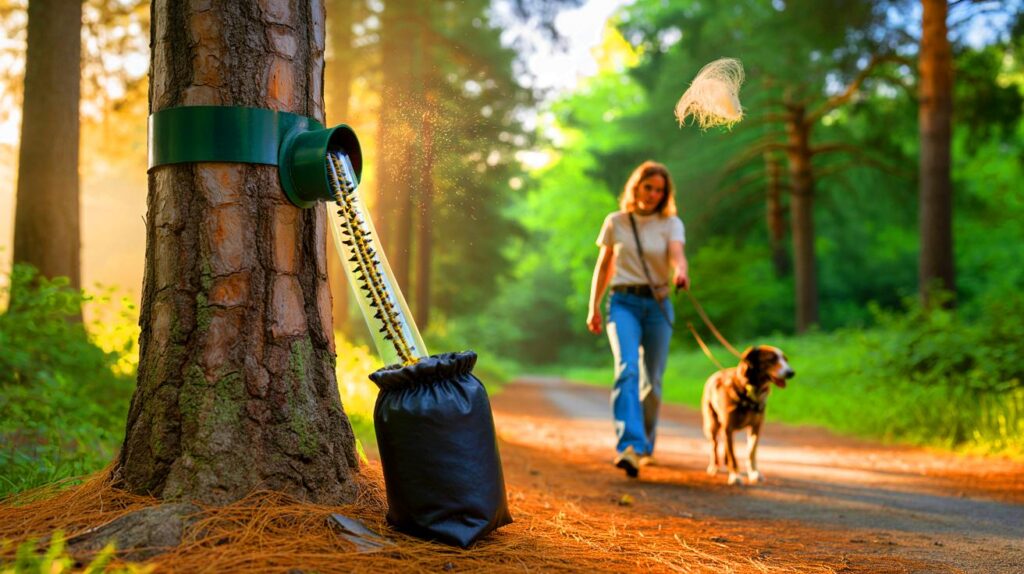
That silent woodland path hides more than birdsong. Those neat, sealed bags on tree trunks are not litter or lost kit.
You may spot them in forests and parks, clipped tight around bark with a tube feeding a black pouch. They look harmless. They are not there for decoration. They mark an active attempt to trap processionary caterpillars, whose tiny barbed hairs can irritate skin, inflame eyes and upset airways. When a bag is in place, the insects are already nearby.
What those black bags really mean
Landowners and councils fit black trunk bags when they confirm processionary caterpillars on pines or oaks. These larvae march down the trunk in tight lines to pupate in the soil. Their hairs break off easily and drift on air currents. A passer-by can react without ever touching a caterpillar.
Trees suffer too. Caterpillars strip needles and leaves, which weakens a tree and invites disease. Repeat defoliation can leave a pine or oak in decline, more vulnerable to drought and storms.
The bag is the warning. Active caterpillars are in the area. Step back, keep hands off, and keep pets close.
How the trap works
The device is mechanical. A plastic collar wraps the trunk, tilted to guide descending caterpillars into a chute. A short tube drops them into a sealed black bag. Sunlight warms the pouch. The contents dry out. No insecticide, no spray drift, and far fewer hairs released into the air.
Some bags carry a weight to stop flapping. Most show a printed message such as “do not open, do not pierce”. That warning protects you as much as the person maintaining the trap. Opening a bag risks a cloud of hairs.
Why timing matters
Trunk traps appear when the descent begins. On pines, that tends to run from late winter into spring. On oaks, peaks often arrive from late spring into early summer. Weather shifts the calendar. A warm spell can bring an earlier march.
| Tree | Typical risk window | What you might notice |
|---|---|---|
| Pine | February to May | Silky nests high in crowns; lines of caterpillars on trunks |
| Oak | May to July | Webbed patches on branches; moulting skins; warning signs on paths |
Risks to you, children and pets
Hairs cause itchy rashes, raised welts and eye irritation. Eyes can feel gritty and water for hours. Sensitive people may sneeze or wheeze. Children rub their eyes and make symptoms worse. Dogs sniff and lick. That brings hairs into mouths and onto tongues, where pain and swelling can escalate quickly. A vet should see any pet that drools, paws at the face or struggles to swallow after a woodland walk.
Never brush or rub exposed skin. Rubbing breaks hairs and drives them deeper. Rinse, change, and seek medical advice if symptoms persist.
First aid: five steps within 100 metres
- Move away upwind by at least 20–50 metres. Keep children close and dogs on a short lead.
- Avoid touching the bag, the trunk, or any nest-like webbing. Do not shake clothing.
- Rinse exposed skin and hair with lukewarm water and mild soap. Use saline for eyes if they sting.
- Change clothes promptly and wash them on a hot cycle. Bag and bin used wipes.
- Call your GP or a pharmacist if symptoms persist or worsen. Contact a vet urgently for pets showing mouth or facial signs.
What to do when you spot a black bag
- Do keep your distance. Treat the area as contaminated even if you cannot see caterpillars.
- Do keep toddlers in buggies and stop them touching bark, sticks or leaf litter nearby.
- Do report damaged traps to the site manager or council using posted contact details if available.
- Don’t open, pierce or remove the bag. Don’t kick, bend or cut the collar.
- Don’t picnic or sit under affected trees. Don’t let pets roll on the ground around the trunk.
Not rubbish: telling traps from nests
People often mistake the trunk bag for fly-tipping. It is not. A genuine nest sits in the canopy, like a thick, white web wrapped around branches or needles. That web is full of old skins and hairs. The trunk bag sits low, clipped tight, usually with a tube leading into a sealed pouch. If you see both in the same area, you are in the heart of an infestation. Choose a different path.
The wider picture and why you keep seeing them
Mild winters and dry springs help these insects thrive. Urban trees create heat islands, and parks offer food and shelter. Managers now combine several tactics: removing nests in winter, deploying pheromone traps for adult moths, placing trunk collars for caterpillars, and fencing off play areas when risk peaks. Each tactic aims to cut exposure without heavy spraying.
Gardeners can help by pruning out reachable nests in the coldest months with full protective gear, then double-bagging waste for specialist disposal. Many councils require licensed contractors for work on taller trees. Unprotected DIY removals spread hairs and raise the risk to neighbours.
Planning a safer walk this season
- Pick wider paths where you can keep distance from trunks and low branches.
- Carry a small bottle of saline and a spare long-sleeved layer for quick cover-ups.
- Leash dogs during the risk window, especially around pines and oaks.
- Teach children a simple rule: no touching tree bags, nests or “furry” caterpillars.
- Avoid strimming or blowing leaves near suspect trees; both can blast hairs into the air.
Extra context to make sense of the warning
Two species matter most. Pine processionary caterpillars favour conifers and descend in late winter. Oak processionary caterpillars prefer broadleaf woodland and reach peak nuisance as parks get busy in early summer. Both carry tens of thousands of hairs that break off and linger on bark, ground and benches. That persistence explains why a black bag means more than a captured few; it signals a contaminated zone.
If you manage land, timing your response pays off. Monitor nests during winter, fit collars just before the first descents, and plan signage for entrances and play areas. If you walk or run daily, set a mental route map that skirts affected trees by dozens of metres. Those small adjustments keep your skin, eyes and lungs happier, and they give the traps space to do the quiet work they were designed for.



I always thought those black bags were litter or sap collectors. This piece finally explains what I’ve been seeing on the pines near our park. The step-by-step within 100 metres is practical, especially the upwind tip. I’ll be leashing our lab all spring. Definately sharing with the dog-walking group—thanks!