
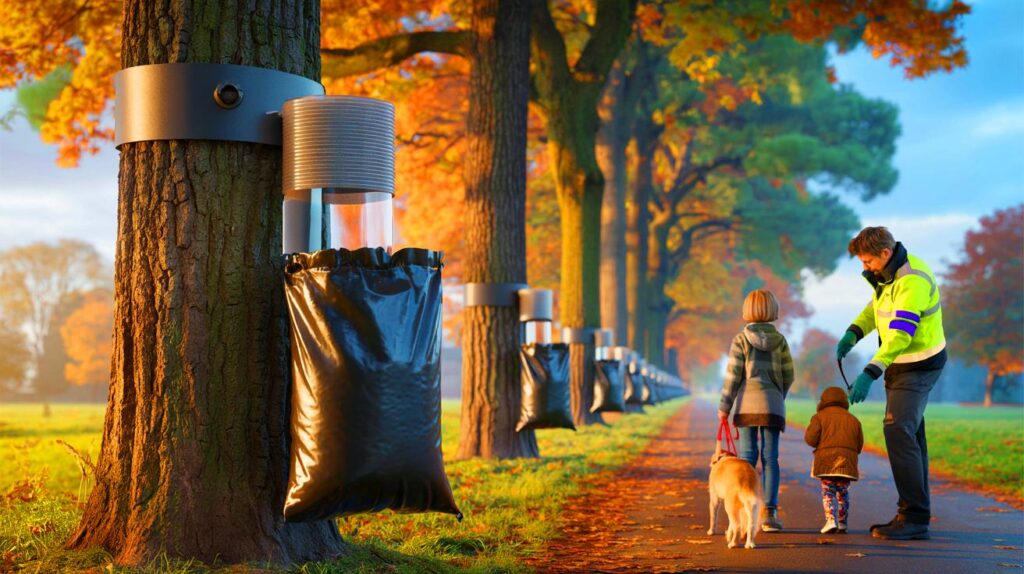
Strange black bags now hang from trunks in parks and woods. They are not litter. Families ask if they should worry.
Wardens have installed the bags during a surge in caterpillar activity that can affect skin, eyes and pets. The sight unsettles walkers, yet the devices help protect trees and people when used correctly.
What those black bags really mean
That black bag on a trunk signals a confirmed infestation of processionary caterpillars. Teams fit a band or collar around the tree, link it to a tube, and channel the insects into a sealed collector bag. The design intercepts the caterpillars precisely when they climb down to pupate in the soil. Many bags carry printed warnings such as “do not touch” because the risk comes from the caterpillars’ barbed hairs, not the plastic itself.
Two species drive most reports. The oak processionary moth targets oaks in spring and early summer. The pine processionary targets pines, usually from late winter into spring. Both shed clouds of microscopic urticating hairs. The wind can carry these hairs several metres. People can react without touching a caterpillar.
The bag is not rubbish. It marks active caterpillars nearby whose hairs can inflame skin, eyes and airways and can seriously harm pets.
Why you should keep your distance
Each caterpillar carries tens of thousands of tiny hairs that break off and stick to clothing and fur. Contact can trigger an itchy rash, red eyes, a sore throat or wheezing. Dogs face greater danger. Ingestion can burn the tongue and mouth and may require urgent veterinary care.
Rangers advise space, calm and zero contact. Treat any tree with a black bag as a live worksite.
- Do not touch, puncture or move the bag, tube or collar.
- Keep children and dogs 5–10 metres away from the trunk and the drip line of the canopy.
- Avoid sitting, picnicking or strimming under affected trees.
- If you think hairs landed on you, shower with lukewarm water and mild soap, change clothes, and avoid rubbing your eyes.
- Seek medical advice if you develop a widespread rash, eye irritation or breathing symptoms. Call a vet urgently if a pet drools, paws at the mouth or shows swelling.
- Report sightings to your local council, landowner or tree officer so they can assess and treat the site.
How the trap works without chemicals
The trunk trap uses a mechanical principle rather than insecticide. A flexible collar funnels descending caterpillars into a tube and then into a sealed bag. Sunlight warms the bag, the air dries, and the insects die in confinement. Crews may add a small weight so gusts do not shake the system and spread hairs. The set-up reduces exposure for passers-by, keeps control local to the host tree and avoids spraying in public spaces.
Leave the trap alone. Tampering increases exposure, defeats monitoring and can push hairs into the air.
Where and when you might see them
Councils, estates and schools deploy these traps on street trees, in parks and along woodland paths. You may spot a run of 3–10 bags on a single avenue if a survey confirms activity. Sightings cluster in warmer districts and sheltered urban microclimates. Timing varies by species and weather.
Telltale signs beyond the bag
Oak processionary nests look like clumps of pale silk on trunks and lower branches from late spring. Pine processionary nests form dense white tents higher in the canopy over winter. Both differ from harmless spider webs. You may also notice lines of caterpillars moving head-to-tail on warm days, which gives the “processionary” name.
| Species | Main host | Peak risk to people | Typical months | Notes |
|---|---|---|---|---|
| Oak processionary | Oaks (Quercus) | High near nests, pruning sites and sunny paths | April–July | Females can lay up to 200 eggs; hairs contaminate bark and undergrowth. |
| Pine processionary | Pines (Pinus), some Cedrus | High near ground in late winter and spring | February–May | Lines descend to pupate in soil; winter tents persist visibly. |
What to do if exposure happens
Rinse skin and hair with lukewarm water and gentle soap as soon as you can. Use sticky tape to lift stray hairs from the skin. Do not scratch. Do not rub your eyes. If eyes feel gritty, rinse with clean water or saline. If breathing feels tight, seek urgent care. Wash outdoor clothes separately at a warm setting. Clean boots and kit with water and dispose of used wipes or tape in a sealed bag.
For pets, prevent licking, rinse the mouth area with water if safe to do so, and contact a vet. Early treatment reduces the risk of tissue damage to the tongue and gums.
Why this matters for trees
Processionary caterpillars can strip foliage quickly. Repeated defoliation weakens trees, slows growth and raises vulnerability to drought. Urban trees stand under extra pressure from heat and compacted soil. Managers combine trunk traps with timed nest removal, pheromone traps for adult moths and targeted treatments away from the public. Natural predators and parasites help, but they rarely keep numbers low on their own in cities.
How to read the scene when you spot one bag or several
A single bag often marks a known nest in the canopy and a descent route down the trunk. Three to ten bags along a street or path usually mean crews have mapped a cluster and placed interceptors on each host tree. You should give each tree the same clearance. Hairs can spread unevenly with wind, lawnmowers and hedge trimmers.
Small choices that lower your risk
Walk on the windward side if a breeze blows from infested trees. Park buggies and bikes away from trunks. Shake picnic rugs before packing up. Keep dogs on a short lead near oaks and pines in season. Teach children one rule that sticks: “look, don’t touch”.
One clear message for families: see a black bag, step back, keep moving, and let the kit do its job.
Extra context you can use
Urticating hairs act like tiny harpoons made of chitin, tipped with proteins that trigger inflammation. Dry weather, gusty days and grounds maintenance can lift them into the air again. Risk builds cumulatively along busy paths and beneath low branches, so short detours pay off.
If you manage a garden near affected sites, consider timing pruning for late summer or winter when caterpillars are absent, and hire trained contractors for any nest work. Leave green waste from host trees out of shredders during the risk window. Simple planning cuts exposure for you, your neighbours and your pets.



Sounds a bit alarmist—are these bags really necessary everywhere, or is this just councils covering themselvs? I’ve walked past dozens with no issues.