
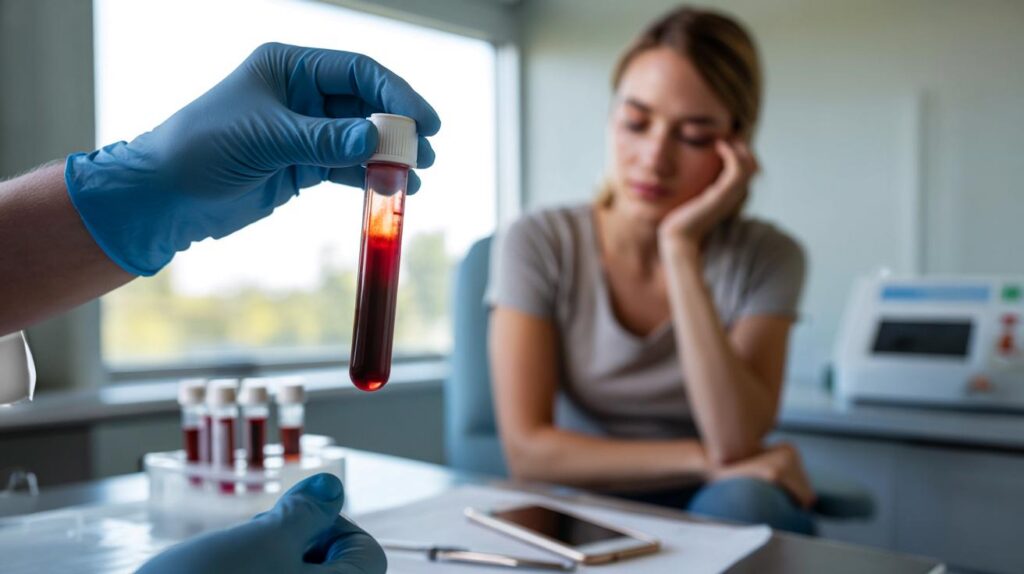
A new wave of research says a simple blood draw might finally spot the biological fingerprints of chronic fatigue. For millions who’ve been told their tests are “normal,” that sentence lands like a pocket of oxygen. If a lab machine can see it, the story changes — for doctors, for work, for daily life.
In a quiet GP waiting room, a woman in her thirties scrolls her phone with the wary economy of someone rationing energy. She’s already been through the carousel: iron, thyroid, B12, sleep apnoea checks, all stamped “fine.” The receptionist calls another name; a toddler falls asleep on a parent’s shoulder; a builder’s boots squeak across the lino. A news alert buzzes: scientists are close to a blood test that can actually read chronic fatigue in the blood. You can almost feel her jaw unclench a notch at the thought of a lab number that finally matches her day-to-day reality. What if a vial of blood could settle the argument?
Blood test breakthrough: why this story matters now
Across the UK, people living with chronic fatigue have learned to live with invisible limits and visible doubt. A lab test that picks up cellular stress or immune misfiring doesn’t just promise faster answers, it changes the conversation in the room. **When a machine detects what you feel, you’re no longer explaining your life from scratch at every appointment.** Research teams in the US and UK are honing assays that nudge blood cells under stress and track how they respond, hunting for a signature that separates severe tiredness from a complex condition.
We’ve all had that moment when words don’t quite carry the weight of what the body is doing. One study cohort found that certain immune markers and cellular energy patterns looked different in people with long-term fatigue than in healthy controls, hinting at a biological groove that keeps looping. In clinics, GPs are seeing a rise in post-viral fatigue since COVID, with waiting lists for specialist services stretching months. A test that reliably flags a pattern could guide referrals sooner, keep people in jobs they love a little longer, and offer families a common language that isn’t just “you look fine.”
So what are scientists actually measuring? Think of it as a stress-reaction snapshot: expose white blood cells to a mild challenge and measure electrical or metabolic changes; scan plasma for a pattern of inflammatory signals; map how energy is made and used when cells are pushed. The promise is specificity rather than a catch-all “tired.” Early results look encouraging in small groups, though larger, diverse trials must confirm accuracy in the real world. No single test has crossed the line into routine NHS use yet, and false positives or overlaps with other conditions remain a risk. The direction of travel is unmistakable, and it points toward biology, not blame.
Turning the science into next steps for your life
Start by reframing your next appointment. Take a two-week snapshot diary with you: waking time, total sleep window, three fatigue ratings across the day, any post-exertional crash, and one line on activity. Keep it plain and consistent; patterns beat paragraphs. Bring a one-page summary: length of symptoms, key triggers, what helps, what makes it worse. Ask your GP about the current pathway for ME/CFS or post-viral fatigue in your area, and which blood tests are used to rule out lookalikes like anaemia, thyroid issues, coeliac disease, diabetes, and infection. If your practice has a specialist interest GP, request them.
Pacing beats powering through. Many people push on good days and pay for it later, which teaches the body to fear effort. Pick a stable “baseline” you can repeat most days without a crash and layer tiny steps from there. Break chores into units with rests that actually feel like rests, not scrolling marathons. Let’s be honest: nobody really does that every day. Try the 30% rule for a fortnight — do about a third less than you think you can — and see if crashes ease. If they do, add small increments. If they don’t, shrink the baseline and protect it like rent money.
Language can lift the weight a little.
“Your fatigue is real. Data just caught up with it.”
- Ask about referrals: community ME/CFS services, occupational therapy for energy management, sleep clinics if you wake unrefreshed or snore.
- Discuss symptom targets: pain relief, orthostatic intolerance, brain fog strategies, gut issues.
- Question the plan: any tests to rule out other causes still pending? Review dates in the diary?
- Agree red flags: when to seek urgent help, and what changes can wait for routine review.
- Name one joy you’ll protect each week, however small. The nervous system listens.
What a new blood test could change — and what it won’t
If a validated blood test lands in clinics, the first shift will be time: fewer cycles of repeated “normal” results before you’re taken seriously. That opens doors to support at work, benefit assessments that recognise functional limits, and targeted research into drugs that actually match the biology. *That feels like daylight after years of fog.* It won’t magic away the careful craft of pacing or the slow patience of recovery. A lab number can’t tell you how to hold a toddler, climb a bus, or manage a supermarket shop without tipping into a crash. What it can do is anchor your story in data, galvanise investment, and turn public debate from “Is this real?” to “What helps most, and for whom?” That shift alone lightens the load.
| Key points | Details | Interest for reader |
|---|---|---|
| Emerging blood tests target biological signatures | Assays stress blood cells or track immune markers to spot a pattern linked to chronic fatigue | Signals a move from guesswork to measurable data |
| Not yet in routine NHS use | Promising early studies need larger, real-world validation before rollout | Sets expectations and helps you plan care in the meantime |
| Practical steps still matter | Pacing, baseline setting, and focused GP conversations change day-to-day outcomes | Gives you actions to try this week while science matures |
FAQ :
- Is the blood test available on the NHS right now?Not yet. Research teams are refining methods, and wider validation is needed before any test becomes part of standard care.
- What does the test actually measure?Most candidates look at how immune cells and energy systems behave under mild stress, or they scan for a fingerprint of inflammatory signals in the blood.
- Could this help with Long Covid as well?There’s growing overlap in findings, with similar immune and energy patterns reported in some people. Any validated test may inform both conditions, though results will likely vary between individuals.
- Should I try intense exercise to “reset” my system?If you experience post-exertional malaise — a delayed crash after activity — intense programmes can backfire. Gentle, symptom-led pacing with tiny, stable increments tends to be safer.
- How do I prepare for my GP appointment?Bring a two-week symptom snapshot, a one-page history, and clear questions about the local pathway, rule-out tests, and support options. Keep it focused and practical.



Promising, but how specific are these assays? If inflammation overlaps with other conditions, won’t we see a lot of false positives? Any PPV/NPV estimates yet from larger cohorts?
Finally, a test that admits I’m not just “tired.” Now can it also write a note to my boss?