
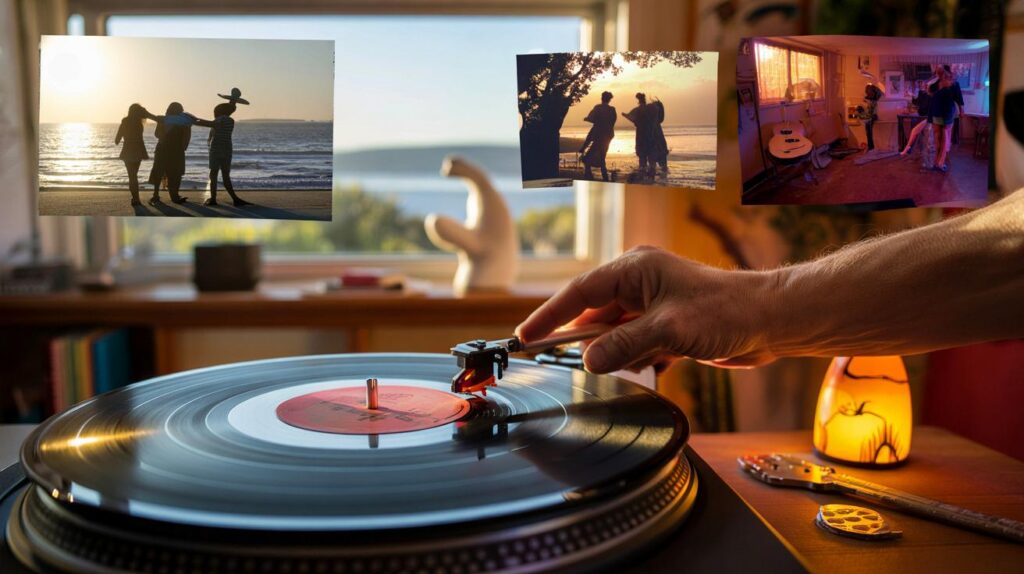
A snatch of guitar, a harmony line, and a living room shifts. Memory lights up faster than any photograph.
Across Britain, a handful of 60s and 70s classics still flip a switch in people now in their seventies. Scientists call it autobiographical recall. Fans call it going back. Here’s why eight familiar recordings still reset the room—and what that says about a generation and the way music wires minds.
Why these eight tracks strike harder than new music
Psychologists describe a reminiscence bump: songs encountered between 15 and 25 attach to identity with unusual strength. Those records embedded during first loves, first flats, first rebellions. They gained context—friends’ faces, town names, long car rides—that later tracks never quite earn.
Music from youth binds to autobiographical memory networks. When the opening chord lands, the brain retrieves a story, not just a song.
There’s a practical layer too. These hits lived on mass radio and in shared spaces. Millions heard the same chorus at the same time. That unity marked them as cultural waypoints. Short, punchy singles—often around three and a half minutes—compressed big feelings into repeatable bursts, perfect for memory reinforcement.
The songs that open the time capsule
| Song | Year | Core feeling | Typical memory it unlocks | Why it sticks |
|---|---|---|---|---|
| The Sound of Silence (Simon & Garfunkel) | 1964 | Beautiful melancholy | Late-night radios, solitary walks | Poetic language over spare guitar invites reflection |
| Good Vibrations (The Beach Boys) | 1966 | Sunny possibility | Seafront summers, first cars | Modular hooks and harmonies feel like bottled optimism |
| White Rabbit (Jefferson Airplane) | 1967 | Intellectual mischief | Student rooms, late debates | Literary imagery meets a steadily rising pulse |
| Let It Be (The Beatles) | 1970 | Hard-won calm | Family gatherings, quiet mornings | Simple reassurance sung with churchlike warmth |
| American Pie (Don McLean) | 1971 | Grief and grin | Singalongs, bar closers | Storytelling that invites personal decoding |
| Hotel California (Eagles) | 1976 | Gilded unease | Night drives, first jobs | Guitar lines that shimmer while the lyric warns |
| Stairway to Heaven (Led Zeppelin) | 1971 | Slow-burn wonder | School dances, basement parties | Folk-to-rock build mirrors adolescent escalation |
| Bridge Over Troubled Water (Simon & Garfunkel) | 1970 | Steady care | Hand-holding, hospital corridors | Gospel swell signals solidarity over spectacle |
The sound of silence: when darkness felt like a friend
Paul Simon’s lyricism arrived just as teenagers met complicated feelings head-on. The gentle arrangement gave permission to sit with unease rather than mask it behind swagger. Many remember first hearing it privately, which deepened the personal bond.
Good vibrations: the last uncomplicated summer
Before adulthood gathered pace, this sounded like fresh paint and warm air. Its unusual structure—snapped together from studio fragments—still feels like a collage of bright moments. For many, it cues the smell of salt and petrol.
White rabbit: rebellion with a reading list
Alice in Wonderland references turned bookworms into provocateurs. Grace Slick’s steady climb from whisper to command mimics a mind opening and then refusing to close. It sends listeners back to cramped flats, cheap lamps, big ideas.
Let it be: the art of acceptance
By the turn of the decade, defiance met reality. This track offered maturity without surrender. Its calm centre—piano, voice, a hint of choir—landed in homes where parents aged and children arrived. The advice felt like a hand on a shoulder.
American pie: singing through the losses
Eight-plus minutes, a pocket history of dreams and comedowns. People attach their own fallen idols to it. That makes every chorus a personal memorial and every verse a private footnote. No wonder the words return from memory without effort.
Hotel california: success with strings attached
As careers advanced, the metaphor of a beautiful trap resonated. The solos glow, the lyric frowns, and together they capture grown-up ambivalence. Many hear their own mortgage paperwork in the closing echo.
Stairway to heaven: eight minutes where time stretched
The gradual climb suited big adolescent feelings. Quiet flutes gave way to thundering release, mirroring teenage discovery. Research on memory salience supports why it lasts: the brain tags intensifying structures as meaningful events.
Bridge over troubled water: choosing to carry others
Comfort became a calling. Heard at weddings, vigils, and goodbyes, it grew from romantic support to family duty. In later life, many feel not the plea for help but the weight of giving it.
Before playlists splintered culture, these tracks formed common ground. That shared ownership amplifies nostalgia decades later.
What you can do with this knowledge at home
Families can turn these reactions into connection, care, and calm. Done well, a playlist becomes a practical tool.
- Ask for specific scenes, not just favourite songs: “Which track was playing when you got your first car?”
- Sequence the list: start with gentle assurance (Bridge Over Troubled Water), then lift energy (Good Vibrations), close with a communal singalong (American Pie).
- Mind the mix: mono radio versions can feel more familiar than modern remasters.
- Set a comfortable volume and allow silence afterwards; recollection surfaces in the gap.
- Invite stories without correcting details; the feeling matters more than factual accuracy.
Inside the brain, briefly
Auditory cortex recognises the pattern within milliseconds. The hippocampus retrieves stored scenes, while the default mode network lights up as the mind revisits the self in time. Dopamine release rewards prediction and fulfilment as choruses arrive exactly when expected. That is why a single intro can soften shoulders across a room.
Why younger listeners feel it too
These songs still work for people who weren’t there. Their structures—patient builds, strong hooks, narrative lyrics—give a map modern pop often skips. Covers and samples keep the melodies in circulation, making the originals feel both historic and current. Parents share the tracks; children absorb the emotions first, the history later.
Ways to deepen the experience safely and meaningfully
Try pairing each track with one tangible thing: a photo, a ticket stub, or even a scent like sea salt. That multi-sensory cue strengthens recall. For care settings, brief, themed sessions can reduce agitation and invite conversation. Keep choices personal—swap Good Vibrations for a Motown single if that’s the real anchor.
Curate alternatives for different moods: one list for steadying nerves (Let It Be, Bridge Over Troubled Water), another for lifting energy (Good Vibrations, Stairway to Heaven). Add short spoken prompts between songs if you’re recording a playlist for someone: a name, a street, a season. These cues nudge the story into the open without pressure.



This nailed the feeling I can never quite explain: a single chord and the living room sort of tilts. The bit about the reminiscence bump is wierdly comforting—so it’s not just me, it’s wiring. Put on Let It Be and I’m back in my dad’s old Vauxhall, windows fogged, everyone quiet. Short songs, big feelings, repeat—yep. This article is definitley going in my ‘play with mum’ folder.
Cool read, but are these eight really the ones? Feels kinda cherry‑picked. No Motown single? No Bowie, ABBA, or even The Kinks? Regional memory varies alot, no?