
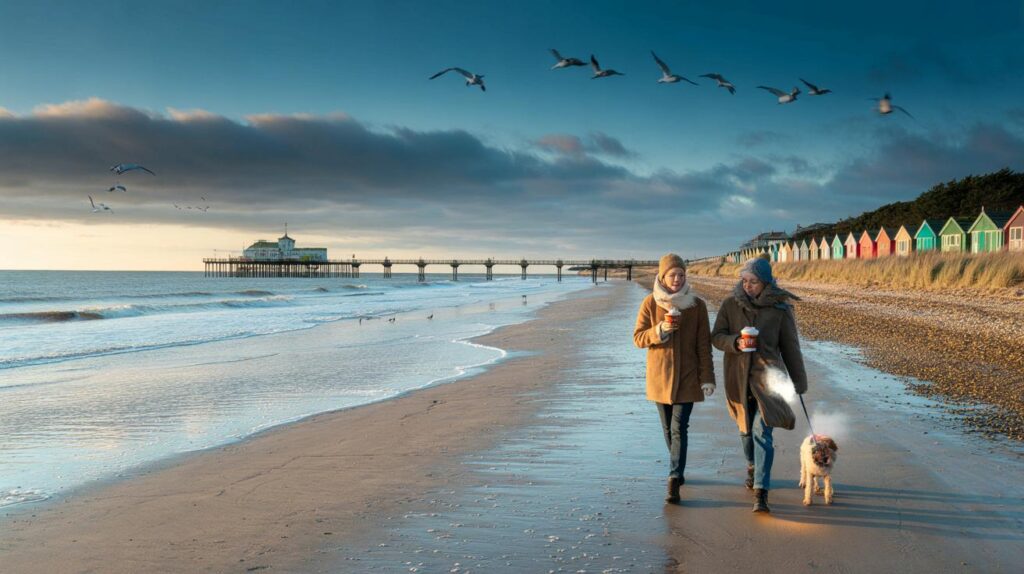
Salt air, winter light and room to breathe draw people to the coast long after the summer deckchairs fold away.
Across the UK, seaside breaks continue year-round, and many readers now look past the usual hotspots. A Norfolk coastal town offers the Brighton feel without the shoulder-to-shoulder crowds, a gentler pace, and plenty to do when the mercury drops.
A quieter take on the Brighton formula
Think colourful beach life, indie cafés and a handsome pier, then swap the city frenzy for calmer streets and open horizons. The North Norfolk coast serves that mix. Cromer and Sheringham bring Victorian swagger and proper seaside theatre; Wells-next-the-Sea and Holkham add big-sky beaches and pine-backed dunes. You still get artisan coffee, small galleries and good fish, just with a slower, kinder rhythm.
Brighton’s buzz, Norfolk’s breathing space: winter weekends here keep the charm and lose the crush.
Families walk the prom without weaving through crowds. Couples find tables at sunset without a 40-minute wait. Locals talk about winter as the secret season, when pastel terraces and beach huts look made for the low sun and the cafés serve hot chocolate as if it’s a small ceremony.
What you’ll find on the Norfolk coast
Piers, huts and winter colour
Cromer’s pier anchors the town with end-of-pier shows and views that hold the eye in raw weather. Sheringham lines up fishermen’s cottages and a pebbly sweep that glows at dusk. Further west, Wells-next-the-Sea stretches out its row of beach huts like a painter’s palette. When the wind picks up, paths through Creake and Holkham woods cut the chill and bring out the scent of pine.
On bright days, the chalk reef off Cromer throws white wave lines towards the sand. On grey days, you watch storms roll through and feel part of the coast’s mood. Either way, you step away from city noise without losing life and character.
Nature that stills the shoulders
Marshes fill with winter birds. Geese stitch the sky in lines at dawn. At Blakeney Point, seal pups arrive on the shingle and boat trips run when conditions allow. Inland, heathland trails carry the footfall of very few, with views that seem to travel further in colder air.
Winter on this coast brings emptying beaches, big skies and the sort of silence that resets the week.
How to plan a weekend that actually feels like a weekend
Getting there without the faff
From London, the straightforward option runs by rail via Norwich and out to Cromer or Sheringham. The journey typically takes around three hours with a single change, and trains run steadily at weekends. Drivers can take the A11 and A140 towards the coast, then settle into slower lanes for the final miles, passing flint churches and fields edged with hedgerows.
Where to stay and when to go
Pick a Victorian guesthouse near the prom if you want sea views and a short stroll to the pier. Cottages in the lanes put you close to bakeries and deli counters. Out of high season, many places accept short stays from two nights, and midweek often brings the calmest streets. If you like a bit of bustle, aim for market days in Cromer or Sheringham; if you want near-silent beaches, go early or late in the day.
Eight reasons people are swapping Brighton for Norfolk this winter
- Space to breathe: promenades feel open, even on Saturdays, and you can hear the sea over conversation.
- Independent flavour: cafés roast decent beans, fishmongers sell the day’s catch, and small shops set their own rhythm.
- Proper pier time: Cromer’s pier brings views, theatre and a photo-friendly walk even when the wind lifts.
- Wildlife on the doorstep: seals, waders and winter geese turn every walk into a low-key nature watch.
- Easy, scenic walking: the Norfolk Coast Path strings together clifftops, dunes and creeks without tricky gradients.
- Year-round food: from crab sandwiches to hearty stews, the menus lean seasonal and suit cold-weather appetites.
- Family-friendly pace: short distances, simple days and plenty of low-cost things to do keep stress at bay.
- Storm-watching drama: winter skies and rolling surf provide a show that costs nothing and sticks in the memory.
Small details that make a big difference
Day plans that don’t feel rushed
Start with a clifftop walk between Cromer and Overstrand, where the path holds back from the edge but still serves views. Pause for a warm-up in a café near the church tower, then drop to the pier as the tide turns. After lunch, hop to Sheringham for the heritage railway to Holt on selected winter dates; when it runs, the short ride gives a dose of nostalgia. If trains are resting, the shoreline still delivers, and the town’s small museum adds context to the fishing heritage.
On another day, drive or bus to Wells-next-the-Sea. Walk the raised bank to the beach huts, then continue along the sands towards Holkham Gap. The huge expanse swallows footprints fast, which takes the pressure off busy corners. Time the return with the sun angling low through the pines.
Safety, tides and practicalities
Winter brings sharper weather, so layers and waterproofs pay off. Check tide times because creeks around Wells and Blakeney can flood fast, and some cuts across the marsh become impassable near high water. Cliffs east of Cromer continue to erode; stick to marked paths and keep back from the edge in windy spells. Seal-watching works best with operators who keep distance and respect the colony; binoculars help and keep you off sensitive shingle.
Pick your path with the tide in mind, dress for changeable skies, and the coast gives more than it takes.
Extra ideas for a richer weekend
Food fans can build a day around coastal producers. Start at a smokehouse for kippers or hot-smoked salmon, then cross to a deli for Norfolk cheese and chutneys. Crabbing remains a gentle ritual for families; buy a simple line, use bait that sinks, and return catches carefully. Birders can add RSPB reserves to the list, where hides sit tucked into reedbeds and guidance boards keep you tuned to seasonal arrivals.
If you want a lighter footprint, go car-free. Trains reach the coast with one change and local buses connect the main towns. Walking links many points smoothly through a web of waymarked paths. Warm up stops are frequent, so you can carry less and stay out longer. Travellers with dogs will find many beaches open over winter; check signage at access points and bring a towel for the return leg.
Who this suits, and what you gain
Brighton excels at energy, nightlife and scale. A Norfolk seaside town trades that for headspace, wild coast texture and a weekend that moves to the sound of the tide. If you measure success in quiet bays, unhurried service and low-cost pleasures like a pier stroll or a hot pasty on a windy bench, winter points you east. You leave with pink cheeks, lighter shoulders and photographs where the horizon does most of the talking.



Booked already! The idea of winter geese at dawn and storm-watching sounds perfect. Any café recs near Cromer pier for proper hot chocolate?
Brighton feel without the buzz? Sounds like “less fun, more wind”. Convince me: what’s actually open after 6pm in Janurary—galleries, pubs, theatre?